
Winter Property Prep Checklist for Western Montana Homes and Businesses
Reviewed by Adam Hurlbert, Owner & Founder, 15+ years in landscape & property care
Most winter problems on a western Montana property are decided before the first snow. A sprinkler line that was not blown out, a limb hanging over the drive, a downspout emptying onto the front walk, a driveway edge nobody marked: each one becomes a repair or a hazard by February. This checklist puts the work in order, from early fall through spring, with the reason for each step and a link to the detailed guide. It is written for homes, rentals and small commercial properties in Missoula, the Bitterroot Valley and the surrounding area.
When should I start winter prep in western Montana?
Earlier than most people think. NOAA's 1991-2020 normals put the median first 32 degree freeze at the Missoula airport on September 26, at Hamilton on September 22 and at Stevensville on September 19. Median means half of years freeze earlier. Water-related tasks need to be done by then, and the rest of the outdoor work is easiest before the ground freezes and the snow arrives.
A practical schedule is: water and irrigation in September and early October, trees, leaves and drainage in October, the snow plan and markers before mid-November, and the indoor and safety items once the season starts. Snowfall at the airport averages 5.4 inches in November and 11.6 in December, so the window closes fast.
What should I do about irrigation and outdoor water?
Blow out the sprinkler system and shut down outdoor water before the first hard freeze. The American Red Cross recommends draining sprinkler supply lines following the manufacturer's or installer's directions, removing and draining hoses, closing the inside valves to outdoor hose bibs and leaving the outside bib open to drain. It also cautions against putting antifreeze in these lines unless directed.
Ask your irrigation contractor how to protect a backflow assembly that stays outside. Book the sprinkler blowout and winterization early, since the Bitterroot's median first freeze falls in September. The full process is in winterizing an irrigation system in Montana.
What tree work should be done before snow?
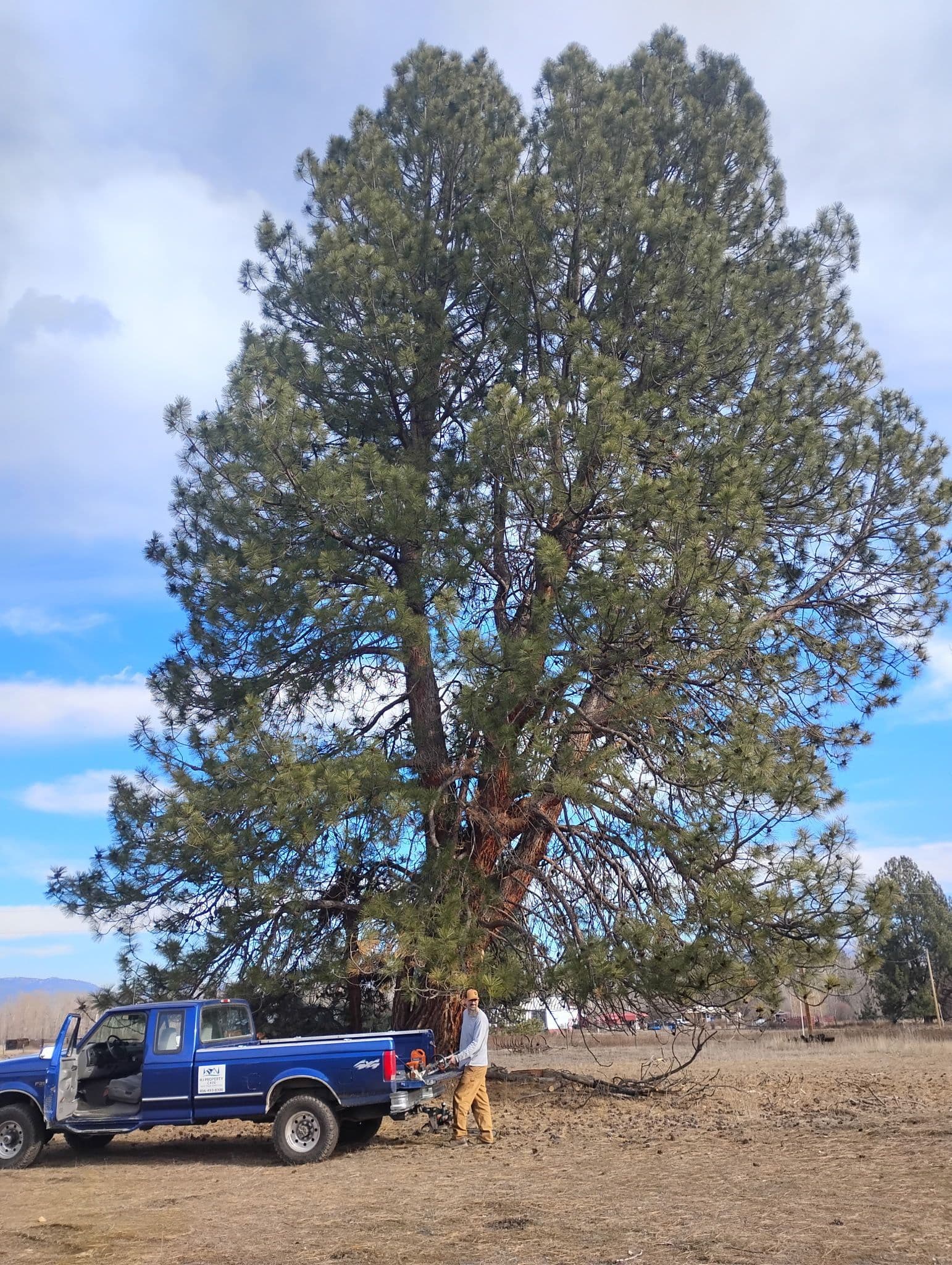
Look up. Limbs that clear a driveway, roof or power line in September sit much lower under wet snow, and a limb that blocks the plow means the drive does not get cleared. Have weak, cracked or overextended limbs over structures, drives and walks assessed, and prune for clearance where needed. A tree health and risk assessment by an ISA Certified Arborist is the right first step for large trees.
For watering, University of Minnesota Extension recommends decreasing watering slightly in September to encourage hardening off, then watering thoroughly in October until freeze-up. Young and recently planted trees benefit most. Our guide to winter tree care and snow load covers young trunks and what to do with heavy snow on branches. Anything near a power line is for the utility or qualified line-clearance crews only; see tree work near power lines.
How do I handle leaves, gutters and drainage?
Clear leaves from lawns, beds, drains and gutters before snow. Blocked gutters and drains send meltwater where it refreezes. Our fall cleanup and leaf removal services handle this, and fall leaf and storm prep explains the timing.
Then trace where meltwater will go. Extend downspouts so they discharge away from walks, steps and driveways. Fill low spots on walks where water collects. Seal open concrete joints and cracks in dry weather. These steps prevent most of the ice that forms later, as explained in freeze-thaw cycles and what they do to a property.
What should a snow plan include?
Who clears, what gets cleared, when, and where the snow goes. Decide whether you will shovel, run a blower or use a service; our comparison of shovel, snow blower or plow service helps. If you use a service, arrange it in the fall, because routes are set before the season. Agree on the trigger depth, the priority areas (walks and entrances usually first) and the ice treatment.
Pick snow storage areas that do not block sightlines, cover drains or melt across walks; see where to pile snow. Mark drive edges, culverts, irrigation heads, landscape lighting and bed edges with stakes before the ground freezes; see snow stakes and markers and snow plow damage prevention. If you are in Missoula, read the city sidewalk snow removal rules.
What ice supplies and safety gear should I have?
Ice melt or traction material by every entrance, chosen for your surfaces and pets; see our ice melt guide, sand, salt or both and pet-safe ice melt. A good shovel and a push broom for steps. For walking, OSHA recommends insulated, water-resistant boots with good rubber treads, or rubber overshoes with good treads.
Ready.gov's winter list adds a few items that belong on any Montana checklist: smoke alarms and carbon monoxide detectors with battery backup on every level, extra batteries for radios and flashlights, supplies to stay home for several days without power, and a car kit with jumper cables, sand, a flashlight, warm clothes, blankets, water and snacks. If you have a generator, Ready.gov says to run it outdoors only and at least 20 feet from windows, doors and attached garages.
How do I protect pipes in the house?
The Red Cross list of pipes that freeze most often is a good place to start: pipes in crawl spaces, attics, garages and under kitchen and bathroom cabinets, and pipes against exterior walls with little or no insulation. It recommends insulating them with pipe sleeves or UL-listed heat tape or heat cable, and adding insulation to attics, basements and crawl spaces.
During cold snaps, the Red Cross advises keeping garage doors closed, opening cabinet doors under sinks, letting cold water drip from faucets served by exposed pipes, and keeping the thermostat at the same setting day and night. If you will be away, leave the heat on and set no lower than 55 degrees. For homes that sit empty for weeks, see winter checks for empty and vacation homes. Frozen or burst pipes inside are a plumber's job.
What should businesses, HOAs and rentals add to the list?
Documentation and access. Commercial properties need a written snow and ice plan, a clear priority order for entrances, accessible routes and fire lanes, and a log of visits and treatments. HOAs need agreement on what common areas the association clears and what owners clear. Landlords need the lease and local rules squared away before the first storm.
We cover these in commercial snow removal, HOA snow removal and the winter checklist for property managers. For accessible parking and entrances, see keeping accessible routes clear in winter.
What should I keep an eye on during the winter?
Forecasts and the predictable trouble spots. Sign up for alerts and learn what each one means in winter weather advisories and warnings explained. After every thaw, check the shaded walks, the bottom of the drive and the area below downspouts for ice. After heavy snow, check trees over the house and drive for bent or cracked limbs, and look at decks and roof edges over entrances; see icicles and roof snow slides near entrances and when roof snow needs removing.
In a dry, open winter, water young trees on mild days. Colorado State University Extension, writing for a similar climate, says to water only when air and soil are above 40 degrees with no snow cover, at midday, about once or twice a month in long dry spells. Our low-snow winter guide explains why this winter may call for it.
What if I am already behind and snow is on the way?
Do the items that prevent the most expensive failures first. Shut off and drain outdoor water, because a split hose bib or backflow assembly is costly and takes minutes to prevent at the valve. Then get a snow plan in place, even a simple one, and put ice melt or traction by the doors. Move hoses, furniture and anything else out of the clearing path, and mark the drive edges with whatever stakes you can still drive into the ground.
Tree concerns move up the list if a limb is already cracked or hanging over the house or the drive. Leaves and bed cleanup can wait for a thaw, and the spring cleanup can catch whatever winter interrupts. If the irrigation has not been blown out and the forecast has turned, read what to do if a hard freeze comes before your appointment and call us.
What comes after winter?
A spring walk-through. Once the snow is gone, look for plow damage to turf and edges, heaved pavers, cracked concrete, broken limbs and vole trails in the lawn. Start the irrigation system carefully and check the backflow assembly before turning on full pressure. Our guides to yard cleanup after the snow melts and spring lawn and landscape startup cover the order of work.
This checklist is part of our Montana Winter Property Guide. Our snow and 24-hour storm services handle clearing, ice management and storm tree work through the season, and residential snow removal routes are set in the fall. Call HJ Property Care & Tree Service at (406) 215-7319 or request a free estimate for winter service in Missoula and the Bitterroot Valley.
Need help?
HJ Property Care & Tree Service is locally owned and ISA-certified. Call for a free estimate.
This article is part of the Montana Winter Property Guide, our complete guide for western Montana property owners.
Explore our snow & 24-hour storm services.
Sources
We cite primary sources: Montana State University Extension, the City of Missoula, and the ISA, so you can verify anything here yourself.
- 1991-2020 annual and seasonal normals, Missoula International Airport (USW00024153) (NOAA National Centers for Environmental Information (NCEI)). Last checked November 2, 2026.
- 1991-2020 monthly normals, Missoula International Airport (USW00024153) (NOAA National Centers for Environmental Information (NCEI)). Last checked November 2, 2026.
- 1991-2020 annual and seasonal normals, Hamilton (USC00243885) (NOAA National Centers for Environmental Information (NCEI)). Last checked November 2, 2026.
- 1991-2020 annual and seasonal normals, Stevensville (USC00247894) (NOAA National Centers for Environmental Information (NCEI)). Last checked November 2, 2026.
- Frozen Pipes: prevention and thawing (American Red Cross). Last checked November 2, 2026.
- Winter Weather (Ready.gov (U.S. Department of Homeland Security)). Last checked November 2, 2026.
- Winter Weather: Hazards and precautions (U.S. Occupational Safety and Health Administration). Last checked November 2, 2026.
- Protecting trees and shrubs in winter (University of Minnesota Extension). Last checked November 2, 2026.
- Fall and Winter Watering, Fact Sheet 7.211 (Colorado State University Extension). Last checked November 2, 2026.
Ready to transform your outdoor space?
Get a free, no-obligation estimate within 48 hours. Locally owned and ISA-certified.