
Create your ideal outdoor space
Custom landscaping & design in Missoula and Ravalli County
Custom landscape design and installation: sod, plantings, hardscaping, xeriscaping, and water features, in Missoula and the Bitterroot Valley.
- Licensed & insured
- ISA-certified
- Free 48-hour estimates
Landscaping & Design
Create your ideal outdoor space
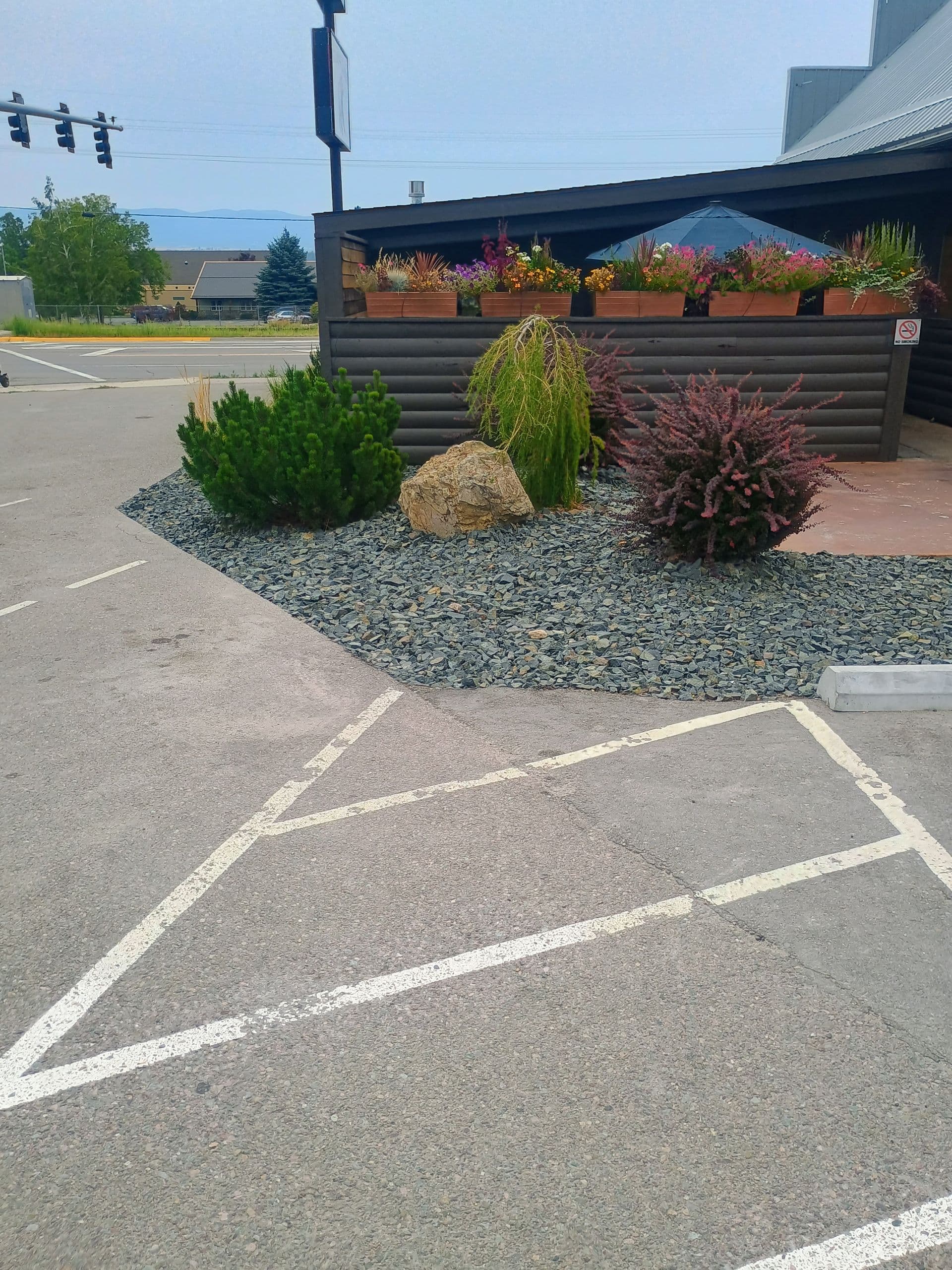
Transform your outdoor area with the expert touch of HJ Property Care & Tree Service LLC. Our custom landscaping and design services include everything from sod installation to mulching, bed refreshes, and more. We work closely with you to create a landscape that reflects your personal style and preferences. Picture a garden where the vibrant colors of freshly planted shrubs and trees are complemented by the texture of rock styles and the elegance of water features.
Serving the Missoula area, including the Florence area, our process is thorough and client-focused, starting with a property overview and measurements, followed by a detailed cost breakdown. We ensure your satisfaction with design approval and adjustments as needed. Plus, our high-value add-ons like hardscaping, retaining walls, and low-water xeriscaping add both beauty and functionality to your space, so you can trust us to deliver lasting quality.
Plan your custom landscaping project with us today.
Request ServiceWhat's included in this service
Our landscaping services are tailored to meet your unique needs and preferences. From the initial consultation to the final touches, we ensure a seamless experience:
- Custom design based on your preferences
- Detailed property measurements and layout planning
- Installation of sod, plants, and shrubs
- Hardscaping options like pavers and water features
- Low-water xeriscaping and drought-tolerant designs
The order we build in, and why it matters
Landscapes fail in a predictable order, and almost all of it traces back to sequence. Water gets settled first: where it arrives, where it currently goes, and where it needs to go instead. A bed built across a drainage path will stay wet whatever is planted in it, and a patio laid without accounting for runoff will send water toward a foundation for the rest of its life. Grading and drainage decisions cost very little on paper and a great deal after installation.
After that the sequence runs grading and drainage, then hardscape, then irrigation, then planting, then finish work. Doing it out of order means driving equipment and hauling material across finished beds. We handle all of those stages in-house, which is why the sequence holds; the alternative is coordinating separate trades who each want to be first on site.
Soil preparation is the step most often trimmed from a budget and the one that most determines how the planting looks in five years. Dropping a nursery root ball into an unamended hole leaves roots sitting in a pocket of soft growing medium surrounded by ground they will not readily enter. Preparing the bed rather than the hole is what avoids that.
Designing for a dry western Montana summer
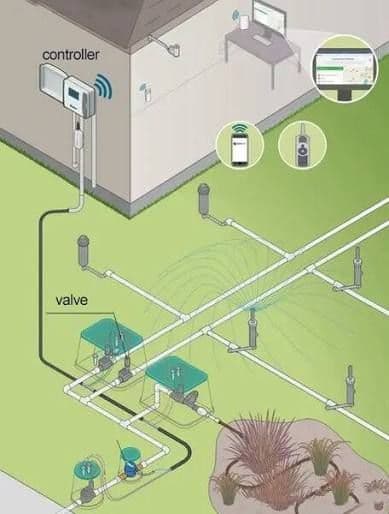
The organizing idea is hydrozoning, grouping plants by how much water they actually need so each irrigation zone can run for what is in it. Thirsty and drought-tolerant planting on one zone guarantees you overwater one and underwater the other, and no amount of controller programming fixes a layout problem. It is the largest efficiency gain available in a design and it costs nothing at the planning stage.
Water-wise does not mean gravel. It means the palette is matched to the water it will realistically get, with drip in beds rather than spray, mulch at a sensible depth to slow evaporation, and turf kept where it is genuinely used rather than run out to every corner. Zeroscaping and xeriscaping fit naturally into that approach where a client wants to go further.
Montana natives and proven water-wise species do a lot of the work: serviceberry, chokecherry, red-osier dogwood, snowberry, ninebark, and Wood's rose among shrubs; blue flax, blanketflower, penstemon, and yarrow in perennial planting; quaking aspen, ponderosa pine, and Rocky Mountain juniper where the scale suits. Montana State University Extension publishes native and fire-resistant plant guidance specific to this state, and it is worth reading before committing to a plan.
Hardscape, and building for freeze-thaw
Patios, walkways, steps, seat walls, and retaining structures are what make a yard usable, and in this climate they live or die on what is underneath them. Freeze-thaw is the mechanism: water gets into a base that holds moisture, freezes, lifts the surface, thaws, and repeats. After enough cycles a patio that was flat in September is uneven by spring.
Preventing that is entirely about the base (depth, compaction, and material that drains rather than traps water) which is the part nobody sees once the job is done. It is also why pavers often outperform poured concrete here: the joints let a surface flex slightly instead of cracking, and an individual paver can be lifted and reset if something settles.
Retaining walls follow the same logic with higher stakes. Saturated backfill is heavy and it expands when it freezes, so drainage behind a wall is not an accessory, clean angular backfill, drain rock, and a perforated pipe with a real outlet are what keep a wall standing. Where wall height or the load above it calls for engineered design, we will say so rather than proceeding as though it does not.
Good to know
Landscaping & Design questions
Common questions about our landscaping & design in Missoula and the Bitterroot Valley.
We begin with a property overview and measurements, then build a detailed cost breakdown. You approve the design (with adjustments as needed), and then we install, sod, plants, shrubs, hardscaping, or water features. Think of it like a blueprint before the build.
Softscaping is the living stuff, plants, shrubs, sod. Hardscaping is the structural bones, pavers, retaining walls, rock beds, water features. Xeriscaping (sometimes called zero-scaping) is low-water landscaping built around drought-tolerant plants, rock, and mulch that thrives on very little irrigation. Most yards blend all three: softscape provides beauty, hardscape provides function and drainage, and xeriscaping cuts water use in Montana's dry summers.
Late spring through early fall is ideal, since roots need warm soil to establish before winter dormancy. Planting too late means roots haven't anchored before the ground freezes, like trying to set concrete in a snowstorm.
Read before you hire
Landscaping & Design guides
Written by our own crew: the questions Montana property owners ask us most.
Local coverage
Landscaping & Design in your area
We run crews across Missoula and the Bitterroot Valley. See what landscaping & design looks like in your town.
More from HJ Property Care
Explore our other services
Ready to transform your outdoor space?
Get a free, no-obligation estimate within 48 hours. Locally owned and ISA-certified.