
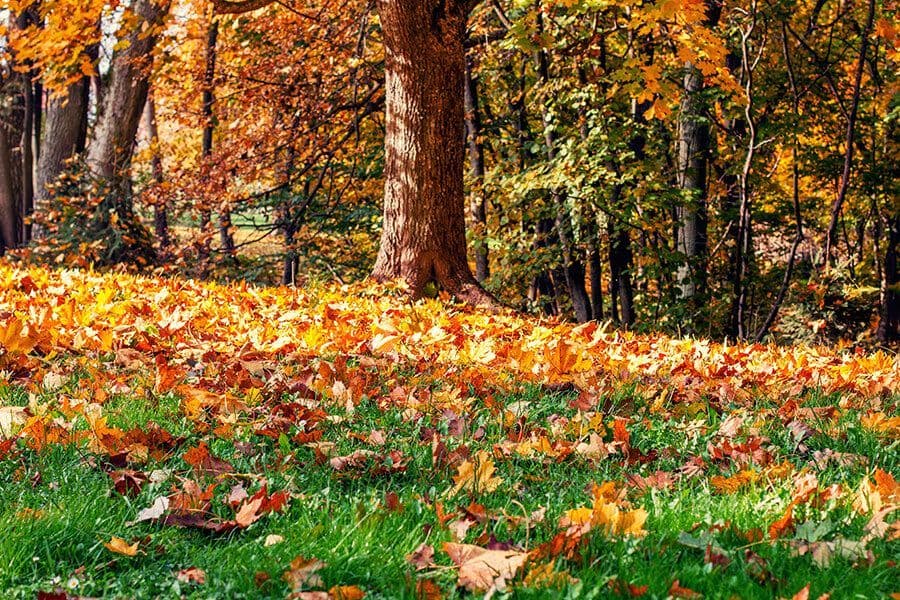
Before the first snow lands on top of it
Leaf and yard debris removal in Missoula & the Bitterroot Valley
Fall leaf and yard debris removal across Missoula and the Bitterroot Valley, timed so the lawn is clear before the first lasting snow arrives.
- Licensed & insured
- ISA-certified
- Free 48-hour estimates
Leaf & Yard Debris Removal
Before the first snow lands on top of it
The window for this is short here, and it is the reason leaf removal is a scheduling problem rather than a gardening one. The leaves come down over a few weeks, the first hard freeze and the first lasting snow are not far behind them, and in some years the snow arrives before the last of the leaves do. Whatever is still on the lawn when that happens stays there until spring.
That matters more than tidiness. A layer of wet leaves compacted under snow blocks light and traps moisture against the crown of the grass all winter, which is the condition snow mold needs, and what emerges at melt is matted grey patches rather than dormant turf waiting to green up. Beds are the same story with the added problem that a heavy mat holds water against the crowns of perennials.
We clear leaves and yard debris across Missoula and the Bitterroot Valley, either as a single pass once the trees are mostly bare or as more than one visit where there are enough mature trees to justify it. On a property with several large cottonwoods or maples, one visit is usually optimistic.
Book leaf removal before the snow arrives.
Request ServiceWhat a leaf and debris visit covers
Scope depends on the property, but a standard fall visit includes:
- Leaf collection and removal from lawn areas
- Clearing landscape beds and around shrub bases
- Debris removal from fence lines, corners, and along foundations
- Clearing walkways, drives, and patio surfaces
- Small fallen branches and general yard debris
- Hauling everything away, rather than piling it on site
When to book, and why one visit is often not enough
The trees on a property do not drop together. Cottonwoods and ashes tend to go early and fast, maples hold on, and oaks can keep leaves well past the point where everything else is bare. On a property with a mix, a single visit timed for the majority means either going too early and repeating the work, or going late enough that the first drop has been sitting wet on the lawn for three weeks.
Where a property has enough mature canopy, two visits usually costs less trouble than one badly timed one: a first pass once the bulk is down, and a final pass at the end that also catches the last debris before winter. On a smaller lot with one or two trees, a single well-timed visit is genuinely enough.
The one date that is not flexible is the end of it. Everything on this list has to happen before the ground freezes hard and before snow arrives to stay, and in western Montana those are not reliably in November. Booking earlier gives the timing somewhere to move; booking late means taking whatever weather is left.
Why leaves get hauled away rather than left
A thin scatter of leaves mulched into a lawn is genuinely good for it, returning organic matter to the soil, and where the volume is light that is a reasonable thing to do. The problem is volume. Under mature trees the quantity is far past what a mower can process into something the turf can absorb, and what you get instead is a chopped wet mat that behaves exactly like an unchopped one.
The same applies to piling. A heap of leaves left in a corner over winter is a wet, compacted mass in spring, and if it is sitting against a fence line, a foundation, or the base of a shrub it holds moisture there all season. It also makes attractive cover for voles, which do their damage under snow where nothing is visible until the melt.
So the material comes off the property. Where a client composts and wants the volume, that is easy to accommodate and worth saying at the point of booking rather than after the trailer is loaded.
What leaf removal sits alongside
Fall work has an order to it, and leaf removal is not the first item. Anything involving seed or planting needs soil still warm enough to work with, so aeration and overseeding happens earlier. The final fertilizer application wants to go down while the grass is still growing. And the irrigation blowout has a hard deadline at the first freeze that nothing else on the list has.
Leaf removal comes after those, because it depends on the trees rather than the calendar, and it has to beat the snow. Pre-winter tree work is easiest once the leaves are down and the structure is visible, so the two often pair naturally on the same property.
If several of these apply, the practical thing is to arrange them together at the start of the season rather than booking each one as it becomes urgent. The full sequence is set out in our guide to fall leaf removal and storm prep.
Good to know
Leaf & Yard Debris Removal questions
Common questions about our leaf & yard debris removal in Missoula and the Bitterroot Valley.
Once the bulk of the leaves are down and before the first lasting snow, which is a narrower gap here than in most places and moves by a couple of weeks year to year. Booking in early autumn rather than waiting until the lawn is covered gives the timing room to move with the weather instead of being dictated by it.
A light scatter is fine and even useful, mulched in by mowing. A thick layer is not: compacted under snow it blocks light and holds moisture against the crown of the grass all winter, which is the condition snow mold needs. What emerges at melt is matted grey patches rather than turf ready to green up, and repairing that costs more than the removal would have.
It depends entirely on how much mature canopy you have and what species. Different trees drop weeks apart, so on a property with several large trees a single visit either goes too early or leaves the first drop sitting wet for weeks. One or two trees is usually a single well-timed visit. We will tell you honestly which case you are.
Beds, fence lines, foundations, corners and hard surfaces are all part of it, and they matter more than the lawn in some ways. Leaves pack into those places and stay wet, which is where you get rot at the base of shrubs and cover for voles working under the snow where nothing is visible until spring.
They are hauled off the property rather than piled somewhere on it, because a pile left over winter is a wet compacted mass in spring that holds moisture wherever it sits. If you compost and want to keep the material, say so when booking and we will leave it where you want it.
Usually it should be. Aeration and overseeding, the last fertilizer application, the irrigation blowout and pre-winter tree work all fall in the same few weeks and have their own deadlines, and arranging them as one conversation is easier than booking each as it becomes urgent. Pre-winter tree work in particular is easier once the leaves are down and the structure is visible.
Read before you hire
Leaf & Yard Debris Removal guides
Written by our own crew: the questions Montana property owners ask us most.
Local coverage
Leaf & Yard Debris Removal in your area
We run crews across Missoula and the Bitterroot Valley. See what leaf & yard debris removal looks like in your town.
More from HJ Property Care
Explore our other services


Ready to transform your outdoor space?
Get a free, no-obligation estimate within 48 hours. Locally owned and ISA-certified.