
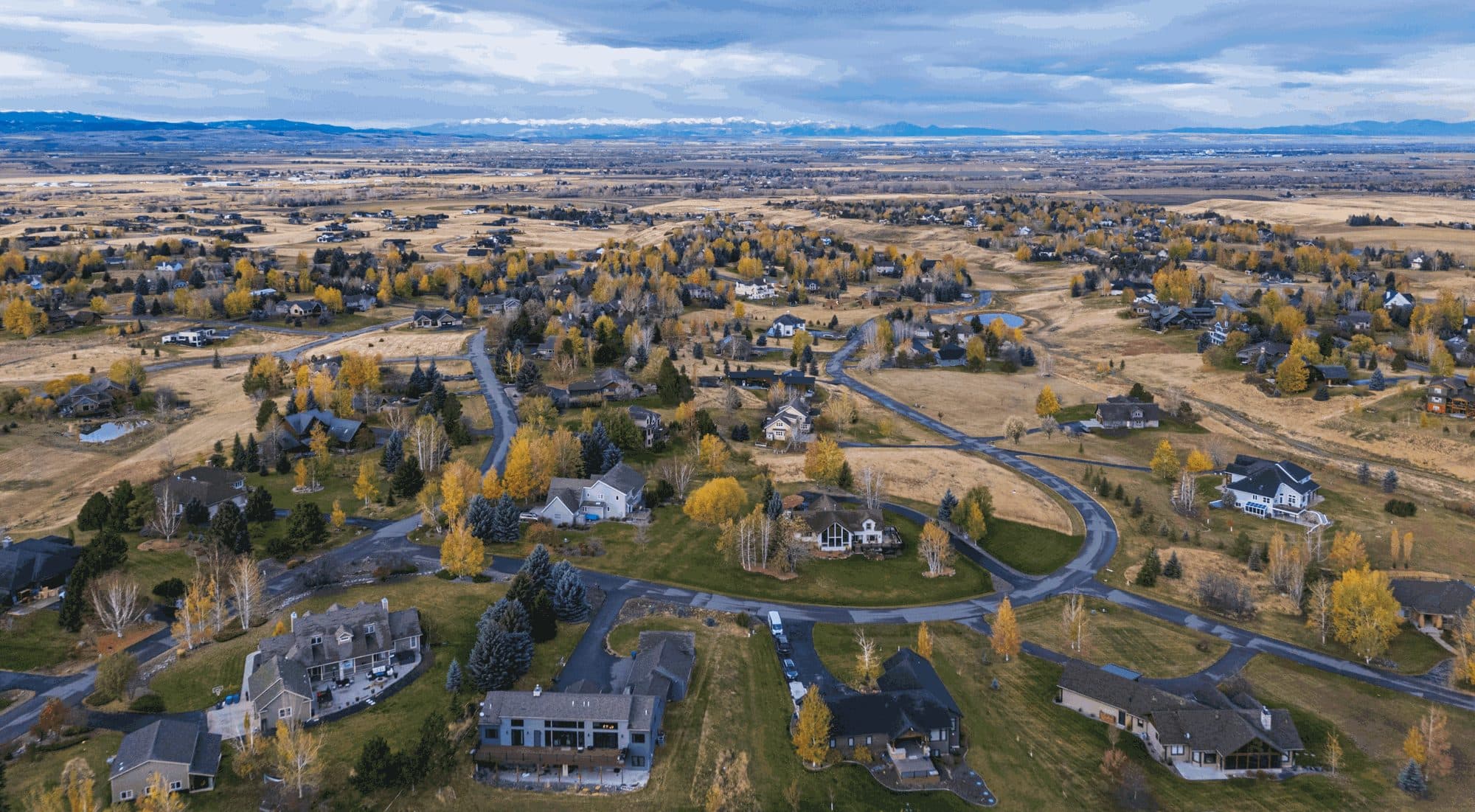
One contract for the whole community
Snow removal for HOAs & property managers in Missoula
Seasonal snow plowing and ice management for HOAs, private roads, and managed properties across Missoula and the Bitterroot Valley, MT.
- Licensed & insured
- ISA-certified
- Free 48-hour estimates
HOA & Property Management Snow Removal
One contract for the whole community
An HOA or a managed property sits awkwardly between the two usual kinds of snow work. It has a homeowner's surfaces (driveways, walks to front doors, a mailbox cluster) at a commercial property's scale, plus things neither of them has: a private road the county does not plow, shared parking where cars never all move at once, and a board or an owner who has to answer to every resident when a morning goes badly.
We take HOA, multi-unit, and property-management accounts on a seasonal basis, with the scope settled before winter and written down: which roads, lots, and walks are ours, the snow depth that triggers a visit, the order areas get cleared in, where the snow goes, and how ice gets handled. The board or manager deals with one contractor and one point of contact, instead of fielding calls about a plow nobody can reach.
We are building our 2026–27 routes now. Managed properties are the accounts that most need to be on a route before the season rather than added during it, because the walk-around that settles storage areas and marks hazards has to happen while the ground is still visible.
Get your community on the 2026–27 route before the first storm.
Request ServiceWhat an HOA or managed-property account covers
Scope is agreed with the board or manager before winter, surface by surface:
- Private and shared roads, including turnarounds and cul-de-sacs
- Parking lots, guest parking, and shared driveways
- Sidewalks, building entrances, steps, and mailbox clusters
- Priority sequencing: emergency access and main routes first
- Ice management where refreeze is a real risk
- Snow storage planned in common areas, with hauling when piles run out of room
- Fall marking of hydrants, curbs, irrigation heads, and drain grates
- 24-hour storm response for events outside the normal cycle
Private roads are the part most communities underestimate
Once a road is private, nobody else is coming. The county plow stops at the public road, and on a lot of Bitterroot and Missoula-area subdivisions that leaves a long internal road, sometimes on a grade, sometimes gravel, that every resident, delivery driver, and emergency vehicle needs open. That makes the road the first priority in the sequence rather than one surface among many: an ambulance that cannot get up it matters more than any walkway being perfect.
Roads need planning that parking lots do not. Snow has to go somewhere along the entire length without burying mailboxes, blocking driveway entrances, or building a wall that narrows the travel lane as the winter goes on. Culverts and ditches have to stay open so melt has somewhere to run in March. Gravel roads are cleared with the blade set slightly high so the surface stays on the road instead of ending up in the ditch, and grades get attention first when ice is forecast.
The practical step that saves the most trouble is walking the road in the fall. Hydrants, culvert ends, road edges, reflectors, and any irrigation or lighting in the common areas get marked while they can still be seen. After the first real snow, nobody driving a plow can tell where a gravel road ends and a ditch begins.
Shared parking, residents, and the cars that never move
The hard part of a multi-unit lot is not the snow; it is the vehicles. Some residents leave early, some work nights, and some cars sit for a week. Plowing around parked cars leaves ridges that freeze into the stalls, so the arrangement should settle how that gets handled: a follow-up pass once spaces open up, set windows when residents are asked to move vehicles, or clearing open areas first and returning. Which of those works depends on the property, and it is much easier to announce to residents in October than in the middle of a storm.
Walks and entrances get their own attention, because on a residential community that is where people actually get hurt: the steps down from a building, the path to the mailboxes, the route from guest parking to a door. These are cleared early in the sequence and are where most of the ice management goes, since shaded entrances and the low spots in front of buildings refreeze every evening that the day gets above freezing.
Storage is the other constraint that tightens as the season goes on. Common-area lawns, the ends of parking rows, and corners out of sightlines are the usual answer, but piles consume parking, sit on irrigation and planting beds, and melt back across paved surfaces where they refreeze. We plan pile locations with the manager up front, and agree the point at which hauling snow off site is better than finding another corner.
What a board or manager should settle before winter
Most of the complaints an HOA board fields in January trace back to something that was never written down in October. The scope should name every surface and who is responsible for it, including the ones that are easy to miss: individual driveways (included, or each owner's own job?), the walk from each driveway to each door, the mailbox cluster, and any trail or common path. The trigger depth, the order areas get cleared in, and how ice is handled belong in the same document.
It also helps to agree how the property is kept informed. Knowing when a pass happened, and what was cleared, makes a resident's question easy to answer and keeps a slip-and-fall claim from turning into a disagreement about whether anyone came. What that reporting looks like is something we set up with each board or manager rather than a one-size template.
Finally, decide how events outside the normal cycle are handled: a storm that keeps going and needs repeat passes, wind that refills the road as fast as it is opened, or a tree that comes down across it under snow load. Our 24-hour storm response covers those, and contracted properties come first during them. Because we are also a tree service, a limb blocking a private road is something the same crew can deal with instead of a second call.
Good to know
HOA & Property Management Snow Removal questions
Common questions about our hoa & property management snow removal in Missoula and the Bitterroot Valley.
Yes. Private and shared roads are usually the top priority on an HOA account, because the county does not plow them and residents and emergency vehicles depend on them. Gravel roads are cleared with the blade set slightly high to keep the surface on the road, and road edges, culverts, and hydrants are marked in the fall so they can be found under snow.
Yes, and that is the arrangement we recommend. One seasonal scope covering every road, lot, walk, and entrance gives the board or manager one contractor and one point of contact, and it means the order areas get cleared in is decided once instead of argued about each storm.
That is up to the association. Some communities include every driveway and the walk to each door, some cover only common roads and parking and leave driveways to each owner, and some let owners opt in individually. We can work with any of those, as long as it is written into the scope so residents know what to expect.
It depends on the property. The options are a follow-up pass once spaces clear, set windows when residents move vehicles, or clearing open areas first and coming back. We agree the approach with the manager before winter so it can be communicated to residents early, which is what actually makes it work.
Yes. Managers with several properties in Missoula or the Bitterroot Valley can put them on one arrangement with a single contact, with each property's scope, priorities, and storage areas set out separately. Routes are being built now for the 2026–27 season.
Yes, and on managed properties it helps. The crew that blows out the irrigation and does the fall cleanup is the one that marks the heads, curbs, and drain grates the plow needs to avoid, so that knowledge carries straight into winter. See our commercial landscaping and grounds maintenance for year-round accounts.
Early fall. Routes are set before the season and fill up, boards often need a meeting to approve a contract, and the walk-around that settles storage and marks hazards can only happen while the ground is visible. Starting the conversation in September or October leaves time for all three.
Read before you hire
HOA & Property Management Snow Removal guides
Written by our own crew: the questions Montana property owners ask us most.
Local coverage
HOA & Property Management Snow Removal in your area
We run crews across Missoula and the Bitterroot Valley. See what hoa & property management snow removal looks like in your town.
More from HJ Property Care
Explore our other services
Ready to transform your outdoor space?
Get a free, no-obligation estimate within 48 hours. Locally owned and ISA-certified.