
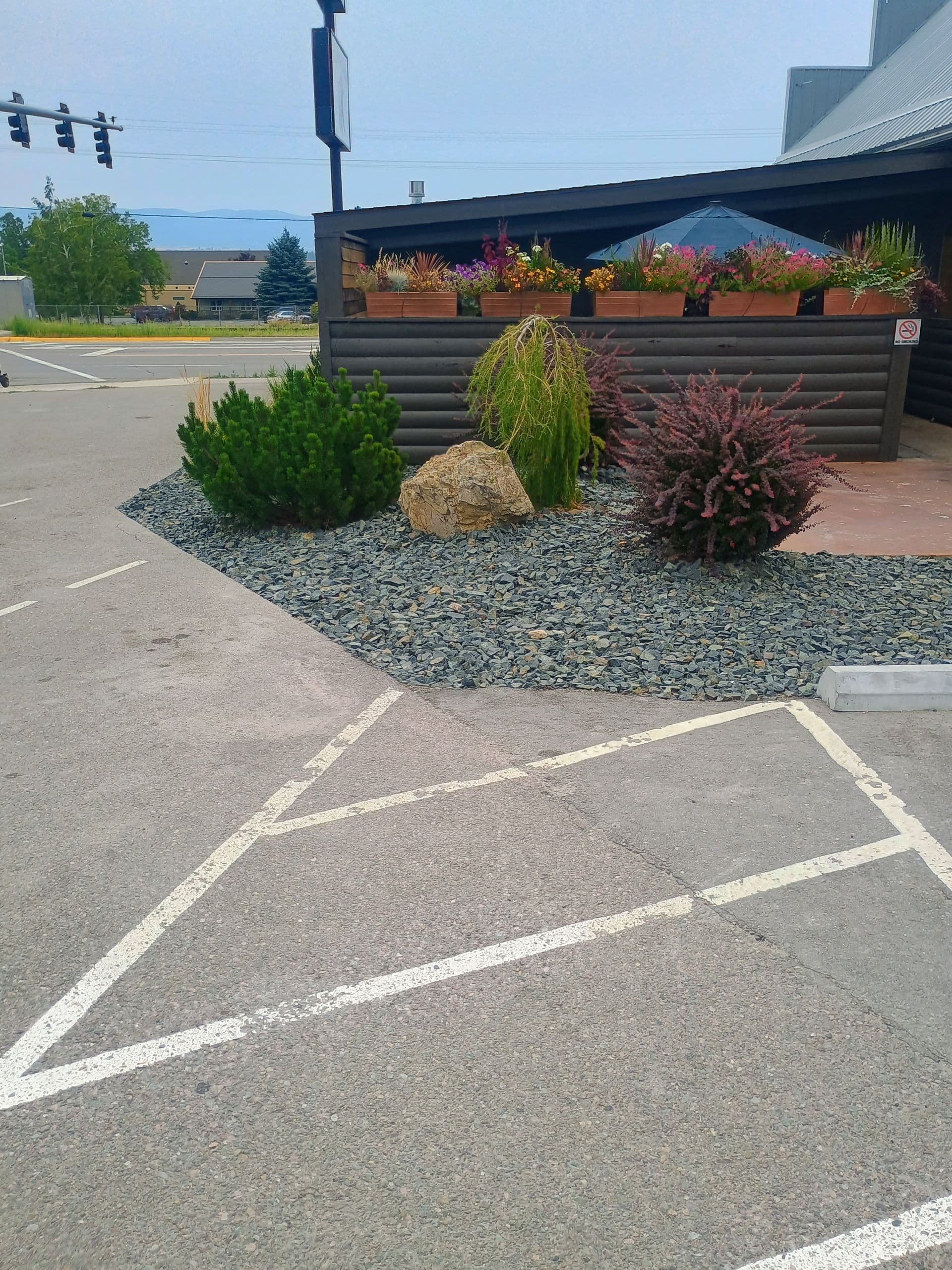
Spring Garden Bed Prep in Montana
Reviewed by Adam Hurlbert, Owner & Founder, 15+ years in landscape & property care
Spring in western Montana tempts people to start too soon. A warm week in April makes the beds look ready, but the soil may still be cold and wet underneath, and digging it then does lasting damage. Good bed prep is mostly about waiting for the right moment and then doing a few things in order: clean up, test, amend, weed, edge, plant, mulch. This guide covers ornamental and perennial beds in Missoula and the Bitterroot, with Montana State University Extension's numbers where it gives them. Lawns have their own routine, covered in our [spring lawn and landscape startup guide](/spring-lawn-landscape-startup-montana).
When can I start working garden beds in Montana?
When the soil crumbles, not when the calendar says so. University of Nebraska Extension's bulb guide gives the simplest test we know: dig and plant when the soil is fairly dry, because wet soil packs tightly and retards growth, and if you can crumble the soil between your fingers, it is dry enough to dig. Squeeze a handful from a few inches down. If it holds a slick ball or smears, leave it another week. Working wet soil squeezes out the pore space plants rely on.
Planting dates are a separate question from working the soil. You can clean up, test and amend well before it is safe to set out tender plants. Our guide to last and first frost dates in Missoula and the Bitterroot covers the planting side, and our guide to planning around a short growing season explains how to use the window you have. Frost timing varies with elevation and site, so your neighbor's schedule may not be yours.
What should I clean up first?
Start with what winter left. Rake out leaves and debris from beds, pull off any winter mulch that has matted over crowns, and remove tree wraps and ties as growth resumes. MSU Extension warns that wraps left on can restrict growth and collect pests and disease. Cut back the perennials you left standing for winter interest: its perennials MontGuide says plants such as sedums can be left over winter and cut back the following spring before new growth begins.
Do not compost anything diseased. MSU's fall checklist points out that composting diseased plant material can keep pathogens alive and reintroduce them. Our spring yard cleanup checklist covers the wider property, and our seasonal cleanup service can handle the hauling if the winter left more than you want to deal with.
Should I test my soil before amending it?
Yes for a new bed, and yes for an old bed that is not thriving. MSU Extension's soil testing MontGuide notes that if plants look healthy, testing is optional, but when they are not thriving, a test may be the only way to find abnormal nutrient levels. It also warns that gardens can have excessive levels from high inputs of compost or fertilizer, and that more is not always better. Its perennials guide says to start any new perennial bed with a test for pH and nutrients.
MSU's sampling directions: collect at least ten samples from the garden and mix them, remove mulch first, take a core 6 inches deep, and submit separate samples if one side of the bed looks or feels different. It says analysis takes about one to two weeks, so allow time before planting, and that soil is ideally sampled in spring. Our guide to soil testing for Montana yards has the details, and our guide to alkaline soil explains why pH matters so much in this region.
How much compost should I add to a new bed?
MSU Extension's perennials MontGuide recommends amending with organic matter at 2 to 4 cubic yards per 1,000 square feet and working the soil 6 to 12 inches deep, adding any nutrients the soil test calls for. By our arithmetic that is roughly two-thirds of an inch to one and a third inches spread over the surface before tilling. It is less than many people expect. University of Nebraska's bulb guide calls for more in a dedicated bulb bed: one part organic matter to four parts soil, such as 3 inches worked in to a depth of 12 inches.
The reason is the same one MSU gives for a yard and garden water budget: organic matter improves how soil holds and moves water. Clay soils take water slowly, and MSU suggests loosening them and adding compost. Sandy soils lose water quickly and benefit from organic material to hold more of it. On cobbly ground, you may be building soil on top rather than amending what is there; our guide to rocky, cobbly ground covers that, and our guide to Bitterroot Valley soils explains what is likely under your yard.
Should I till an established perennial bed?
No. Tilling around established perennials cuts roots and brings up weed seed. For existing beds, MSU's perennials guide says top-dressing with organic matter or broadcasting a general-purpose fertilizer in early spring may be sufficient for most herbaceous ornamentals. Save the digging for new beds or for a bed you are lifting and rebuilding.
Spring is also the time to divide many perennials. MSU says conventional wisdom has spring-blooming plants divided in fall and others in spring, with exceptions such as peonies, Oriental poppies and daylilies, which are best divided in fall. Spring division should happen when the plant has 2 to 4 inches of new growth, and newly divided plants may not flower the first season. Our guide to hardy perennials for Missoula and the Bitterroot covers what to plant.
Where should a new garden bed go?
Follow the sun and the water. MSU's perennials guide says most perennials and biennials do best with at least six hours of sun a day and well-drained soil, and warns against planting in low, wet areas that do not drain well or get much sun. In the spring melt, it is easy to see which parts of the yard hold water, so walk the site then. Our yard drainage guide explains how to read it, and a bed built across a drainage path will stay wet whatever you plant.
Keep the bed clear of the first few feet of wall on a house where the ground slopes the wrong way, and do not pile new soil against siding; our guide to grading away from the foundation explains why. If you are on the wildland edge, choose placement and materials with fire in mind, since the first 5 feet around a house is its own subject. Our guide to Zone 0 covers that.
How do I deal with weeds before planting?
Early, and by hand where you can. MSU's perennials guide says weed control is best done by hand to avoid disturbing plant roots. Weeds are easiest to pull in spring soil that is moist but not wet, and getting the perennial roots of quackgrass, thistle and bindweed before you plant is far easier than after. In a new bed, watering once and letting weeds sprout, then removing them shallowly before planting, thins out the seed bank near the surface.
Avoid deep tilling after that first preparation, since it brings up more seeds. If you use any herbicide, MSU's checklist says to always read and follow label directions. Tough perennial weeds, noxious weeds and lawn edges are where our licensed fertilizer and weed control service can help. Our guide to common lawn weeds in western Montana can help you identify them.
How deep should mulch be on a spring garden bed?
Sources differ, and the difference is worth understanding. MSU's perennials MontGuide describes a 4 to 6 inch layer of organic mulch around perennial plantings. MSU's yard and garden water management MontGuide suggests a 1 to 2 inch layer of mulch or compost over the root area. University of Nebraska suggests 2 to 3 inches for bulb beds. Our read is that part of the difference is material: a fine compost layer stays thin, while coarse bark settles and lets more air through.
A practical approach is 2 to 3 inches of medium or coarse mulch, more where weeds are heavy, always kept back from plant crowns and stems. Hold off until the soil has warmed a little, since mulch keeps cold soil cold. Near a house in fire country, bark is not the right choice for the first few feet; our guide to mulch and wildfire covers alternatives.
What else should be done before planting?
Edge the bed, because a clean line keeps turf from creeping in and makes mowing easier. Our guide to landscape edging options compares what lasts. Then check the water: run drip lines or sprinkler zones before plants go in so you can fix leaks and aim heads while the bed is empty. Our guides to spring sprinkler startup and drip irrigation walk through it.
We do bed refreshes, mulching, planting and full landscaping design across Missoula and the Bitterroot Valley. Our guide to the Montana landscape maintenance calendar shows how spring work fits the rest of the year. This guide is part of our Montana Landscaping, Lawn & Irrigation Guide. Call (406) 215-7319 or request a free estimate and we will take a look at your beds.
Need help?
HJ Property Care & Tree Service is locally owned and ISA-certified. Call for a free estimate.
This article is part of the Montana Landscaping, Lawn & Irrigation Guide, our complete guide for western Montana property owners.
Explore our landscaping & design.
Sources
We cite primary sources: Montana State University Extension, the City of Missoula, and the ISA, so you can verify anything here yourself.
- Perennials & Biennials for Montana Gardens (MontGuide) (Montana State University Extension). Last checked November 2, 2026.
- Home Garden Soil Testing & Fertilizer Guidelines (MontGuide) (Montana State University Extension). Last checked November 2, 2026.
- Yard and Garden Water Management (MontGuide MT198915AG, revised July 2020) (Montana State University Extension). Last checked November 2, 2026.
- Fall Garden Care and Winter Preparation Checklist (Lives and Landscapes, Fall 2021) (Montana State University Extension). Last checked November 2, 2026.
- Spring Flowering Bulbs (G1742) (University of Nebraska-Lincoln Extension). Last checked November 2, 2026.
Ready to transform your outdoor space?
Get a free, no-obligation estimate within 48 hours. Locally owned and ISA-certified.