Best Native and Water-Wise Plants for Bitterroot Valley Landscapes
Native and water-wise plants are the smartest foundation for a Bitterroot Valley landscape because they are already adapted to our cold winters, dry summers, and rocky soils. They reward you with beauty, lower water bills, and far less maintenance.
Why choose native plants for a Bitterroot Valley yard?
Native plants are the best choice because they evolved in western Montana's exact conditions and need less water, fertilizer, and fuss to thrive. Picture a plant that already speaks the local language of zone 4 to 5 winters, dry summers, and gravelly soil; that is what a native gives you. Because they are matched to our climate, natives resist drought and cold better than many imported ornamentals, support local pollinators and wildlife, and often shrug off the temperature swings that stress less-adapted plants. The result is a landscape that looks like it belongs here, because it does.
What does water-wise landscaping actually mean here?
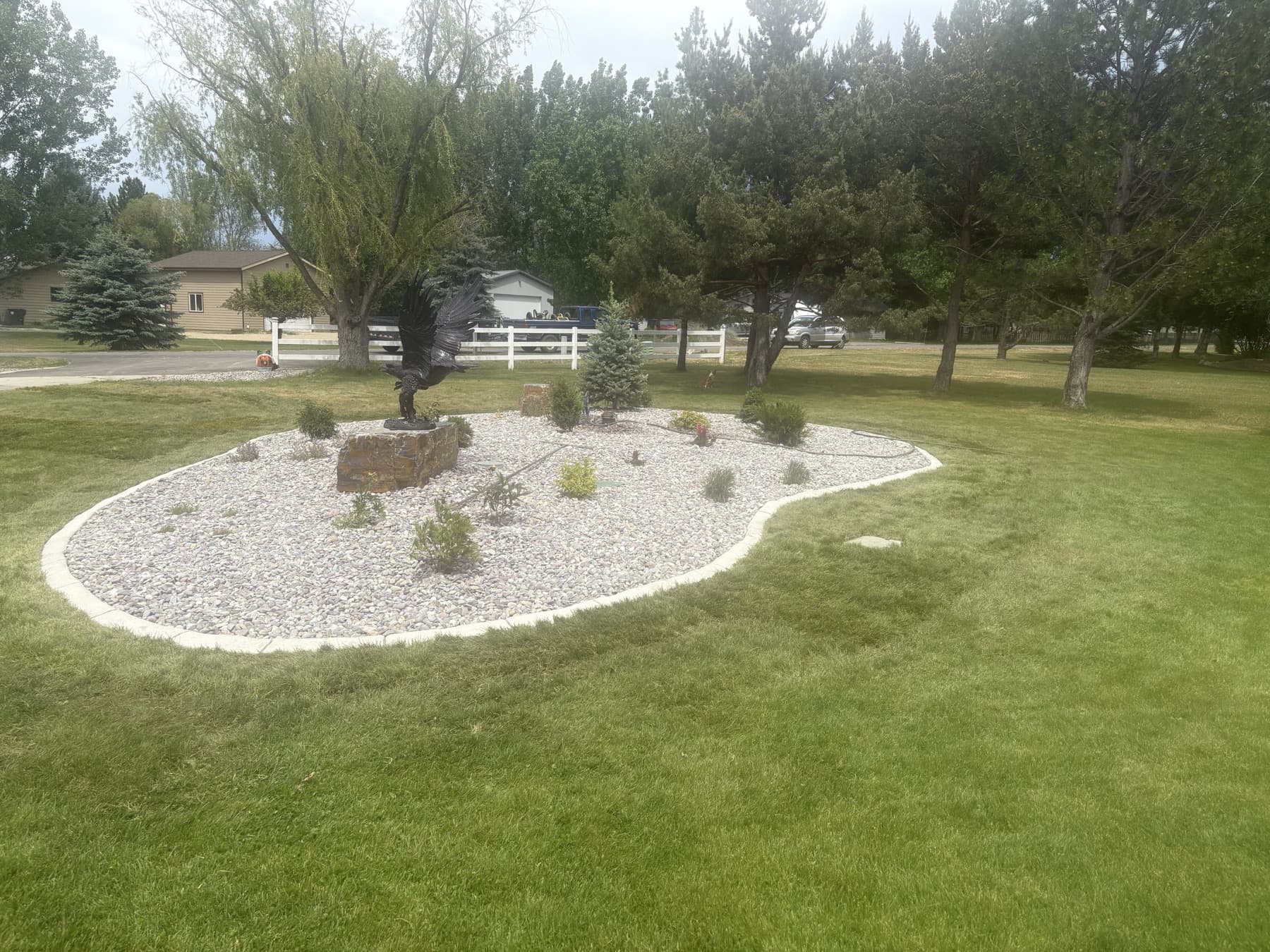
Water-wise landscaping, sometimes called xeriscaping, means designing a yard that thrives on minimal supplemental water once established. In the Bitterroot Valley's dry, warm summers, this approach saves water, reduces your bills, and produces resilient plantings that survive drought restrictions and hot spells. It does not mean a yard of bare rock; it means grouping plants by water needs, improving the soil, mulching to hold moisture, and choosing species that do not demand constant irrigation. A well-designed water-wise landscape can be lush and colorful while using a fraction of the water a thirsty lawn requires.
Which native trees thrive in western Montana?
Several iconic native trees thrive here, including ponderosa pine, Douglas fir, quaking aspen, and blue spruce. Ponderosa pine is a drought-tolerant workhorse with handsome bark and a classic Montana silhouette, while Douglas fir offers dense evergreen structure and wind protection. Quaking aspen brings movement and brilliant gold fall color, though it spreads by suckers and prefers a bit more moisture. Blue spruce adds year-round color and form. Choosing trees already adapted to our soils and winters means stronger establishment and far fewer of the problems that plague mismatched species.
What native shrubs and perennials handle drought and cold?
Many regional natives combine cold-hardiness with genuine drought tolerance, making them ideal for low-water beds. Shrubs adapted to the Northern Rockies, such as serviceberry, chokecherry, and woods' rose, provide flowers, fruit for wildlife, and seasonal color while tolerating lean soils. For perennials and groundcovers, look to hardy wildflowers and grasses native to the region that establish deep roots and survive on natural rainfall once mature. Pairing these with a generous layer of mulch helps retain the limited summer moisture and keeps roots cooler during heat spells.
How do I deal with the Bitterroot's rocky, gravelly soil?
The key is to work with the fast-draining nature of our rocky soil rather than fighting it. Many native and water-wise plants actually prefer this sharp drainage and would rot in heavy, soggy ground. For these plants, amend sparingly and let them adapt to the lean conditions they favor. Where you want richer plantings, incorporate organic matter to improve moisture retention and add mulch to slow evaporation. Understanding your specific soil and microclimate, which can vary widely across the valley's mountain-influenced terrain, is the foundation of a planting plan that succeeds long term.
Do native plantings still need any care to get established?
Yes, even drought-tolerant natives need consistent water and attention during their first year or two while their root systems develop. The phrase gardeners use is sleep, creep, leap: the first year the plant focuses on roots, the second it spreads modestly, and by the third it takes off. Regular deep watering during establishment, proper planting depth, and seasonal mulching set natives up to become the low-maintenance, water-wise performers you want. A well-designed irrigation system makes this establishment phase far easier and protects your investment.
Ready to build a beautiful, low-water landscape suited to our valley? HJ Property Care & Tree Service LLC designs native and water-wise landscapes, with expert planting and irrigation, across the Missoula area and Bitterroot Valley. Call (406) 215-7319 for a free 48-hour estimate.
Native planting works best paired with the structural elements around it, see our hardscaping page for patios, paths, and rock beds designed alongside the planting.
What does 'right plant, right place' mean in practice?
It means matching a plant to the conditions it will actually live in rather than the conditions you would like it to have. Three factors do most of the work: how much sun that spot receives, how much moisture it holds through a season, and what the soil is like below the surface. A species that thrives on a moist north-facing bed will struggle in an exposed south-facing strip twenty feet away.
Most planting failures are placement failures rather than plant failures. Something native to western Montana is adapted to conditions found in western Montana, which is not the same as tolerating every microclimate on your property, particularly the hot, reflective spots next to drives and south walls.
The practical approach is to walk the site across a day and note where sun actually falls, where water collects or runs off, and where wind concentrates. Planning planting around that is what makes a native palette perform rather than merely survive.
How do natives support pollinators and wildlife, and where is that a trade-off?
Native plants support native insects, which in turn support birds, in ways ornamental plantings often do not. Species that flower in sequence through the season give pollinators forage across the whole year rather than a single burst, and seed heads left standing into winter feed birds during the leanest months.
That is a genuine benefit and it comes with an honest trade-off in this area: some of what you attract has hooves. A planting designed to support wildlife will also be found by deer and elk, and pretending otherwise leads to a browsed landscape and a frustrated homeowner.
The workable answer is layered. Use browse-resistant species at the exposed edges of a property, put the most vulnerable planting where it is protected, and protect young trees physically from both browsing and antler rubbing. That gets you the ecological benefit without funding the local deer population.
When are natives not the right answer?
Native planting is a strong default here, but treating it as an absolute rule leads to bad outcomes. A native species that wants moist ground will not thrive on a dry gravel strip simply because it is native, and the plant will not care about the principle behind its placement.
There are also functional situations natives may not serve. A hard-wearing lawn where children play, a specific screening height and density on a property line, or a formal design intention may all be better met by well-chosen adapted non-natives that are not invasive. The important boundary is not native versus non-native; it is non-invasive versus invasive, and Montana maintains a noxious weed list precisely because some introduced species cause real damage.
The most durable approach is usually a mix: natives doing the heavy lifting in beds and naturalised areas, chosen adapted species where a specific function demands it, and nothing on the noxious list anywhere.
Need help?
HJ Property Care & Tree Service is locally owned and ISA-certified. Call for a free estimate.
Explore our landscaping & design.
Sources
We cite primary sources: Montana State University Extension, the City of Missoula, and the ISA, so you can verify anything here yourself.
- Native Plants for Montana's Home Gardens (MontGuide) (Montana State University Extension). Last checked August 20, 2026.
- USDA Plant Hardiness Zone Map (USDA Agricultural Research Service). Last checked August 20, 2026.
- Water conservation guidance and seasonal restrictions (City of Missoula). Last checked August 20, 2026.
Ready to transform your outdoor space?
Get a free, no-obligation estimate within 48 hours. Locally owned and ISA-certified.