
Landscape Edging Options and What Lasts in Montana
Reviewed by Adam Hurlbert, Owner & Founder, 15+ years in landscape & property care
Edging is a small line item that decides how tidy a yard looks for years. It keeps grass out of beds, mulch and rock out of the lawn, and gravel on the path. In a climate where the ground freezes and thaws, it also has to stay put, and a lot of it does not. This guide compares the common materials, explains why edging lifts in winter, and covers the different job an edge restraint does on a paver patio.
What is edging actually for?
University of Illinois Extension's guide to bed edges sums up the goal: properly installed edging should blend into the landscape, minimize hand trimming and help keep mulch inside the bed. Those are bed and lawn jobs, and there are others. A path edge holds gravel in place. A paver edge restraint keeps the whole surface from spreading. Decide which job you need done first, since a product that works for one can fail at another.
We did not find a Montana-specific comparison of these materials, so we rely partly on Illinois guidance. Illinois also has freezing winters, but soils and frost differ, so treat its comments as a guide rather than a local test.
Is a spade-cut edge enough?
Often, yes, and it costs nothing but labor. The same Extension guide says to use a sharp spade to cut an edge, remove the soil and grass to form a small cliff, and notes that an edging area 4 inches deep and wide can easily contain bluegrass. It looks natural and has nothing to heave or rust.
The catch is upkeep. The guide says hand edging is hard work and must be touched up once or twice a year. It also suits lawn beside mulch better than lawn beside loose rock, which spills over a cut edge. If the lawn is Kentucky bluegrass, a common choice covered in Kentucky bluegrass or fescue, expect to keep up with its spreading rhizomes.
How does steel edging hold up?
University of Illinois Extension says metal edging is the longest lasting, and that steel has been around for more than 30 years but is relatively expensive and difficult to install properly. It also says steel can have frost heaving problems in winter, and that it is the best choice where strong side support is needed, such as along driveways.
Steel gives a crisp, thin line that suits modern designs and stands up to a shovel. Use it with proper stakes, set low enough that a mower wheel can ride past it, and keep the top edge rounded or capped, since a bare edge can cut. Where a plow or snow blower will pass, mark the line before winter, as covered in snow stakes and markers.
What about aluminum?
It offers much of the same clean line in a lighter material. The Illinois guide says aluminum edging is easier to work with, but that its silver color can look unnatural in many landscapes. Look for a dark finish if you want it to disappear. Being lighter and softer than steel, it may dent where equipment or a shovel hits it, so it is better along beds than along drives.
Why does plastic edging keep popping out?
Most homeowners have seen it: a black strip riding up out of the lawn by the second spring. The Illinois guide says plastic edging has poor durability and an artificial appearance, and that it is probably the hardest material to install in a way that stays stable. It notes that round-top edging is better than flat because it does not sink as easily, and that a treated wood strip fastened along the bottom can help stabilize flat plastic.
Plastic is the common choice because it is cheap and easy to buy. It can still work on a short, low-stakes bed if it is staked well and installed deep enough. For long runs, or beside a heavily used lawn, it is usually a false saving.
What makes edging heave?
The ground around it moves. The Federal Highway Administration's pavement manual lists three conditions for frost heave: frost-susceptible soil, subfreezing temperatures in the soil and a source of water, and it describes silts as highly frost-susceptible. A lawn edge is often the wettest strip in a yard, because sprinklers and melt meet there, so edging can lift even when nearby ground looks fine.
The Illinois guide says most frost heaving can be stopped by using grooved or lip-style edging, steel anchoring stakes and proper installation. A lip or groove gives frozen soil less to grip on the way up and more to hold on the way down. Check the line every spring once the frost is out, and tap or reset any section that has crept up before you mow over it.
How do stone, brick and pavers work as edging?
They look substantial and can be a good match to a patio. The Illinois guide says stone should be at least 3 inches thick and 4 inches wide to stop grass, and that brick or pavers should be well fired so they are waterproof. That second point matters even more here, since a brick that absorbs water can spall in freeze-thaw. A flush row of pavers also gives a mower wheel a clean track, which removes most hand trimming.
These edges need a base. A row of pavers set directly on soil will heave and drift apart. Set them on compacted gravel, with the same logic described in patio base preparation in frost country. Native stone edges suit informal beds; our guide to landscaping with boulders and native rock covers sourcing.
Is poured concrete curbing worth it?
It is durable and continuous, with no joints for grass to creep through, and it follows curves well. The Illinois guide says continuous concrete edging is poured by special machines, that a sand or concrete base containing reinforcing rods adds durability and strength, and that newer mixes resist cracking with added polyolefin fibers.
Concrete can still crack over time, and a rigid curb is hard to repair invisibly. The National Ready Mixed Concrete Association's guidance is that cracks in concrete cannot be prevented entirely, but can be controlled with planned joints. Ask about joint spacing. De-icer exposure beside walks and drives also matters, as salt damage to plants and concrete explains.
Does timber edging make sense in Montana?
Timber suits a rustic yard, and it is easy to find. The Illinois guide says landscape timbers, ties and treated 2x4s stay in place well and create a nice mowing edge, and warns to avoid old railroad ties coated with materials that are toxic to plants. Wood in wet soil eventually rots, so expect a shorter life than metal or stone.
Wood is also combustible. Near a house in wildfire country, the Firewise USA fact sheet from the National Fire Protection Association recommends crushed stone or gravel instead of flammable mulches within 0 to 5 feet of the house, and the same reasoning makes metal or stone a better edge in that strip. See Zone 0, the first five feet and fire-resistant mulch alternatives.
What edge works for gravel and rock?
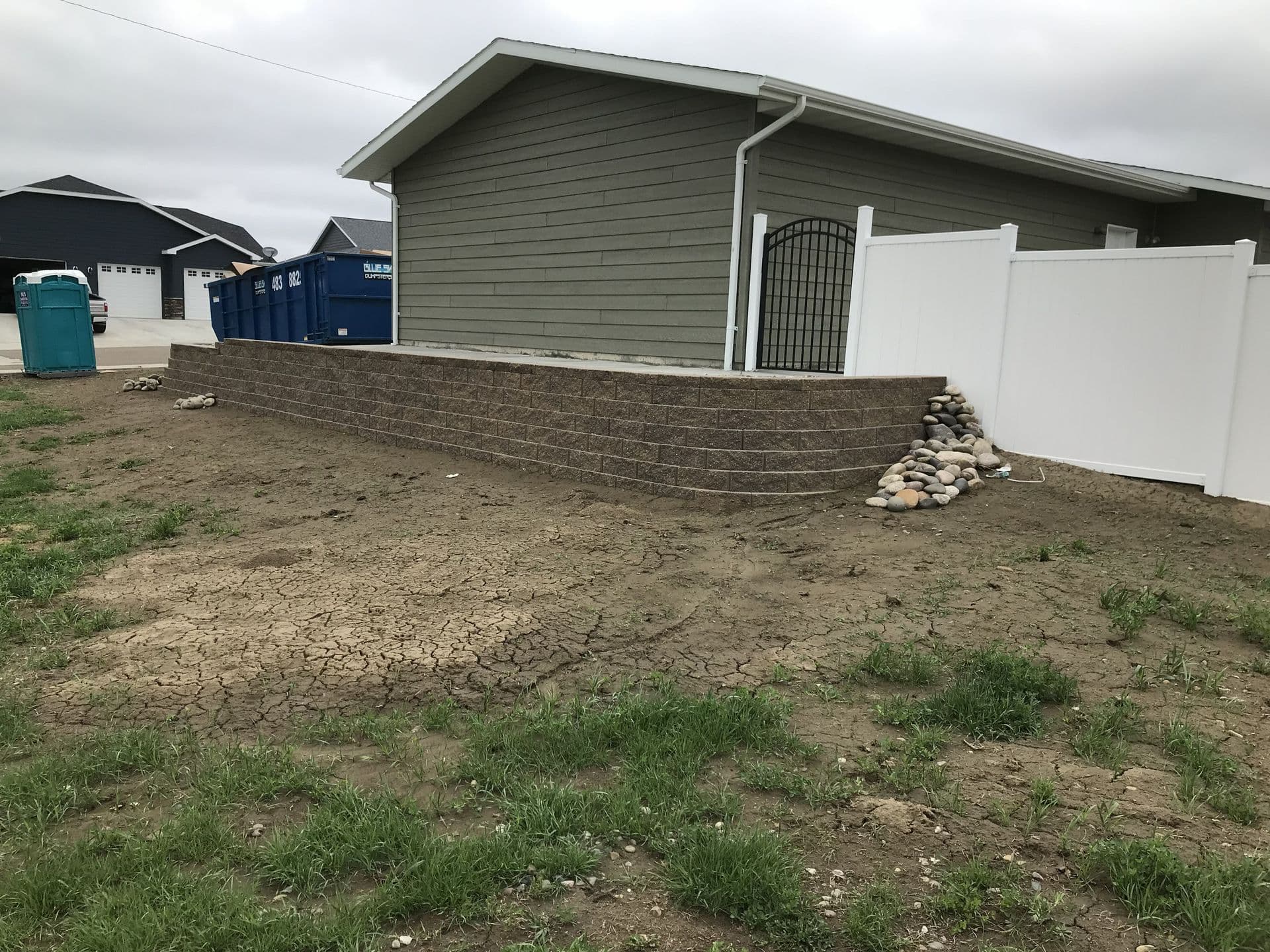
Loose material needs a real barrier, taller than the rock layer. Steel, stone or paver edges work well, and a flush strip of pavers between gravel and lawn keeps stones out of the mower. See walkway and path materials for gravel paths. If you want a bed edge that also holds soil, remember that a tall edge becomes a small wall and needs to be built like one, as covered in retaining wall materials.
What edging does a paver patio need?
A structural one, not a decorative one. The Concrete Masonry & Hardscapes Association says soil is not an acceptable edge restraint for interlocking pavers, that timber is not recommended because it warps and rots, and that restraints should never be installed on top of the bedding sand. It calls for at least 1 inch of vertical restraining surface in contact with the side of the paver, and for the base to extend beyond the restraint at least as far as the base is thick.
So bed edging from a garden center is usually not a substitute for a paver restraint, unless it is made and rated for that purpose. Our guide to pavers or poured concrete covers where this fits in a patio decision.
Getting edging done with HJ
We install bed edges and restraints as part of our hardscaping and landscaping and design work, and we will suggest what suits the job. Any digging should start with Montana 811, which says you can simply dial 811, that it is free, and that private lines may not be located through the system. This guide is part of the Montana Landscaping, Lawn & Irrigation Guide.
Call HJ Property Care & Tree Service at (406) 215-7319 or request a free estimate and we will walk the site with you.
Need help?
HJ Property Care & Tree Service is locally owned and ISA-certified. Call for a free estimate.
This article is part of the Montana Landscaping, Lawn & Irrigation Guide, our complete guide for western Montana property owners.
Explore our landscaping & design.
Sources
We cite primary sources: Montana State University Extension, the City of Missoula, and the ISA, so you can verify anything here yourself.
- Bed Edges (Rhonda Ferree, May 24, 2015) (University of Illinois Extension). Last checked November 2, 2026.
- Edge Restraints for Interlocking Concrete Pavements, Tech Note PAV-TEC-003-22 (Concrete Masonry & Hardscapes Association (CMHA)). Last checked November 2, 2026.
- Geotechnical Aspects of Pavements Reference Manual (NHI-05-037), Section 7.5.6 Frost-Susceptible Soils (Federal Highway Administration). Last checked November 2, 2026.
- CIP 6, Joints in Concrete Slabs on Grade (Concrete in Practice series, hosted by Prairie Materials) (National Ready Mixed Concrete Association (NRMCA)). Last checked November 2, 2026.
- How to Prepare Your Home for Wildfires (Firewise USA fact sheet) (National Fire Protection Association (NFPA)). Last checked November 2, 2026.
- Montana 811: call before you dig (Montana811). Last checked November 2, 2026.
Ready to transform your outdoor space?
Get a free, no-obligation estimate within 48 hours. Locally owned and ISA-certified.