
Questions to ask before hiring for fuel reduction
Reviewed by Justin Johnson, ISA Certified Arborist (RM-8889A)
Two fuel reduction estimates for the same property can describe completely different jobs, and you will not see the difference from the total at the bottom. The way to see it is to ask about the plan. These are the questions we would want answered for our own property, grouped in the order the job happens, with the reason each one matters in Missoula County and the Bitterroot. Checking the company itself (insurance, credentials, licensing) is a separate step, covered in our [guide to choosing a contractor](/how-to-choose-fire-mitigation-contractor).
Where will you start, and why there?
The answer you want starts at the house. NFPA's Firewise checklist says to begin with the house itself, move into the landscaping of the immediate zone from 0 to 5 feet, then go on to the intermediate zone from 5 to 30 feet and the extended zone from 30 to 100 feet. A crew that wants to begin at the back fence because that is where the trees are thickest may be selling tree removal rather than risk reduction. Ask what the crew would do first if the budget ran out halfway.
Have you read my assessment, and does the plan follow it?
If you have a free assessment from a fire department, the county or DNRC, hand it over. Then ask which recommendations the estimate covers, which it does not, and who handles the rest. Vents, roofing and siding go to other trades. If you have no assessment yet, ask whether the contractor would suggest getting one first; the free options are in our assessments guide.
Which trees are coming out, and how will I know before you cut?
Ask to have trees flagged and to walk the flags with the crew lead. Then ask why each one was chosen. Good reasons include dead, dying or diseased, crowded or suppressed, a ladder into a better tree, or touching or overhanging the building. "It's just in the way" is not a reason. Also ask which trees the plan is meant to protect. See defensible space without clearcutting.
What crown spacing are you working to on this slope?
Published numbers vary. NFPA's checklist suggests at least 18 feet between crowns in the intermediate zone, with the distance increasing with the percentage of slope, and says the spacing needed can be significantly greater because of slope, species and site conditions. The contractor should be able to give you a figure for your ground and explain it. If the answer is "we'll open it up," ask for numbers in writing. Our thinning guide gives the background.
How high will you limb the trees, and what about small ones?
The answer should be tree by tree, not a single height. NFPA's checklist says to prune trees up to six to ten feet from the ground and, for shorter trees, not to exceed one third of the overall height. The Colorado State Forest Service guide uses six to ten feet or a third of the total height, whichever is less. Also ask how limbs are cut: our limbing guide explains what good pruning looks like. If anyone suggests topping, read our tree topping guide first.
What about the trees near power lines?
Ask whether they are included, who is qualified to work on them, and who talks to the utility. OSHA's tree care guidance tells crews to keep work at least 10 feet from power lines or call the power company to de-energize and ground the line. If those trees are excluded from the estimate, you need to know before you compare prices. Our tree work near power lines page explains who is responsible.
What happens to the slash, and when?
Ask for the disposal method in writing and whether it is included. Chipped on site? Hauled? Piled to burn? Who applies for the burn permit, who lights the piles, and how long will they sit next to your house? Missoula Public Health's 2026 notice says permits must be activated each day you burn and that burning typically closes in midsummer, while Montana Public Radio reported Ravalli County's fall 2026 burning was allowed day to day through 30 November. So a pile promised for burning may wait a while.
Also ask where the chips go. Missoula County's first priority for a home is a five-foot buffer free of combustible materials, and the Colorado guide says to avoid large accumulations of surface fuels such as logs, branches, slash and mulch in its 5 to 30 foot zone. Chip spread against the house undoes the job. See chipping or hauling and slash disposal options.
What time of year would you do this, and why?
A contractor should have a reason. The Forest Service pine engraver guide hosted by Montana DNRC rates green pine slash created August through November as a low to moderate infestation risk, December through March as high, and April through July as extreme, with treatment timing to match. If the crew plans to cut pine in May or June, ask how it will treat slash as it is created. Our pine engraver guide and fall and winter timing guide explain why.
What equipment will you bring, and what will it do to the ground?
Ask what will drive where, what happens to the lawn, sprinkler lines, septic system and fences, and how soft ground will be handled. Ask how they will get into the back of the property if there is no gate. If a machine will be on site, ask about ruts and who repairs them. Ask too about fire precautions during the work itself: OSHA's chainsaw sheet says to fuel saws at least 10 feet from ignition sources, and you can reasonably ask what water or tools are on hand.
Who is on site, and who decides on the spot?
Ask who runs the job day to day and whether the person who holds the arborist credential will be there or only on the estimate. Ask who you call if you see something you do not like. Decisions about a particular tree come up during the work, and you want them made by someone who knows why the plan says what it says.
How long will it take, and what could change the schedule?
Ask for an estimated number of crew days and a start window. Ask what happens if wind, a burn closure or a fire restriction interrupts the job, and whether the price changes if it takes longer. The stages are laid out in what to expect on a fire mitigation project.
Will this work meet the cost-share program's requirements?
If you are using one, ask directly. Missoula County's page says projects must be completed within one year of the start date, that completion includes cutting and disposal, that the county inspects before paying the contractor directly, and that tree removal needing ropes or aerial lifts and stump grinding are not eligible. So ask the contractor to split those items out, and ask whether the contractor is on the program's approved list. See the cost-share and grants guide.
Would you coordinate with my neighbors?
NFPA's checklist says home ignition zones often overlap adjacent properties and calls working with neighbors extremely important. Ask whether the crew can price adjoining lots together, and whether a shared chipper day would make sense; Missoula County's property page suggests organizing community chip days with neighbors. Ask what happens at the property line: who confirms where it is, and what the crew does about a neighbor's limbs over your side. A contractor should not cut anything past the line without the owner's agreement, and we do not survey, so settle boundaries first. Our neighbor tree guide and Firewise USA guide help with the group version of this.
What will the property look like when you leave?
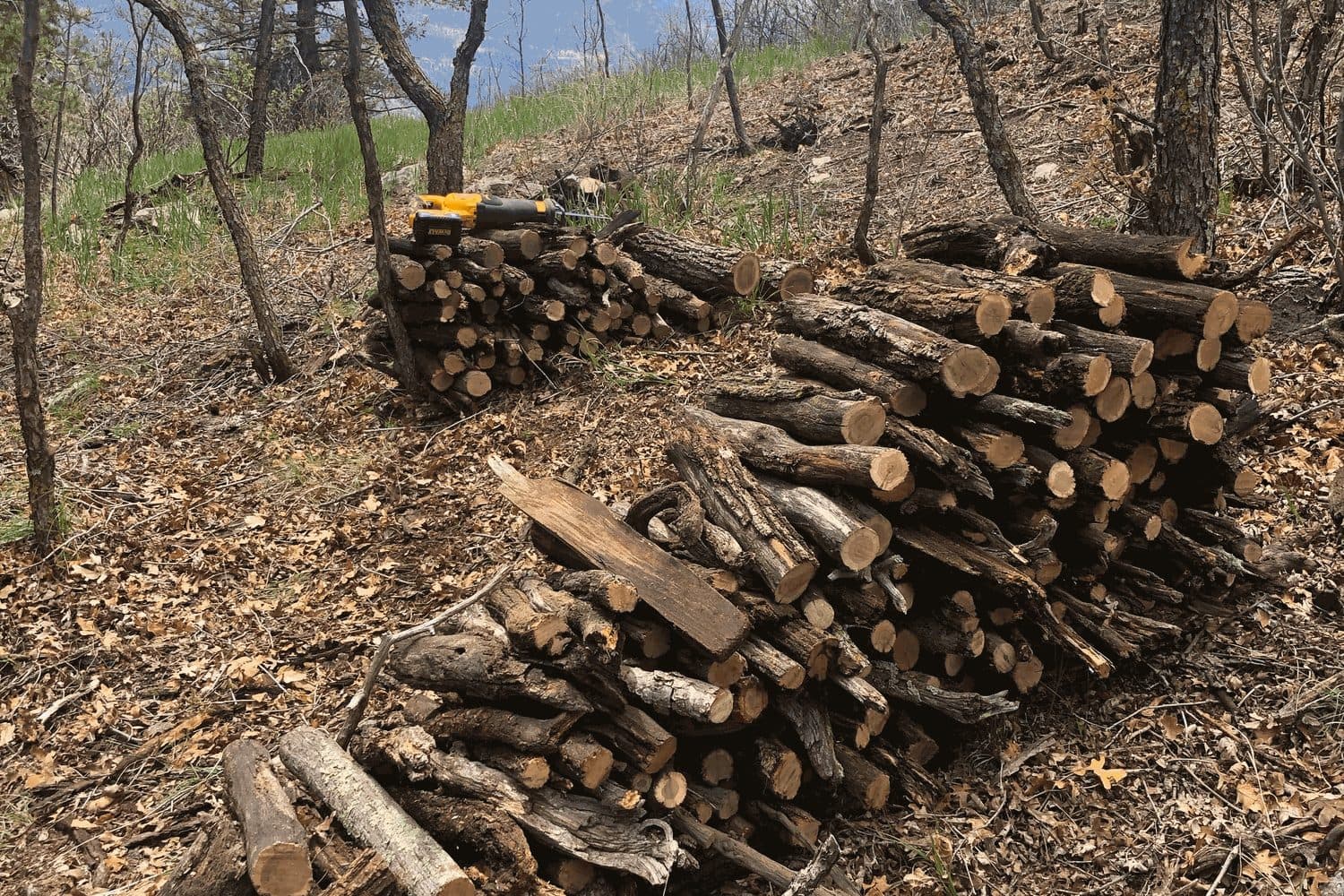
Ask about stump height, whether stumps are ground, whether the roof and gutters are included, how much wood is left and where, and whether it is stacked. If you want firewood, say so; if you do not, make sure it is hauled. A short written description of the finished site prevents most arguments. Our stump grinding page explains that option.
What will I need to maintain, and how often?
A good contractor will tell you the work is not permanent. The Colorado guide says the home ignition zone requires regular, ongoing maintenance, because vegetation keeps growing and dropping material. Ask what regrows first, what you can handle yourself and when the crew would suggest coming back. See our maintenance schedule.
Can I have a written record of what was done?
Ask for a dated invoice describing the work, and take before and after photos from the same spots. That record is useful for your insurer, for a cost-share inspection and for a future buyer. Our guide to documenting mitigation lists what to keep.
This guide is part of our Montana Wildfire & Defensible Space Guide. Ask us every question on this page; our fire mitigation service starts with a walkthrough where you can do exactly that. Call HJ Property Care & Tree Service at (406) 215-7319 or request a free estimate and we will walk the property with you.
Need help?
HJ Property Care & Tree Service is locally owned and ISA-certified. Call for a free estimate.
This article is part of the Montana Wildfire & Defensible Space Guide, our complete guide for western Montana property owners.
Explore our fire mitigation.
Sources
We cite primary sources: Montana State University Extension, the City of Missoula, and the ISA, so you can verify anything here yourself.
- Reducing Wildfire Risks in the Home Ignition Zone (checklist) (National Fire Protection Association (Firewise USA)). Last checked November 2, 2026.
- The Home Ignition Zone: A Guide to Preparing Your Home for Wildfire and Creating Defensible Space (2021) (Colorado State Forest Service). Last checked November 2, 2026.
- Tree Care Work: Know the Hazards (OSHA 3752) (Occupational Safety and Health Administration). Last checked November 2, 2026.
- Working Safely with Chainsaws (fact sheet) (Occupational Safety and Health Administration). Last checked November 2, 2026.
- Prepare your property (Missoula County Office of Emergency Management). Last checked November 2, 2026.
- Wildfire Ready cost-share program (Missoula County Office of Emergency Management). Last checked November 2, 2026.
- Outdoor burning opens March 1 in Missoula County (27 Feb 2026) (Missoula Public Health). Last checked November 2, 2026.
- Open burning ban ends in Ravalli County following rainy weather (10 Sep 2026) (Montana Public Radio). Last checked November 2, 2026.
- Pine engraver (Ips pini) Insect and Disease Management Guide (rev. 2025) (USDA Forest Service Northern and Intermountain Regions, hosted by Montana DNRC). Last checked November 2, 2026.
Ready to transform your outdoor space?
Get a free, no-obligation estimate within 48 hours. Locally owned and ISA-certified.