
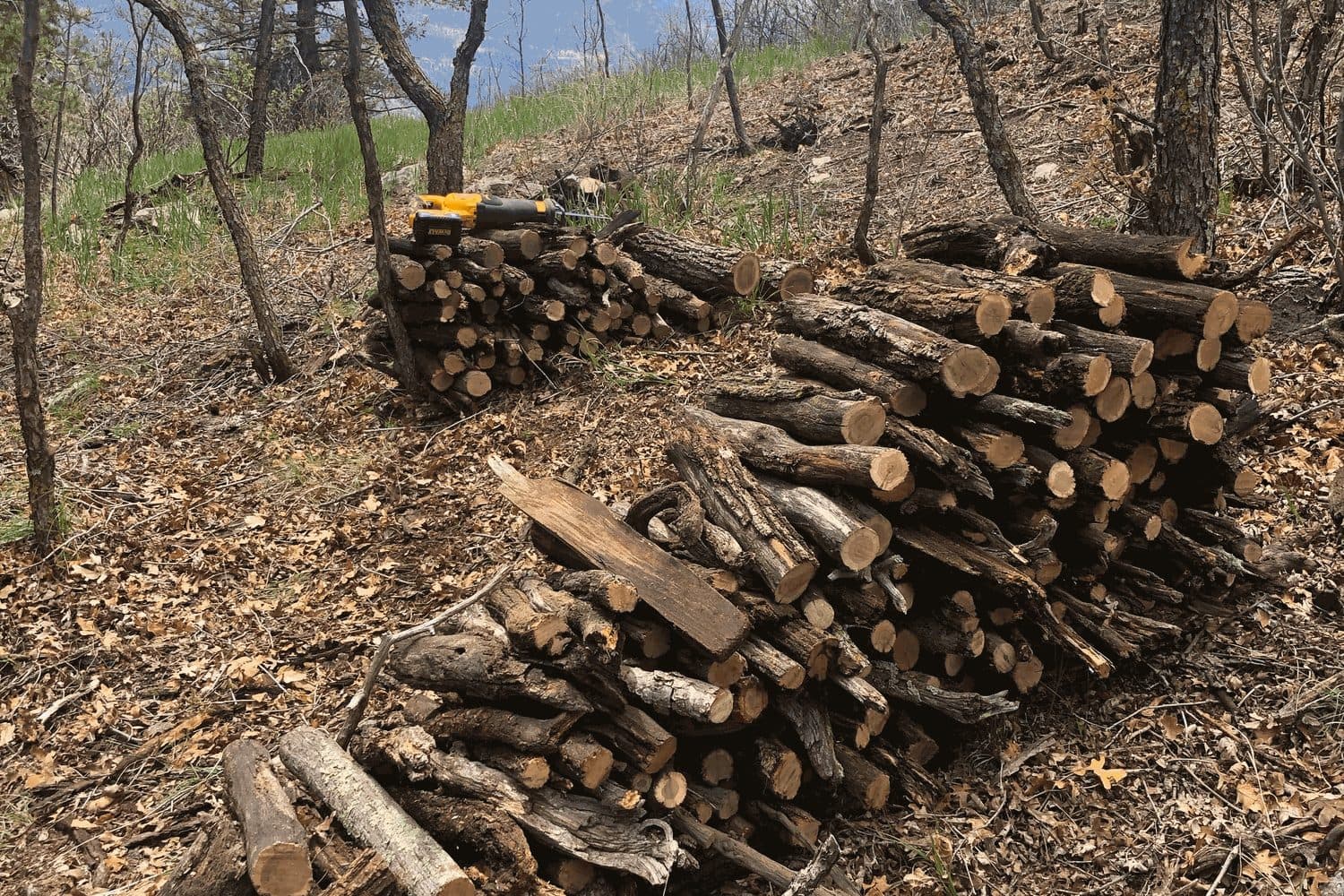
Why Fall and Winter Are the Best Time for Fuel Reduction
Reviewed by Justin Johnson, ISA Certified Arborist (RM-8889A)
Most people think about fire mitigation in July, when the smoke is in the valley and the neighbor's place just got thinned. That is the worst time to do it. In western Montana the best window for thinning, limbing and clearing runs from late summer through winter, and the reasons are specific: pine engraver beetles, how fast slash dries, what frozen ground does for soil, when you are allowed to burn, and the simple fact that cutting in hot, dry weather can start the fire you are trying to prevent. This guide compares the seasons honestly, including the tradeoffs of winter work, so you can decide when to book.
Why not just do the work in summer, when the risk is obvious?
Two reasons: the work itself carries ignition risk in summer, and summer pine slash feeds beetles. Keep Montana Green notes that afternoon heat, lower humidity and stronger winds raise fire risk during clearing work, and that a metal blade striking a rock in dry grass can start a fire. Chainsaws, chippers and mowers all throw heat and sparks, which is why spark arrestors are required on portable gas equipment. Fire restrictions, which the Missoula Fire Department notes change with the season, add another thing to check before work starts.
The beetle problem is less obvious and more expensive. The USDA Forest Service's 2025 pine engraver management guide for the Northern and Intermountain Regions rates green pine slash created from April through July as extreme risk for infestation, because pine engravers are actively seeking fresh material. Beetles that breed in a summer slash pile can move into the standing pines you were trying to protect.
How does the pine engraver beetle decide the calendar?
The Forest Service guide lays out the beetle's year. Overwintering adults become active in late April to early May, once daytime temperatures exceed 63 degrees, and attack slash or winter-damaged trees with moist inner bark. The first generation flies around June, usually less than a quarter mile, and prefers slash but will attack nearby live trees when numbers are high. A second generation typically finishes from late summer to early fall, and warm, dry weather speeds development.
Green pine slash over two inches in diameter is ideal breeding material, according to the guide. The guide's Table 1 sets out the risk by when slash is created. Slash created August through November: low to moderate risk, because it has time to dry before the fall freeze. December through March: high risk, because slash under snow or frozen stays moist enough to attract beetles in spring. April through July: extreme. More on the beetle itself is in our pine engraver and slash guide.
So is fall the single best window?
For pine, late summer and fall are the lowest-risk time to create slash, according to that table. The ground is usually dry and firm, the hottest weeks are over, and slash cut in August, September or October has a chance to dry out before winter. For owners who want the work done and the property clean before the next season, fall also leaves the whole winter and spring to deal with anything left over.
There is a catch: the table still lists April to June 1 as the treatment window for fall slash, and a footnote says risk varies with the temperature and precipitation that control drying. A wet fall can leave slash moist. That is why we prefer to chip or haul pine slash as the job goes rather than leave piles to cure, a choice covered in chipping on site or hauling slash away.
What does winter work offer?
Frozen ground and snow. A USDA Forest Service Watershed, Soil, and Air program note on winter fuels operations records that winter operations conducted over frozen ground and snow have been observed to effectively reduce soil disturbance, including on sensitive soils and on ground already disturbed in the past. On a yard or small acreage that means fewer ruts in the lawn, less compaction around tree roots, and less torn-up ground for weeds to colonize.
Equipment ignition is also much less of a concern on snow-covered ground. Deciduous trees and shrubs are leafless, which makes structure and defects easier to see; the same logic is behind dormant pruning.
What are the downsides of cutting pine in winter?
The beetle table again. The Forest Service guide rates pine slash created from December through March as high risk, because slash covered by moderate to heavy snow, or that stays frozen, holds enough moisture to be suitable habitat in spring. If you cut pine in January, the slash has to be chipped, hauled or burned by about June 1, before the overwintering beetles' offspring emerge.
The guide also cautions that chipping produces volatiles that can attract pine engravers for up to two weeks after chipping, so chipping should be avoided just before and during the spring flight. Winter chipping avoids that problem; chipping in late April does not. And the guide says not to stack fresh pine logs or green pine firewood against live pines you want to keep, which applies to winter firewood piles too.
Does a low-snow winter change anything?
It changes access more than biology. In a winter with little snow on the valley floor, crews can reach more ground and the work looks a lot like late fall, but the slash still falls in the December to March category in the Forest Service table, where frozen slash can stay moist into spring. Deep snow buries stumps, rocks and small material and makes it harder to see what you are leaving behind.
Either way, the frozen ground benefit depends on the ground actually being frozen. A soft, muddy spell in February is not frozen ground, and equipment on lawns and wet soil is better held off until it firms up.
When can slash be burned in fall and winter?
That depends on your county and the month. Missoula County Public Health lists the general outdoor burning season as March 1 to August 31. Its prescribed wildland category, for planned burns on forest or undeveloped land including fire hazard reduction, runs March 1 to November 30. From December 1 to February 28 the county lists only an essential prescribed wildland category, which requires an application explaining why the burn must happen outside the regular season, a winter burning certification exam for the person in charge, and specific authorization before burning.
Ravalli County administers burn permits from March 1 to November 30 and notes that from December 1 to the end of February, the Montana DEQ may issue permits instead. Rules change, so check both pages before planning a burn. Our guides to burning slash piles safely and legally and slash disposal options cover the methods.
Can thinning itself attract beetles?
For a while, yes. The Forest Service guide says thinned, vigorous pine stands are less attractive to pine engravers and better able to resist attack in drought years, but that recently thinned stands may temporarily be more attractive, because soil disturbance and damage to the trees left behind can reduce their vigor. It advises avoiding damage to leave trees and promptly removing badly damaged ones.
The guide also says to avoid creating new slash within a half mile of where slash was produced the previous year, and to clean up storm-damaged pine where possible. On a small lot you may not control the half mile, but it is a good reason to talk to neighbors about timing. Our guide to thinning conifers for defensible space covers how much to take out.
How do the seasons compare side by side?
Late summer to fall: lowest beetle risk for new pine slash under the Forest Service table, firm ground, cooler weather, and the property finished well before next season. The downside is that a hot, dry September can still carry fire risk and restrictions.
Winter: least soil disturbance on frozen or snow-covered ground, lower equipment ignition risk on snow. The downside is that pine slash must be dealt with before the spring flight. Spring: workable, and the right time to finish slash cut over winter, but the window closes fast once temperatures pass the 60s and beetles fly. Summer: best for upkeep like mowing and needle clearing, worst for new pine cutting.
What should you ask a contractor about timing?
Ask what happens to the pine slash and when. A good answer names the method (chipped, hauled or piled for burning) and a date relative to the spring flight. Ask whether they will work on frozen ground or wait for it, how they protect lawns and irrigation lines, and whether they need a burn permit in your name. Our checklist of questions to ask before hiring for fuel reduction goes further.
Also ask how they handle trees with defects or root problems that should come out while the crew is there. A tree health and risk assessment at the start of a fall project catches those.
How we schedule fire mitigation
We plan larger thinning and limbing for fall through early spring and keep summer for upkeep. Slash is chipped on site or hauled away as part of the job rather than left in piles, which takes most of the beetle timing out of the owner's hands. Our fire mitigation service page explains what is included, and the rest of the seasonal picture is in the Montana Wildfire Guide.
If you want the work done before next summer, the time to call is now. Call HJ Property Care & Tree Service at (406) 215-7319 or request a free estimate and we will walk the property with you.
Need help?
HJ Property Care & Tree Service is locally owned and ISA-certified. Call for a free estimate.
This article is part of the Montana Wildfire & Defensible Space Guide, our complete guide for western Montana property owners.
Explore our fire mitigation.
Sources
We cite primary sources: Montana State University Extension, the City of Missoula, and the ISA, so you can verify anything here yourself.
- Pine engraver (Ips pini), Insect and Disease Management Guide, Northern and Intermountain Regions (revised 2025) (USDA Forest Service, Forest Health Protection (hosted by Montana DNRC)). Last checked November 2, 2026.
- Resources: equipment and debris burning fire prevention (Keep Montana Green). Last checked November 2, 2026.
- Wildfire Prevention (City of Missoula, Missoula Fire Department). Last checked November 2, 2026.
- Currents & Profiles, Spring 2007: Development of Science-Based Winter Guidelines for Mechanical and Fuels Treatment Operations (USDA Forest Service, Watershed, Soil, and Air Technology & Development Program). Last checked November 2, 2026.
- Outdoor Burning (Missoula County Public Health). Last checked November 2, 2026.
- Burning Permits (Ravalli County). Last checked November 2, 2026.
Ready to transform your outdoor space?
Get a free, no-obligation estimate within 48 hours. Locally owned and ISA-certified.