
Winter lawn care do's and don'ts for Montana
Reviewed by Adam Hurlbert, Owner & Founder, 15+ years in landscape & property care
A dormant lawn does not need much, which is exactly why people get it wrong. The most useful winter lawn care happens in the last weeks of fall, and the rest is mostly about keeping things off the grass: snow piles, salt, leaves and voles. Here is the short version of what to do and what to leave alone.
This guide is part of our Montana Winter Property Guide. The Montana advice comes from the MSU Extension MontGuide, Maintaining Successful Lawns in Montana. Where we use North Dakota, Illinois, Colorado, Wisconsin or Minnesota extension advice, we say so, because they cover winter details the Montana publication does not.
Should you keep mowing until the snow falls?
Do keep mowing as long as the grass is growing. MSU says to mow turf at recommended heights until it is no longer actively growing. University of Illinois Extension says to keep mowing until the grass is completely dormant in fall, which helps against both voles and snow mold.
For the final cut, both Illinois and North Dakota State University Extension suggest about two inches, because tall grass is more likely to be matted down and infected by snow mold, as NDSU explains. That final height is shorter than the height you want through the summer, which is covered on our lawn care page. Don't drop to two inches in July, and don't scalp the lawn to get there.
Do you need to rake leaves before winter?
Do clear them off. MSU lists raking up leaves among the things to do against gray snow mold, and Illinois names excessive debris such as leaves or straw on the turf as a contributing factor. A thick mat that goes under the snow stays there for months.
If you missed the window, read is it too late for a fall cleanup. Our fall cleanup and leaf removal crews handle this until snow stops the work, and our fall yard cleanup checklist covers the rest of the property.
Should you fertilize a lawn before winter?
Don't overdo it late in the season. MSU says to avoid over-fertilizing in the fall as part of limiting snow mold. Illinois says excessive fast-release nitrogen in early to mid-fall contributes to snow mold, and NDSU's advice for North Dakota is that the final application should take place around Labor Day or early September, because late applications make turf more susceptible to disease.
Once the lawn is dormant, the time has passed. Our lawn fertilizer rates and timing guide has the full Montana calendar, and we offer licensed fertilizer and weed control when the timing is right. If you want to know whether fall weed control is still an option, ask us during the fall rather than waiting until the ground is white.
Can you aerate or overseed in winter?
Don't aerate. MSU says aeration should occur when turf is vigorously growing, in spring and fall, and never when it is dormant. If your lawn needs it, plan for spring: our guide to when to aerate and overseed a Montana lawn and our aeration and overseeding service cover the timing.
The same logic applies to repairs. Patching and reseeding wait until the snow is gone and grass is growing. Trying to do it in a winter thaw is usually wasted effort, because the next freeze comes back before anything has established.
Where should snow go on a lawn?
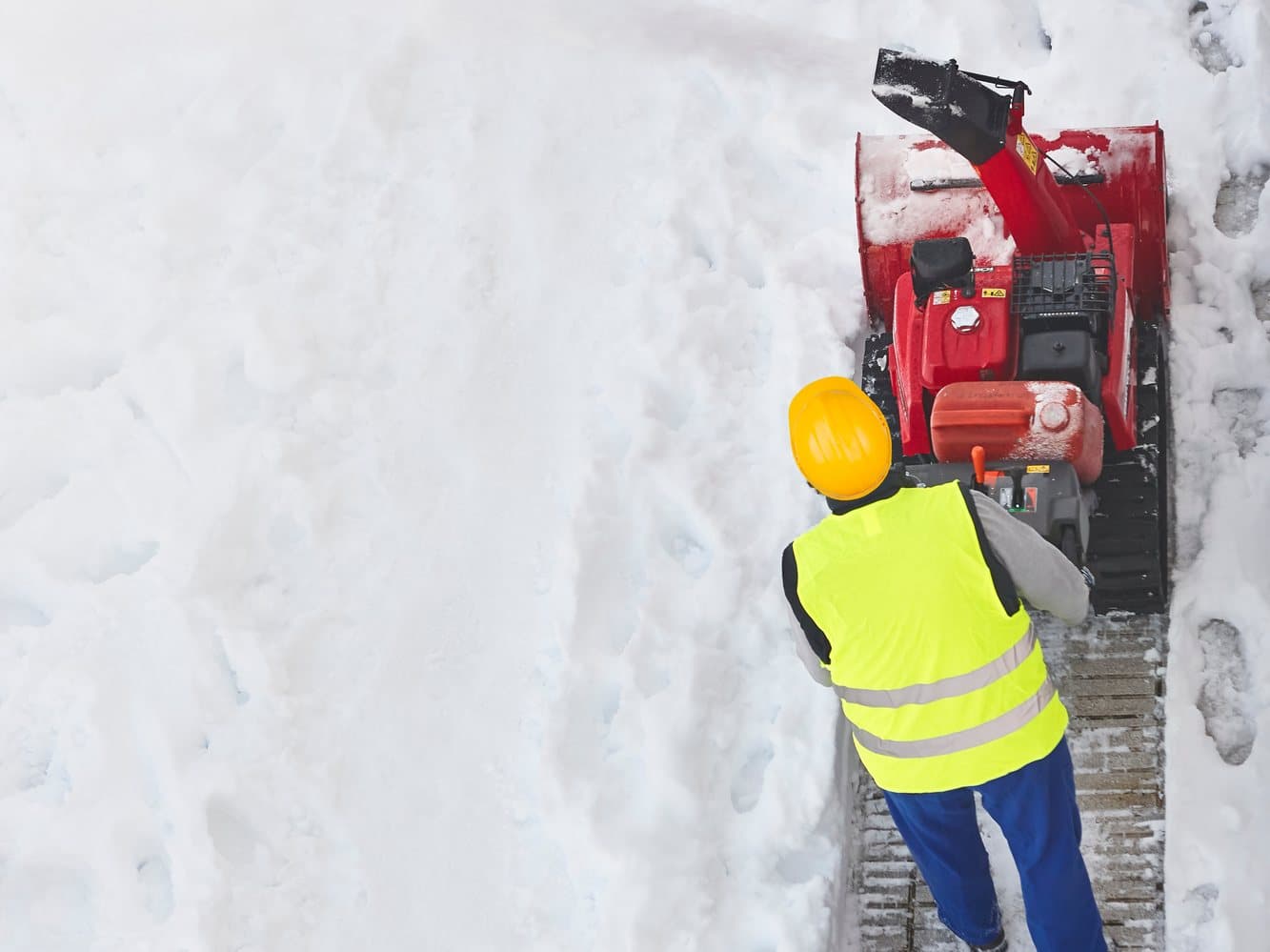
Don't pile it on the lawn if you can avoid it. MSU says to try to avoid piling snow onto the lawn, and Illinois says areas receiving drifting snow or piles of deposited snow are prone to snow mold. Colorado State University Extension also warns that a solid layer of ice lasting more than a month can suffocate grass or cause matting.
Of course, the snow has to go somewhere. Our guide to where to pile snow walks through the options, and a residential snow removal route can be set up with a pile location agreed before the season. Stakes help the operator stay off the turf at the edges, as our guide to snow stakes and markers explains, and what plowing can do to a gravel drive and its edges matters if your lawn meets gravel.
How do you protect a lawn from de-icing salt?
Don't let it reach the grass. University of Minnesota Extension says to clear snow quickly, apply the minimum needed and keep salt off grass and ditches. University of Wisconsin-Madison Extension explains that salt destroys soil structure, reduces water infiltration and aeration, and causes significant damage to turfgrass along roads, driveways and sidewalks. It also says most soil damage occurs within 30 feet of a road.
Wisconsin also recommends plowing first and then salting, and using sand for traction wherever possible. Choose products carefully near lawn edges: see our ice melt guide and sand, salt or both for traction. Wisconsin notes that potassium chloride is less harmful to vegetation than sodium chloride.
Does a lawn need water in winter?
Rarely, but do check in a dry, open winter. MSU's advice for especially dry conditions is that lawns can need water too, when temperatures are above 40 degrees, at midday, with no snow cover. Colorado State says new seeded or sodded lawns are especially vulnerable, and south- or west-facing lawns are more susceptible. It also says warm exposures are prone to late-winter mite damage and that water is the best way to prevent it.
Use a hose rather than recharging your system. A sprinkler system that has been blown out for winter should stay dry until spring, and our winter watering guide has more on how to do this safely. If you have not winterized yet, do that first, and read winterize your sprinkler system.
How do you limit vole damage over winter?
Do take away the cover before snow arrives. MSU's James Knight says the shorter the grass, the harder it is for voles to move around during winter, and that voles travel well under snow if they can move through vegetation or loose material between the soil and the snow. Illinois also suggests cleaning up excessive vegetation near lawns.
If your lawn borders pasture or native grass, Knight suggests cutting as short as possible in a 10-foot swath along that edge. Our guide to vole trails and winter lawn damage has more.
Should you apply fungicide for snow mold?
Generally don't, at least as a home treatment. NDSU says it does not recommend applying fungicide to home lawns to prevent snow mold, noting that the most effective turf fungicides are not legal to apply to residential lawns and that the best timing for fall applications is still being researched. That is North Dakota's position, and it is a good place to start.
Prevention is cultural: thatch management, drainage, air circulation and the mowing and leaf habits above. MSU says a thatch layer thicker than 1/2 inch interferes with the movement of air, water and nutrients. For more on diagnosis, see what happens to a lawn under snow.
Should you rake a lawn with snow mold in spring?
Do rake lightly once it is dry enough. MSU says gray snow mold damage disappears as temperatures warm and grass begins to grow, and that raking can speed recovery. NDSU says to rake matted turf lightly to improve air circulation and to delay raking if the lawn is still muddy. It also notes that snow mold rarely kills turfgrass crowns, and that reseeding can quickly fill in any patches that do die.
Keep in mind that NDSU lists Kentucky bluegrass, perennial ryegrass and tall fescue as quite susceptible, with fine fescue blends containing hard fescue tending to be more resistant. If it comes back every year in the same place, the fix may be a bigger one than a rake. See best lawn grasses for Montana before you reseed.
Should you worry about soil heaving in an open winter?
It is a concern mostly for shallow-rooted plantings. University of Wisconsin-Madison Extension says lack of snow cover and fluctuating temperatures lead to freezing and thawing of the upper soil, and that this heaving action can damage the roots of perennials, bulbs, groundcovers and strawberry plantings. Its answer for those beds is winter mulch, such as evergreen branches or straw. See freeze-thaw cycles and what they do to a property and a low-snow winter for the wider picture.
Keep any winter mulch on beds rather than on the lawn, since Illinois lists straw among the debris that can contribute to snow mold on turf.
What should you plan now for spring?
Do write down what you see. When the snow goes, note matted patches, vole runways, plow scars and salt-burned edges, because those notes decide what the spring work is. Our guides to yard cleanup after the snow melts and spring lawn and landscape startup take it from there.
We offer lawn care and licensed fertilizer and weed control in the growing season, plus snow and 24-hour storm services in the winter, across Missoula and the Bitterroot Valley. Call (406) 215-7319 or request a free estimate.
Need help?
HJ Property Care & Tree Service is locally owned and ISA-certified. Call for a free estimate.
This article is part of the Montana Winter Property Guide, our complete guide for western Montana property owners.
Explore our snow & 24-hour storm services.
Sources
We cite primary sources: Montana State University Extension, the City of Missoula, and the ISA, so you can verify anything here yourself.
- Maintaining Successful Lawns in Montana (MontGuide MT202004AG) (Montana State University Extension). Last checked November 2, 2026.
- Dakota Gardener: Snow Mold Is Affecting Lawns this Spring (North Dakota State University Extension). Last checked November 2, 2026.
- Preventing Winter Damage to Lawns (University of Illinois Extension). Last checked November 2, 2026.
- Fall and Winter Watering (Fact Sheet 7.211) (Colorado State University Extension). Last checked November 2, 2026.
- Winter Watering Trees and Shrubs, by Abi Saeed, MSU Extension Horticulture Specialist (24 Dec 2025) (Big Sandy Mountaineer, Green Acres column). Last checked November 2, 2026.
- Protecting trees and shrubs in winter (University of Minnesota Extension). Last checked November 2, 2026.
- Winter Salt Injury and Salt-tolerant Landscape Plants (University of Wisconsin-Madison Extension). Last checked November 2, 2026.
- Winter Weather and Plants (University of Wisconsin-Madison Extension). Last checked November 2, 2026.
- Non-chemical Control of Voles, by James E. Knight, MSU Extension Wildlife Specialist (retired) (Montana State University Extension). Last checked November 2, 2026.
Ready to transform your outdoor space?
Get a free, no-obligation estimate within 48 hours. Locally owned and ISA-certified.