
The structural bones of a yard
Patios, walkways & hardscape construction in western Montana
Paver patios, walkways, steps, fire pits, and stonework built for Montana's freeze-thaw cycle across Missoula and the Bitterroot Valley, MT.
- Licensed & insured
- ISA-certified
- Free 48-hour estimates
Hardscaping
The structural bones of a yard
Hardscaping is the part of a landscape that does not grow, patios, walkways, steps, seat walls, rock beds, fire pits, and the stonework that ties them together. It is what makes a yard usable, and it is what determines where water goes when the snow melts.
In this climate the enemy is freeze-thaw. Water gets into a poorly built base, freezes, lifts the surface, and thaws again, and after enough cycles a patio that was flat in September is heaved and uneven by spring. Preventing that is not about the pavers you can see; it is about the depth and compaction of the base underneath them and whether the finished surface sheds water away from the house.
We design hardscape alongside the planting and irrigation rather than as a separate job, because the two interact; a patio changes where runoff goes, and a bed layout changes what the hardscape has to work around. That coordination is the difference between a yard that works and a collection of features that fight each other.
Let's design hardscape that survives Montana winters.
Request ServiceHardscape work we take on
Built on properly prepared, compacted bases with drainage designed in:
- Paver and flagstone patios
- Walkways, garden paths, and steps
- Seat walls and low garden walls
- Fire pits and outdoor gathering areas
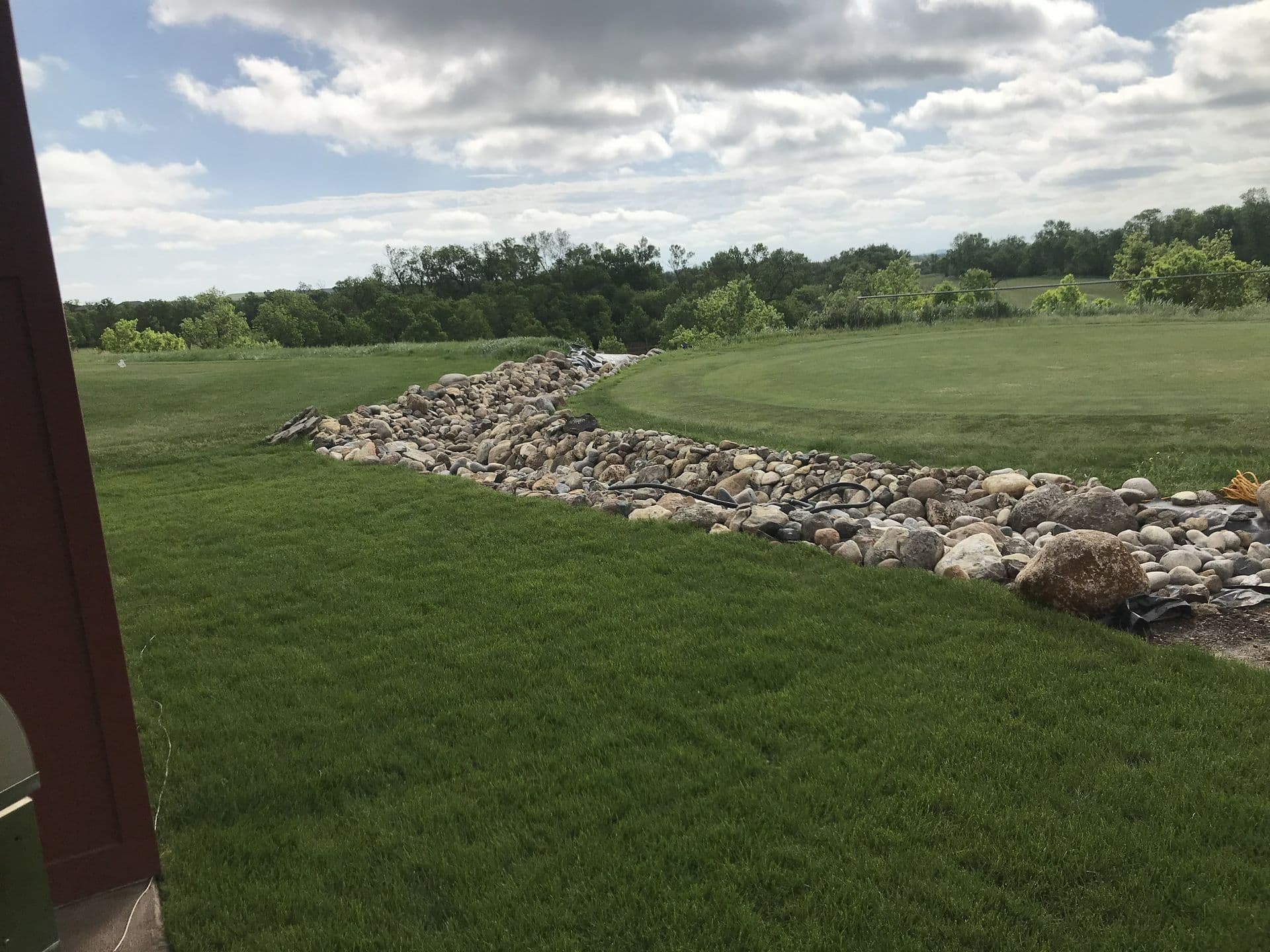
- Rock beds, boulder placement, and dry creek drainage features
- Grading and surface drainage so water moves away from structures
- Hardscape coordinated with planting beds and irrigation zones
Good to know
Hardscaping questions
Common questions about our hardscaping in Missoula and the Bitterroot Valley.
Freeze-thaw acting on a base that holds water. If the base is too shallow, not properly compacted, or made of material that traps moisture, the water in it expands as it freezes and lifts the surface above. Repeat that through a western Montana winter and the settling is uneven. A deep, well-compacted, free-draining base is what prevents it, and it is entirely hidden once the job is done.
Hardscape generally goes in first. It involves heavy material, and often equipment, both of which are hard on finished beds and new plantings. Designing both together and building the hardscape first means the planting and irrigation can be laid out around what is actually there rather than around a plan.
Pavers have a real advantage in a freeze-thaw climate because the joints let the surface flex slightly instead of cracking, and individual pavers can be lifted and reset if something settles. Poured concrete is a monolith: when it cracks, and here it eventually does, the repair is far more visible. Concrete still makes sense in some applications, and we will say which we would use where.
It can, if it is built without thinking about it, a hard surface sheds water that used to soak in. That is why grading and drainage are part of the design rather than an afterthought. Done properly, a patio directs water away from your foundation and can improve on what was there before.
Usually, yes. There is a wide range of paver and natural stone available, and we will bring samples so you can see them against your house and existing materials in daylight rather than choosing from a catalogue photo.
Read before you hire
Hardscaping guides
Written by our own crew: the questions Montana property owners ask us most.
Local coverage
Hardscaping in your area
We run crews across Missoula and the Bitterroot Valley. See what hardscaping looks like in your town.
More from HJ Property Care
Explore our other services

Ready to transform your outdoor space?
Get a free, no-obligation estimate within 48 hours. Locally owned and ISA-certified.