
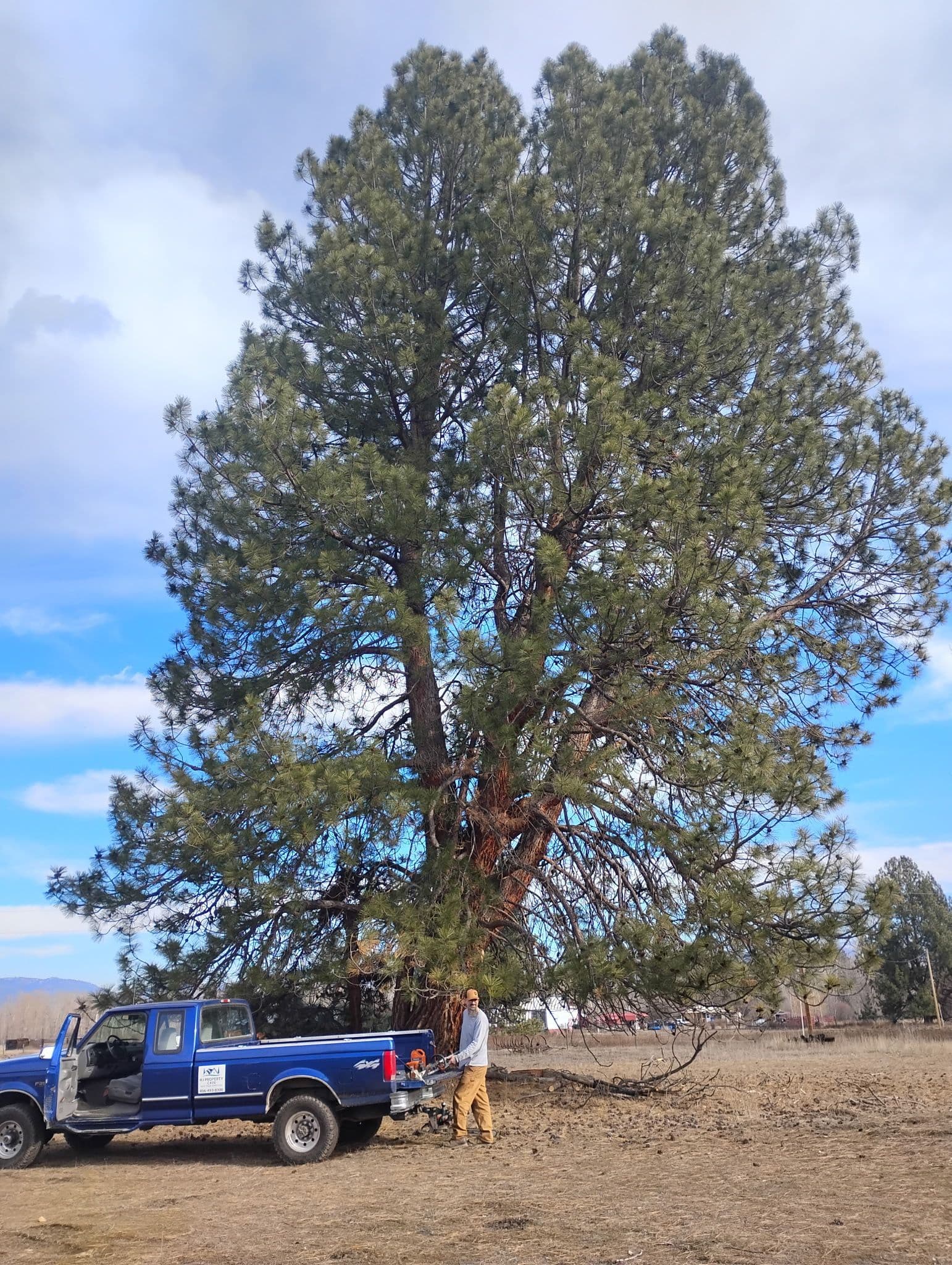
The best pruning window of the year
Dormant season pruning in Missoula & the Bitterroot Valley
Dormant season pruning for trees and shrubs across Missoula and the Bitterroot Valley, done in the window when structure is visible and stress is lowest.
- Licensed & insured
- ISA-certified
- Free 48-hour estimates
Dormant Pruning
The best pruning window of the year
Dormancy is the best pruning window of the year for most deciduous trees and shrubs in this climate, and it is the one most property owners miss because the yard is not on their mind in February. The tree is not actively growing, so a cut costs it far less than the same cut in June. The structure is visible without leaves in the way, so what needs to come off is obvious rather than guessed at. And the ground is often firm, which means equipment can reach a tree without leaving ruts across a lawn.
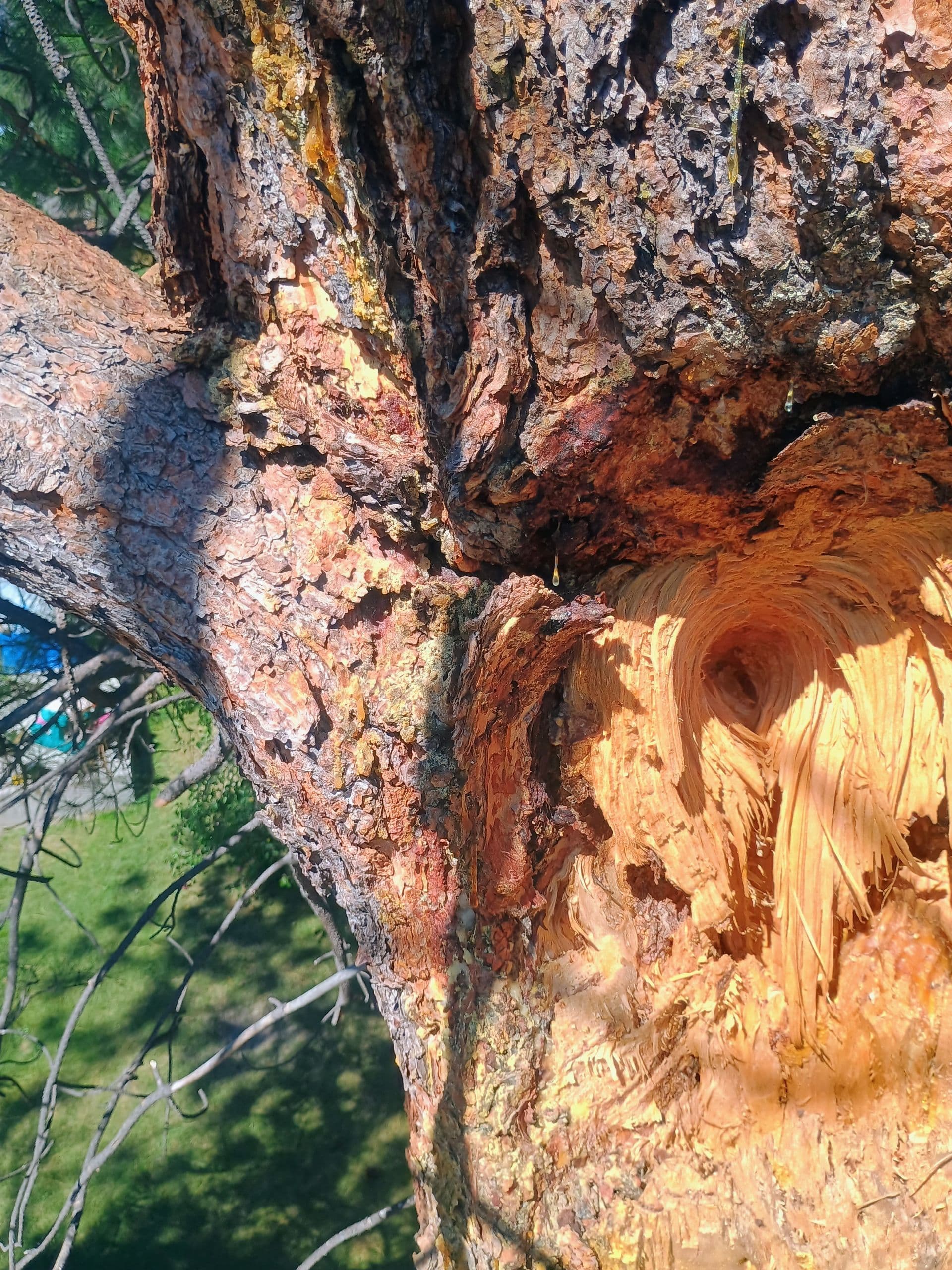
It is also when the defects show. A crack, a cavity, deadwood, a weak union where two stems meet at a narrow angle, a limb that has grown into a roofline: all of it is hidden by foliage for half the year and plain for the other half. A dormant visit is as much an assessment as a pruning job, which is why it pairs naturally with a proper look at the trees on a property.
There is a real deadline at the far end of it. Pruning too late, once buds are swelling and sap is moving, gives up most of the advantage. The window runs from leaf drop through to the start of spring growth, and the work is worth booking inside it rather than whenever it comes to mind.
Book dormant pruning before spring growth starts.
Request ServiceWhat dormant pruning covers
What a visit involves depends on the trees and shrubs on the property:
- Deadwood removal from the canopy
- Structural pruning to correct weak or crossing growth
- Clearance pruning away from roofs, drives, and walkways
- Shrub and ornamental renewal pruning
- Fruit tree pruning for structure and light
- Assessment of defects made visible by leaf drop
- Debris cleared and hauled away
Why dormancy is the right window
Three things line up in winter that do not line up at any other point in the year. A dormant tree is not spending stored energy on active growth, so removing wood costs it less than it would in the middle of a growing season. There is no foliage in the way, so the branch structure, and every defect in it, can actually be read. And most of the insects and fungal pathogens that exploit fresh pruning wounds are inactive in cold weather, which is a real consideration on species vulnerable to disease spread through cuts.
The practical benefits matter just as much on a working property. Frozen ground carries equipment without rutting a lawn, which on a soft site is the difference between doing the work now and waiting for summer. And debris on a bare property is straightforward to gather rather than being dragged out of full beds.
The trade is that not everything belongs in this window. Some species are better pruned at other points in the year, and anything that flowers on old wood will have next season's flowers cut off if it is pruned dormant. Our Montana tree pruning calendar sets out what belongs when, species by species.
What gets cut, and what does not
The order of priorities is the same on almost every tree. Dead, damaged and diseased wood comes out first, and on many properties that is most of the job. Then structural problems: branches crossing and rubbing, a narrow union with bark growing into it rather than wood, competing leaders on a young tree that will be a failure point in twenty years. Then clearance, which is the practical part, moving growth off a roof, a drive, a walkway, or a sightline.
What does not happen is topping. Cutting main stems back to stubs to reduce a tree's height is not pruning; it removes the crown wholesale, forces dense regrowth that is weakly attached at the cut, and leaves large wounds that decay inward. A topped tree is more hazardous a decade later, not less. Where genuine size reduction is needed it is done through selective reduction cuts to appropriately sized lateral branches.
There is also a limit on how much comes off at once. Leaves are how a tree feeds itself, so removing too much of the live crown in a single season forces a stress response instead of healthy growth, and a tree that has been over-thinned often responds with a flush of weak watersprouts. Restraint in one winter is usually better than a decade of correction.
Shrubs, ornamentals and fruit trees
Shrubs are where dormant pruning is most visibly worthwhile and most often done wrong. Many overgrown shrubs respond well to renewal pruning, taking the oldest stems out at the base over a few seasons so new growth comes from the bottom rather than shearing the outside into a shape, which produces a dense outer shell and a dead, bare interior. Once a shrub has been sheared for years, getting it back is a multi-season project rather than an afternoon.
The flowering question decides timing. Anything that flowers on wood grown the previous year is carrying next spring's flower buds through the winter, and pruning it dormant removes them. Those are better pruned right after they flower. Things that flower on new growth can be pruned in the dormant window without losing anything.
Fruit trees are their own discipline, pruned for light and air through the centre and for fruit within reach rather than for appearance, and late in the dormant window rather than early. If a property has fruit trees that have not been touched for several years, that is worth flagging when booking, because it is a staged job rather than a single visit.
Good to know
Dormant Pruning questions
Common questions about our dormant pruning in Missoula and the Bitterroot Valley.
From leaf drop through to the point where buds begin swelling and sap starts moving in spring. Late winter is generally the sweet spot: fully dormant, but close enough to spring that wounds begin closing as growth resumes. Pruning once buds are breaking gives up most of the advantage, so it is worth booking inside the window rather than at the end of it.
For most deciduous trees and shrubs here, yes, and it is easier on the plant than pruning in active growth. The tree is not spending stored energy, the pathogens and insects that exploit fresh wounds are largely inactive, and the structure is visible. The species that are exceptions are the ones our pruning calendar flags.
Better than with them. Leaves hide exactly what matters: cracks, cavities, deadwood, crossing branches, and weak unions where two stems meet at a narrow angle with bark growing into the join. A dormant visit is partly an assessment for that reason, and if something more serious turns up we would rather find it in February than after it fails in a storm.
It depends on the shrub. Anything that flowers on the previous year's wood is carrying its buds through winter, so pruning it now removes this coming season's flowers; those are pruned right after they finish flowering instead. Shrubs that flower on new growth can be pruned dormant with nothing lost. Tell us what you have and we will sort them.
No. Topping cuts main stems back to stubs, which removes the crown wholesale, forces weakly attached regrowth at the cut, and opens large wounds that decay inward, leaving a more hazardous tree a decade later. Where a tree genuinely needs to be smaller, that is done with selective reduction cuts back to appropriately sized laterals, and sometimes the honest answer is that the tree is in the wrong place.
Less than most people expect. Leaves are how a tree feeds itself, so taking too much of the live crown at once forces a stress response rather than healthy growth, often a flush of weak watersprouts. A neglected tree is usually brought back over more than one season, and doing it properly across a few winters produces a better tree than doing it all at once.
Read before you hire
Dormant Pruning guides
Written by our own crew: the questions Montana property owners ask us most.
Local coverage
Dormant Pruning in your area
We run crews across Missoula and the Bitterroot Valley. See what dormant pruning looks like in your town.
More from HJ Property Care
Explore our other services

Ready to transform your outdoor space?
Get a free, no-obligation estimate within 48 hours. Locally owned and ISA-certified.