
Best Trees to Plant in Western Montana
A tree is a fifty-year decision made in an afternoon at the nursery. In Missoula and the Bitterroot, the trees that last are the ones matched to a Zone 5b winter, a dry summer, alkaline and often gravelly soil, and the actual space available once the tree is full grown. The eleven below are drawn largely from the City of Missoula's approved street tree list, which is a good filter even for trees that will never go near a street.
What should you check before choosing a tree?
Start with hardiness. Missoula, Florence, Stevensville, Corvallis, Victor and Hamilton are all Zone 5b on the 2023 USDA map, meaning an average coldest night of 10 to 15 degrees below zero. Then check mature size against the space: overhead lines, the house, the neighbor's lot line and the septic field. Then water: a tree that needs steady moisture will struggle on a dry Bitterroot bench without irrigation. Sizes below come from Missoula's 2026 approved street tree list; hardiness ranges come from Utah State University's TreeBrowser.
1. Bur oak
A very large, long-lived oak, 70 to 80 feet tall and as wide, that the city describes as tolerant of most urban conditions. Hardy to Zone 2 and rated high for drought tolerance once established. The catch: it grows slowly, drops acorns every year, and needs developmental pruning while young to set a good structure. Plant it where it has room for a century.
2. Common hackberry
A tough 40 to 60 foot shade tree that tolerates drought and alkaline soil, both common here. The city lists the 'Prairie Pride' cultivar. The catch: the city lists it as susceptible to nipple gall, powdery mildew and leaf spots, and its roots are aggressive, so keep it away from paving and small planting pits.
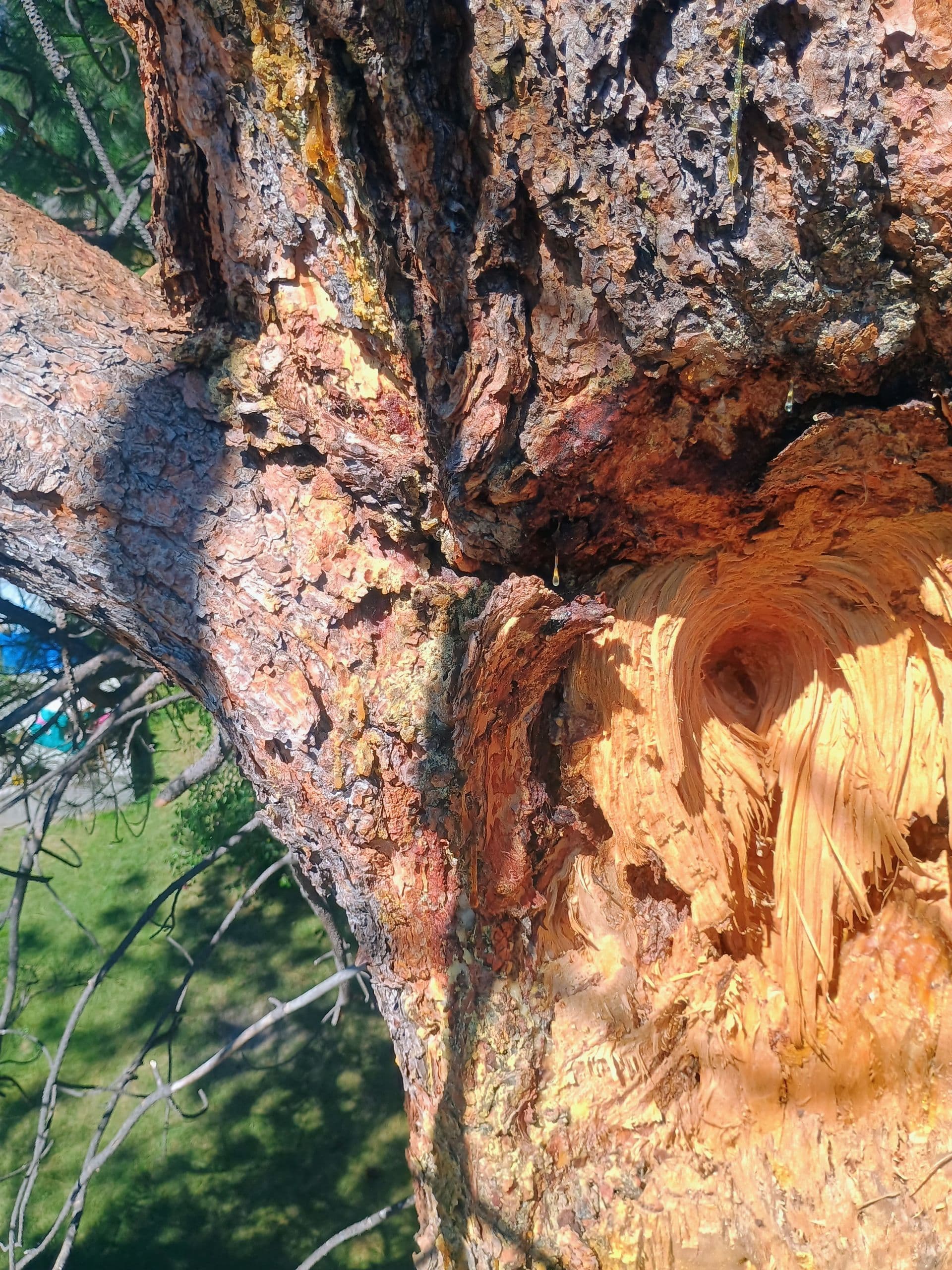
3. Ponderosa pine
Montana's state tree and a drought-tolerant native, 60 to 100 feet tall. It wants deep, well-drained soil and full sun. The catch: stressed ponderosas attract bark beetles, so water through dry spells, and on wildfire-prone lots, place it with defensible space in mind. See our mountain pine beetle guide.
4. Douglas-fir
A native conifer, 70 to 100 feet tall, that Missoula lists as drought tolerant and that MSU Extension rates highly deer resistant. The catch: it does not tolerate wet soil, so avoid low spots and heavily irrigated lawns, and give it space; this is not a small-yard tree.
5. Western larch
A native deciduous conifer whose needles turn gold and drop in fall, 90 to 120 feet at maturity and very cold tolerant. The catch: the city's own note is to plant it only where there is space, and it dislikes wet soil.
6. Kentucky coffeetree 'Espresso'
A vase-shaped shade tree, 45 to 55 feet, cold tolerant and rated high for drought tolerance. 'Espresso' is a seedless cultivar, so there are no pods to clean up. The catch: the wood can be brittle, so it needs good structural pruning early.
7. Thornless honeylocust
A fast-growing tree with light, filtered shade that lets lawn grow underneath, 30 to 70 feet depending on cultivar, and very salt tolerant, which helps near plowed drives. The catch: pod gall midge; the city notes 'Skyline' has the best resistance. Buy a named thornless cultivar.
8. Rocky Mountain Glow maple
A selection of the native bigtooth maple, about 30 feet tall, with reddish-orange fall color and better tolerance of alkaline soil than many introduced maples. Drought tolerant once established. The catch: it grows slowly.
9. Tatarian maple
A small tree, 15 to 25 feet, that suits smaller yards and prefers drier rooting conditions; it is somewhat drought tolerant once established. The catch: it will not give you big shade.
10. Japanese tree lilac
A 20 to 25 foot tree with creamy flowers in early summer, small enough for spots near overhead lines. 'Ivory Silk' is the common cultivar. The catch: the city notes it has many insect pests and does not tolerate salt, so keep it away from plowed edges.
11. Saskatoon serviceberry
A native multi-stem small tree, about 15 feet, with white spring flowers, edible berries and good drought tolerance. The catch: the berries bring birds, and its size limits it to accent use.
Should you still plant ash in Montana?
Not as a new planting. Emerald ash borer had not been detected in Montana as of MSU Extension's summer 2026 update, but it is established in the Dakotas and Colorado, Montana has quarantined untreated ash nursery stock and firewood since 2021, and state officials describe its arrival as a matter of when. Missoula's 2026 approved street tree list includes no true ash. Mountain ash is not a true ash and is not affected. If you already have a healthy ash, there is no reason to remove it now; just avoid adding more.
What about elms?
Only disease-resistant selections. Dutch elm disease has been documented in urban areas across Montana, and the elms on Missoula's list, such as 'Valley Forge', 'Accolade' and 'Sapporo Autumn Gold', are resistant cultivars chosen for that reason.
How do you get a new tree through its first years?
Water is what decides it. The City of Missoula's guidance is deep watering within the dripline through the growing season, a 2 to 4 inch layer of mulch kept a few inches off the trunk, and a simple check: a screwdriver should push 6 to 8 inches into moist soil. Plant with the root flare at grade, not buried. Planting a boulevard tree in Missoula also needs a permit and a species from the approved list; see our Missoula tree permits guide.
If you want help choosing, placing and planting trees, our landscaping team and arborist can plan it together. For established trees, see our tree services, or compare local arborists in our lists of the best tree services in Missoula and the Bitterroot Valley.
Need help?
HJ Property Care & Tree Service is locally owned and ISA-certified. Call for a free estimate.
Explore our tree services.
Sources
We cite primary sources: Montana State University Extension, the City of Missoula, and the ISA, so you can verify anything here yourself.
- Approved Street Trees List, 2026 (City of Missoula). Last checked September 22, 2026.
- USDA Plant Hardiness Zone Map (2023) (USDA Agricultural Research Service). Last checked September 22, 2026.
- Emerald Ash Borer update, Lives & Landscapes (Summer 2026) (Montana State University Extension). Last checked September 22, 2026.
- How Much Water Do My Trees Need? (City of Missoula Urban Forestry). Last checked September 22, 2026.
- TreeBrowser species catalog (Utah State University Extension). Last checked September 22, 2026.
Ready to transform your outdoor space?
Get a free, no-obligation estimate within 48 hours. Locally owned and ISA-certified.