
Mountain Pine Beetle in Montana: ID, Prevention, and Treatment
Mountain pine beetle is a native insect that can kill healthy pines across western Montana, and early detection is your best defense. Knowing the warning signs lets you act before an infestation spreads.
What is the mountain pine beetle?
The mountain pine beetle is a small, native bark beetle about the size of a grain of rice that bores into pine trees to lay eggs beneath the bark. Although it is a natural part of Montana forests, periodic outbreaks can kill vast numbers of trees. The beetle itself does limited damage, but it carries blue-stain fungi that block the tree's water-conducting tissue. Together, the tunneling larvae and the fungus essentially girdle the tree from the inside, cutting off the flow of water and nutrients until the pine dies.
Which Montana trees are most at risk?
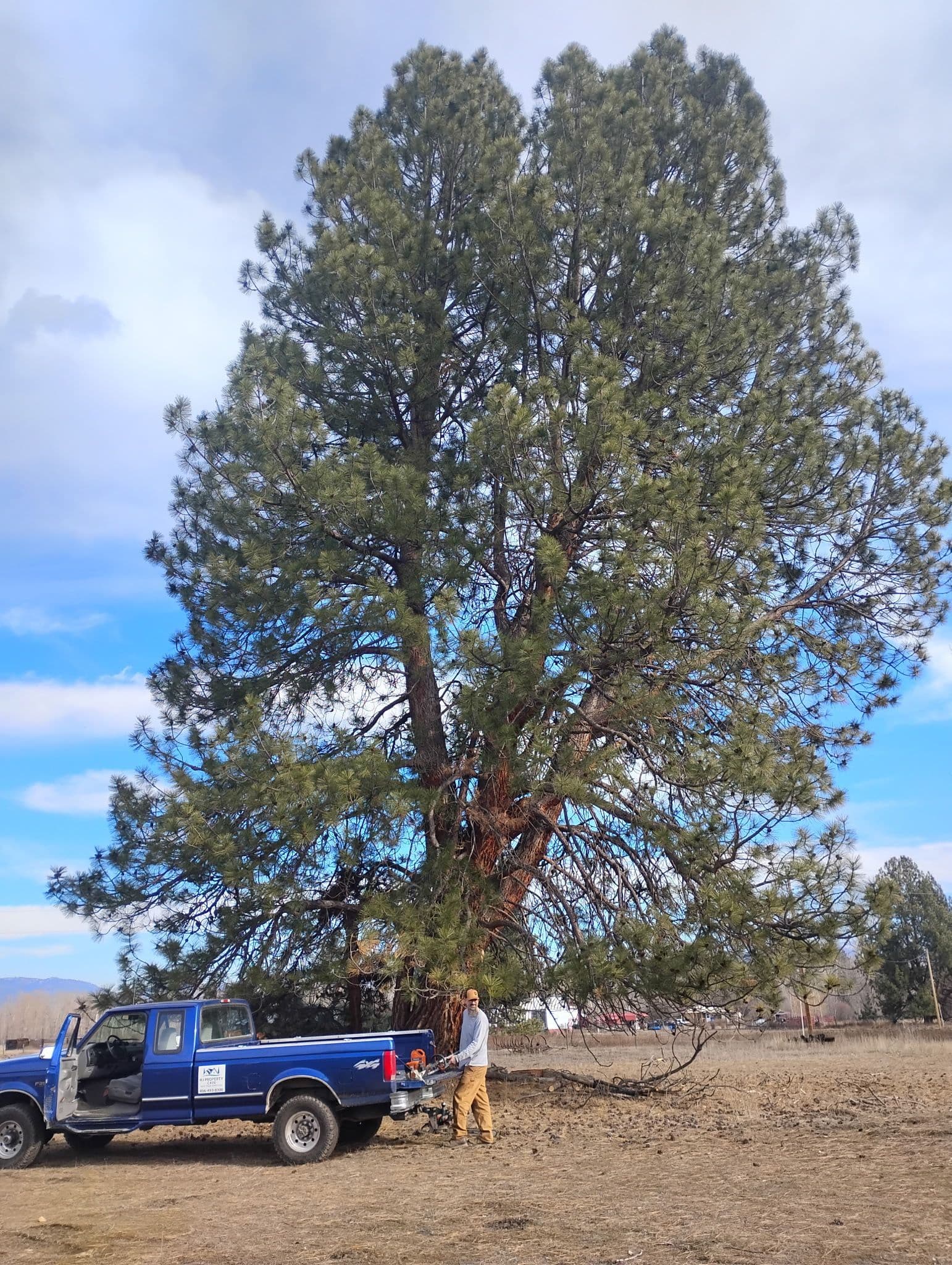
Lodgepole pine and ponderosa pine are the primary targets in western Montana, though the beetle also attacks other pines. Larger, mature trees with thick bark and ample inner bark are preferred because they offer more food for the developing larvae. Trees stressed by drought, crowding, root damage, or age are especially vulnerable, since a healthy tree can sometimes flush out attacking beetles with pitch, while a weakened tree cannot. In the dry summers and rocky soils of the Bitterroot Valley, drought stress is a common factor that tips the balance in the beetle's favor.
What are the warning signs of an infestation?
The clearest early sign is popcorn-shaped masses of pitch, called pitch tubes, on the trunk where the tree is trying to push out invading beetles. You may also see fine sawdust-like boring dust in bark crevices and at the base of the tree. As the infestation progresses, the needles fade from green to yellow to red, usually the year after attack, and the wood under the bark shows blue-gray staining and winding galleries. By the time needles turn red, the beetles have often already moved to neighboring trees, which is why early inspection matters so much.
How can I prevent beetles from attacking my trees?
Prevention centers on keeping trees vigorous and reducing stress, because healthy pines defend themselves far better than weak ones. Water mature pines deeply during prolonged summer drought, avoid soil compaction and root damage near the trunk, and thin overcrowded stands so each tree has room to grow strong. Preventive insecticide sprays applied to high-value trees before the summer flight season can protect individual specimens, but timing and application require professional knowledge. Promptly removing and properly disposing of already-infested trees also reduces the beetle population that emerges to attack neighbors.
Can an infested tree be saved?
Once beetles have successfully colonized a tree and the blue-stain fungus has spread, that tree usually cannot be saved and removal is the responsible choice. Spraying or treating a tree that is already fully infested does not reverse the internal damage. The real goal at that point is containment: removing the infested tree before the next generation of beetles emerges helps protect the surrounding pines. This is why an accurate, timely diagnosis is so valuable, because it determines whether you are protecting a tree or harvesting a beetle nursery.
When should I call a professional arborist?
Call a professional as soon as you notice pitch tubes, boring dust, or unexplained needle discoloration on your pines. An ISA-certified arborist can confirm whether the beetle is present, assess how far it has spread, and recommend whether prevention, treatment, or removal is appropriate. Because beetle outbreaks move quickly and can threaten an entire stand of trees, a quick expert evaluation often saves the rest of your landscape. Professionals also handle infested-tree removal and disposal correctly so the problem does not simply migrate next door.
How does the beetle's life cycle affect when I can act?
Mountain pine beetles generally complete a generation in a year in this region, spending most of it under the bark. Adults emerge and fly in the warm part of summer, seek out host trees, bore in, and lay eggs in galleries beneath the bark. Larvae feed there through fall and winter, mature in spring, and emerge as the next flight.
That timeline dictates what is possible. Preventive treatment aims to protect a tree before adults arrive, which means it has to be in place ahead of the flight period rather than in response to seeing beetles. Once a tree is successfully attacked, the beetles are inside and protected by the bark, and there is no spray that reaches them.
It also explains a common confusion: a tree that still looks green may already be infested, because needle color lags the attack by months. Conversely, the tree turning red this year was attacked the previous summer, and the beetles that killed it have usually already left.
What should I do with infested wood?
Deal with it before the next flight, and do not move it. Wood cut from an infested tree still contains developing beetles under the bark, and hauling it elsewhere is one of the most effective ways to spread an infestation into a stand that was fine. This is the same reasoning behind long-standing advice not to move firewood between areas.
Removing the bark is what makes the material safe, because the beetles live in the layer between bark and wood; debarked logs are no longer a nursery. Where that is impractical, timing matters: material dealt with before adults emerge does not release a new generation.
If you burn firewood, use local wood and burn it promptly rather than storing infested rounds through a season next to living trees. Stacking freshly cut infested wood against the house or under a pine is close to the worst possible arrangement.
Why does tree stress matter more than the beetle itself?
Because healthy pines have a real defense. A vigorous tree responds to boring beetles by flooding the entry with resin, pushing them out or drowning them; those are the pitch tubes you see on a trunk, and a tree producing them is fighting. A stressed tree cannot generate that response, and the same number of beetles succeeds where it would otherwise have failed.
Drought is the dominant stressor, but root damage from construction, grading, and compaction does the same thing, as does crowding where too many stems compete for limited water. That is why keeping trees watered through dry stretches and protecting their root zones is genuinely preventive rather than merely good practice.
Density is the other lever on larger properties. Thinning to give remaining trees more room reduces competition for water and makes a stand less attractive to beetles, which favour dense host stands. It is slower than a treatment and considerably more durable.
If you suspect mountain pine beetle on your property, do not wait. HJ Property Care & Tree Service LLC provides expert inspection, prevention, and removal across the Missoula area and Bitterroot Valley. Call (406) 215-7319 for a free 48-hour estimate and protect your pines while there is still time.
Need help?
HJ Property Care & Tree Service is locally owned and ISA-certified. Call for a free estimate.
This article is part of the Montana Tree Guide, our complete guide to trees in western Montana.
Explore our tree services.
Sources
We cite primary sources: Montana State University Extension, the City of Missoula, and the ISA, so you can verify anything here yourself.
- Urban Forestry division: city tree rules and right-of-way (City of Missoula). Last checked August 20, 2026.
- Local Certified Arborists List (City of Missoula). Last checked August 20, 2026.
Ready to transform your outdoor space?
Get a free, no-obligation estimate within 48 hours. Locally owned and ISA-certified.