
A Month-by-Month Tree Pruning Calendar for Western Montana
The best time to prune most western Montana trees is late winter while they are dormant, but timing varies by species. Pruning at the wrong moment can invite disease, sap loss, or insect attack.
When is the best overall time to prune in Montana?
For most trees in western Montana, the best time to prune is late winter to early spring, roughly February through March, while the tree is still dormant. Dormant pruning is like operating on a patient under anesthesia: the tree is not actively growing, sap flow is minimal, wounds are exposed for less time, and the tree can pour its spring energy into sealing cuts. Dormant trees also have bare branches, making structural problems easy to see. In the Bitterroot Valley's zone 4 to 5 climate, dormancy lasts longer than in milder regions, giving you a generous winter window.
How should I prune pines, firs, and spruce?
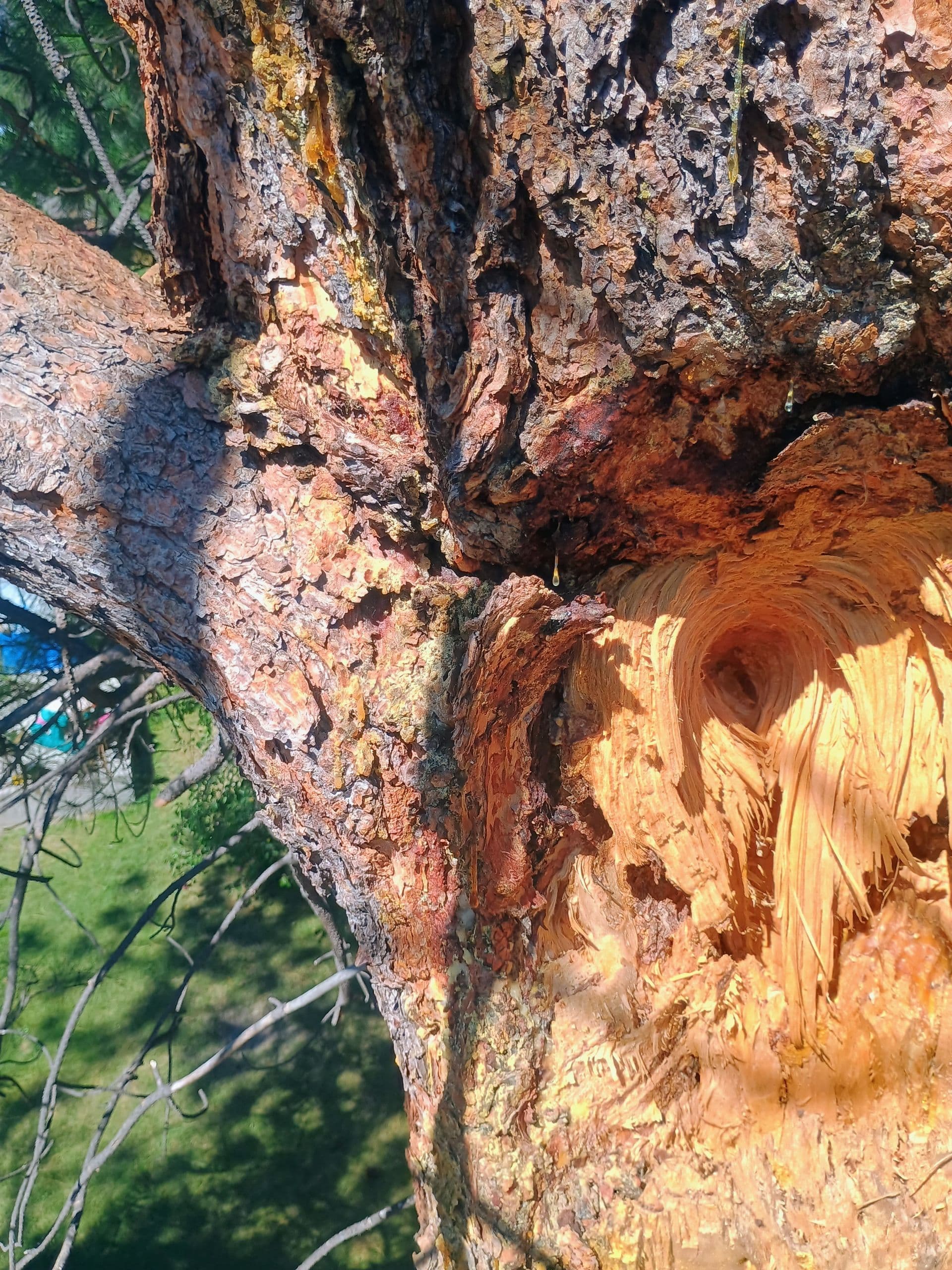
Conifers like ponderosa pine, Douglas fir, lodgepole pine, and blue spruce need very little pruning and are best worked on in late winter or early spring before new growth pushes out. Remove only dead, damaged, or crowded branches; avoid cutting into old wood where no needles grow, because most conifers will not regenerate from bare branches. Pines in particular should be pruned in the dormant season rather than mid-summer, since fresh summer cuts release scent that can attract bark beetles. Light is better than heavy with evergreens.
What about aspens, cottonwoods, and other deciduous trees?
Quaking aspen, cottonwood, and most shade trees should be pruned in late winter while dormant, but a few rules protect them from disease. Aspens and cottonwoods are prone to cankers and fungal problems, so clean dormant cuts that close quickly reduce infection risk. Avoid pruning these species in spring as the leaves emerge, when sap is running heavily and pathogens are active. If you must remove a hazardous limb during the growing season, that is always acceptable, but save routine shaping for the dormant window.
When should I prune fruit trees in the Bitterroot Valley?
Prune apple, cherry, and other fruit trees in late winter, generally February into early March, before buds swell. Dormant pruning shapes the tree, improves airflow to reduce disease, and stimulates productive new growth for the coming season. The Bitterroot Valley has a long fruit-growing heritage, and well-timed pruning keeps trees productive and structurally sound. Avoid heavy fall pruning, which can stimulate tender growth that winter cold will kill, and avoid wet spring conditions that spread bacterial diseases between cuts.
Are there months I should never prune?
Yes, late spring and early fall are generally the riskiest times to prune in Montana. Pruning in late spring removes the energy-producing leaves a tree just invested in, stressing it during the growing season. Pruning in early fall can trigger a flush of soft new growth that has no time to harden before the first hard freeze, leaving the tree vulnerable to winter dieback. Insects and fungal spores are also most active in the warm months, so open wounds are more likely to become infected. When in doubt, wait for dormancy.
Can I prune storm-damaged branches any time of year?
Absolutely, broken, hanging, or hazardous branches should be removed promptly regardless of season. A cracked limb is an open wound and a safety threat that will not improve by waiting. Montana's heavy snow loads and occasional windstorms can split branches at any time, and prompt removal prevents further tearing of the bark and reduces the chance of the limb falling on people or property. This is one situation where safety overrides the seasonal calendar, and where professional equipment and training make the job far safer.
What are the different kinds of pruning, and which do I need?
Pruning is not one operation, and knowing the vocabulary makes it much easier to ask for the right thing. Cleaning removes dead, dying, diseased, and broken branches; it is the most common need and the least controversial, since nothing living is taken. Thinning removes selected live branches to improve light and air movement through the crown, and it has to be done carefully, because taking too much from the interior produces weakly attached regrowth at the ends of limbs.
Raising removes lower branches for clearance over a drive, path, or roof. Reduction decreases the height or spread of a crown by cutting back to lateral branches large enough to assume the lead; that is what genuine size reduction looks like, as opposed to topping, which cuts to stubs and is not pruning at all.
Most residential work is cleaning, with some raising for clearance. If someone proposes heavy thinning or reduction, it is fair to ask what specific problem it solves.
How much can safely come off in one season?
Less than most people expect, and the reason is straightforward: leaves are how a tree feeds itself. Remove too much of the live crown at once and the tree has to fund its recovery from stored reserves, which produces stress responses, water sprouts, dieback elsewhere, and greater vulnerability to pests already present.
Industry guidance keeps live-crown removal to a modest proportion in any single season, and the tolerance falls as trees age. A young, vigorous tree recovers from more than a mature one does. Where a large change is genuinely needed, staging it across several seasons is far better for the tree than achieving it in one visit.
Where the cut is made matters as much as how much. Cuts are placed just outside the branch collar, the slightly swollen ring at the branch base, because that is the tissue the tree uses to close the wound. Flush cuts remove it and leave a wound the tree cannot seal properly; stubs die back and decay inward.
Is there a schedule for pruning a young tree?
Yes, and it is the highest-value pruning anyone will ever do on a tree. Nearly every structural problem in a mature tree (competing leaders, narrow unions with bark trapped inside them, branches attached too closely together) began in the first years and could have been corrected with cuts you could make with hand pruners.
The first few years after planting are about removing damage and any obviously competing leader rather than shaping. Through the following decade the goal is establishing a single dominant leader and well-spaced scaffold branches, taken gradually rather than all at once. Small, frequent corrections beat occasional heavy ones at every stage.
The economics are stark. Correcting a competing leader on a young tree takes a minute and leaves a wound the size of a coin. Correcting the same fault at forty years takes a crew, a lift, and leaves a wound the tree may never close, and sometimes cannot be corrected at all, only managed.
Not sure where your trees fall on the calendar? HJ Property Care & Tree Service LLC offers expert, ISA-certified pruning timed to protect your trees throughout western Montana and the Bitterroot Valley. Call (406) 215-7319 for a free 48-hour estimate and a pruning plan built for your property.
Need help?
HJ Property Care & Tree Service is locally owned and ISA-certified. Call for a free estimate.
This article is part of the Montana Tree Guide, our complete guide to trees in western Montana.
Explore our tree services.
Sources
We cite primary sources: Montana State University Extension, the City of Missoula, and the ISA, so you can verify anything here yourself.
- What an ISA Certified Arborist credential covers (International Society of Arboriculture). Last checked August 20, 2026.
- Urban Forestry division: city tree rules and right-of-way (City of Missoula). Last checked August 20, 2026.
- USDA Plant Hardiness Zone Map (USDA Agricultural Research Service). Last checked August 20, 2026.
Ready to transform your outdoor space?
Get a free, no-obligation estimate within 48 hours. Locally owned and ISA-certified.