
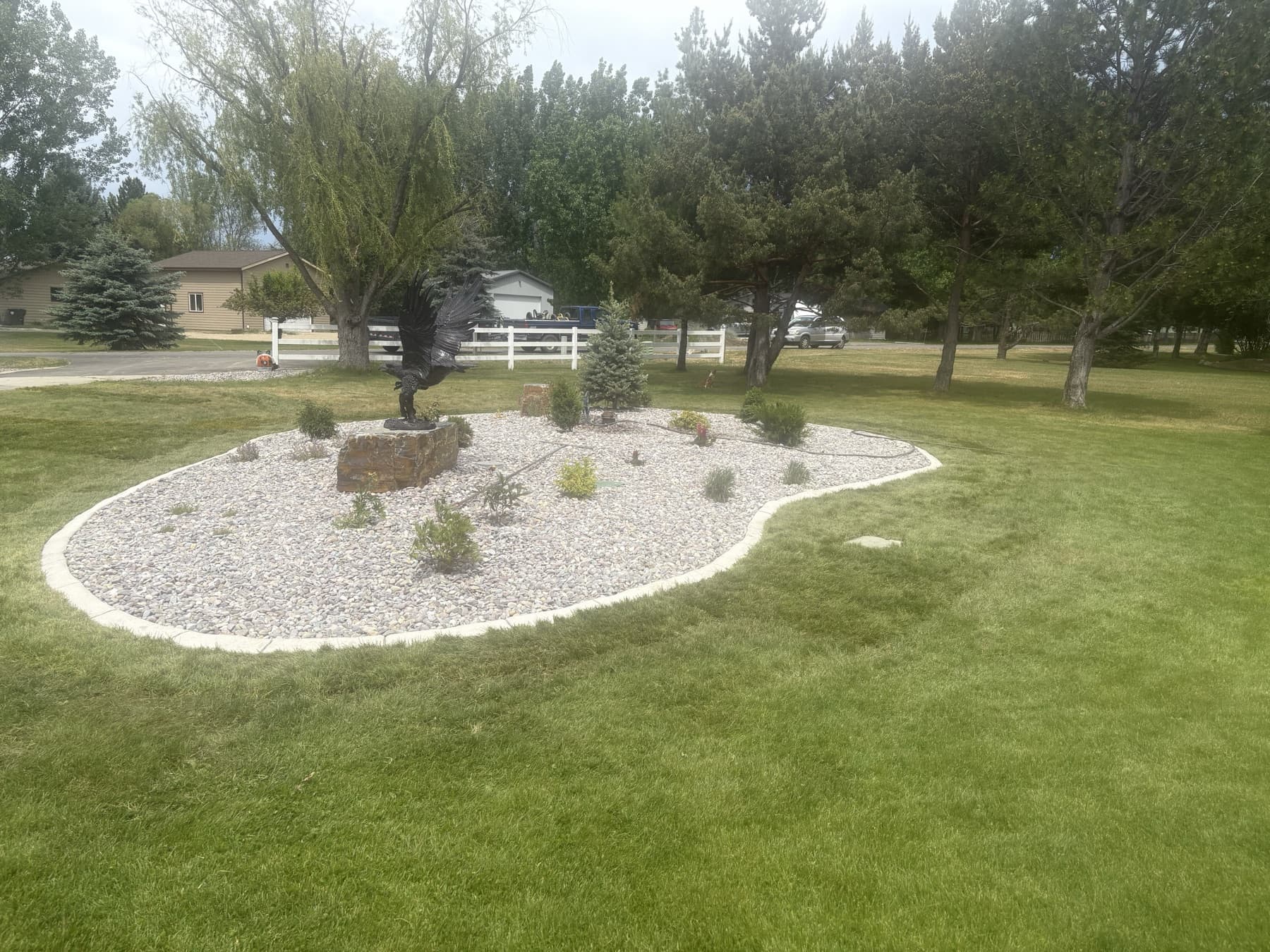
What to Expect During a Landscape Installation
Reviewed by Adam Hurlbert, Owner & Founder, 15+ years in landscape & property care
A landscape installation can look chaotic from the window: equipment in the yard, piles of soil and gravel, trenches across the lawn. Underneath it there is a set order, and knowing it makes the weeks easier to live through. Grading and drainage come first, then hard surfaces, then irrigation, then planting and lawn, then finish work. Each step depends on the one before it, which is why good crews resist doing them out of sequence. This guide walks through each stage of a typical installation in western Montana, what you will see, what you need to do, and what to check before the crew calls the job done.
What happens before the crew arrives?
The design is approved, the scope and schedule are in writing, any HOA approval is in hand, and the utility locate is requested. Montana law requires notice through the one-call center before excavation, and underground facility owners have two business days to mark their lines once notified. The paint and flags you see in the yard are those marks; please do not move them.
Montana811 notes that private underground lines may not be located through its system. Tell the crew what you know about sprinkler lines, landscape lighting, septic components, buried power to outbuildings and pet fence wire. Also clear the work areas of furniture, planters and vehicles, and decide where materials can be dropped.
What does the first day look like?
Usually a walk-through with the crew lead, layout of beds, paths and patios with paint or stakes, and protection of things that should not be touched: trees and their root zones, finished surfaces, and plants you are keeping. Then equipment arrives. Material deliveries may take up part of the driveway for a while.
Walk the layout with the crew lead before digging starts. It is the easiest moment to move a bed edge or a path.
Why does grading come first?
Because everything else sits on it. Water has to move away from the house and off hard surfaces, and that is set by the grade. Montana State University Extension recommends at least a 1 percent slope away from the house for lawns, about one inch every 8 feet. MSU also advises that when a grade has to change, the top 6 inches of soil should be stripped, the grade changed and the topsoil put back, so good soil is not buried.
Drainage features such as swales, dry creek beds or French drains are built in this phase, along with any retaining walls. Expect the yard to look worse before it looks better.
When does the hardscape go in?
After rough grading and before irrigation and planting. Patios, walkways and walls involve heavy material and equipment that would damage finished beds and lawn. Excavation, base gravel, compaction and the surface follow in order; on a patio the compacted base takes more time than laying the pavers. Our guide to patio base preparation explains why that step is not rushed. Sleeves for irrigation and lighting wire are placed under hard surfaces now, before they are covered.
How is the irrigation installed?
Trenches are cut for the main line and zone lines, valves and the controller are installed, and heads or drip lines are set. The system is flushed and tested, and coverage is checked before trenches are closed. Plan to be shown where the valves and backflow assembly are and how the controller is set. Our guides to drip irrigation and sprinkler head types explain what goes in, and our irrigation systems page covers how we design them.
What happens to the soil before planting?
Bed and lawn areas are prepared with whatever the soil test called for. MSU Extension says Montana soils typically run about pH 7 to 8, and recommends testing before planting because a deficiency is hard to fix once plants show it. For lawns, MSU's establishment guide says working about 2 inches of composted organic material into the top 6 inches of soil substantially improves soil structure, and that the surface should be brought to a fine, firm seedbed with clods and rocks removed.
This is the stage most often trimmed from budgets and the one that most decides how the landscape looks in five years. Our soil testing guide explains how a test is taken.
How does planting proceed?
Trees go in first, then shrubs, then perennials and groundcovers. Plants are set out in their containers so you can see the layout before they go in the ground, which is another good moment to walk through with the crew. After planting, beds are edged and mulched, and each plant is watered in. Our guide to how to plant a tree explains the planting detail for trees.
How is the lawn installed?
Sod is laid on a prepared, firm, moist surface and rolled; seed is spread and lightly raked and rolled into the soil. MSU recommends sowing half the seed in one direction and half at right angles for even coverage, and says seeding from mid-August to mid-September is better than spring in Montana. Sod timing depends mostly on being able to keep it watered. Our sod or seed comparison and new lawn timing guide explain the choice.
Will the work hurt my existing trees?
It can, if nobody plans for it. Trenching, grade changes and soil compaction from equipment all happen in the ground where a tree's roots are, and root damage does not show on the tree right away. Before we start, we mark the trees that are staying and plan trench routes, grade changes and equipment paths to stay out of their root zones as far as the design allows. Co-owner Justin Johnson is an ISA Certified Arborist, so tree protection is part of our planning rather than an afterthought. Our guide to protecting tree roots during construction explains what to watch for.
What if something unexpected turns up?
Digging finds things: buried concrete, old irrigation, construction debris, a layer of cobble, a wet spot that was not obvious in summer. A good contractor stops, shows you what was found, explains the options and the effect on cost and schedule, and gets your agreement before going on. The contract should say how changes are handled. If the crew finds something and keeps going without a word, ask about it.
What about noise, mess and neighbors?
Expect equipment noise during working hours, material piles in the driveway or on the street side of the property, and some mud if it rains. Let neighbors know when work is scheduled, especially if trucks will be delivering. Keep children and pets away from the work area and open trenches. Most of the disruption is in the first phases, grading and hardscape; planting days are much quieter.
What does cleanup and walk-through include?
Hard surfaces are swept and washed, leftover material and debris hauled away, and ruts from equipment repaired. Then a final walk-through: check the grading by looking at where water would go, check paver joints and edges, run each irrigation zone, look over the plants and the plant list, and confirm the watering instructions. Ask for a simple drawing of what was installed underground.
What do you need to do after installation?
Water. New plants and lawns need regular watering through establishment, and that is the most common reason new landscapes fail. Follow the schedule you were given, adjust for weather, and ask if something looks stressed. MSU recommends deep, infrequent watering in the early morning for established lawns, but new seed and sod have not rooted yet and are a different case, so follow the schedule your installer gives you until they have. Our summer watering guide covers the transition.
Keep foot traffic and pets off new lawn until it roots in, and leave mulch in place. Plan for a fall sprinkler blowout before the first hard freeze.
How long does an installation take?
It depends on scope, weather and site, and a full yard with hardscape and irrigation takes longer than a planting refresh. Rain delays grading and compaction because wet soil should not be worked. We give a schedule with the estimate and tell you when weather or site conditions change it.
Installing a landscape with us
We handle grading, hardscaping, irrigation, planting and lawn ourselves, in that order, as part of our landscaping design and installation service across Missoula and the Bitterroot Valley. If the full plan is more than one season, see phasing a landscape project. Estimates are free. More planning guides are in the Montana Landscaping, Lawn & Irrigation Guide.
Call HJ Property Care & Tree Service at (406) 215-7319 or request a free estimate and we will walk the property with you and put the scope in writing.
Need help?
HJ Property Care & Tree Service is locally owned and ISA-certified. Call for a free estimate.
This article is part of the Montana Landscaping, Lawn & Irrigation Guide, our complete guide for western Montana property owners.
Explore our landscaping & design.
Sources
We cite primary sources: Montana State University Extension, the City of Missoula, and the ISA, so you can verify anything here yourself.
- Planning and Planting Successful Lawns in Montana, MontGuide MT202003AG (Montana State University Extension). Last checked November 2, 2026.
- Home Garden Soil Testing and Fertilizer Guidelines (Montana State University Extension). Last checked November 2, 2026.
- Maintaining Successful Lawns in Montana, MontGuide MT202004AG (revised 08/23) (Montana State University Extension). Last checked November 2, 2026.
- Montana Code Annotated 2025, 69-4-503 (excavation notice and locate marking) (Montana Legislature). Last checked November 2, 2026.
- Montana811: call before you dig, homeowner requests and private lines (Montana811). Last checked November 2, 2026.
Ready to transform your outdoor space?
Get a free, no-obligation estimate within 48 hours. Locally owned and ISA-certified.