
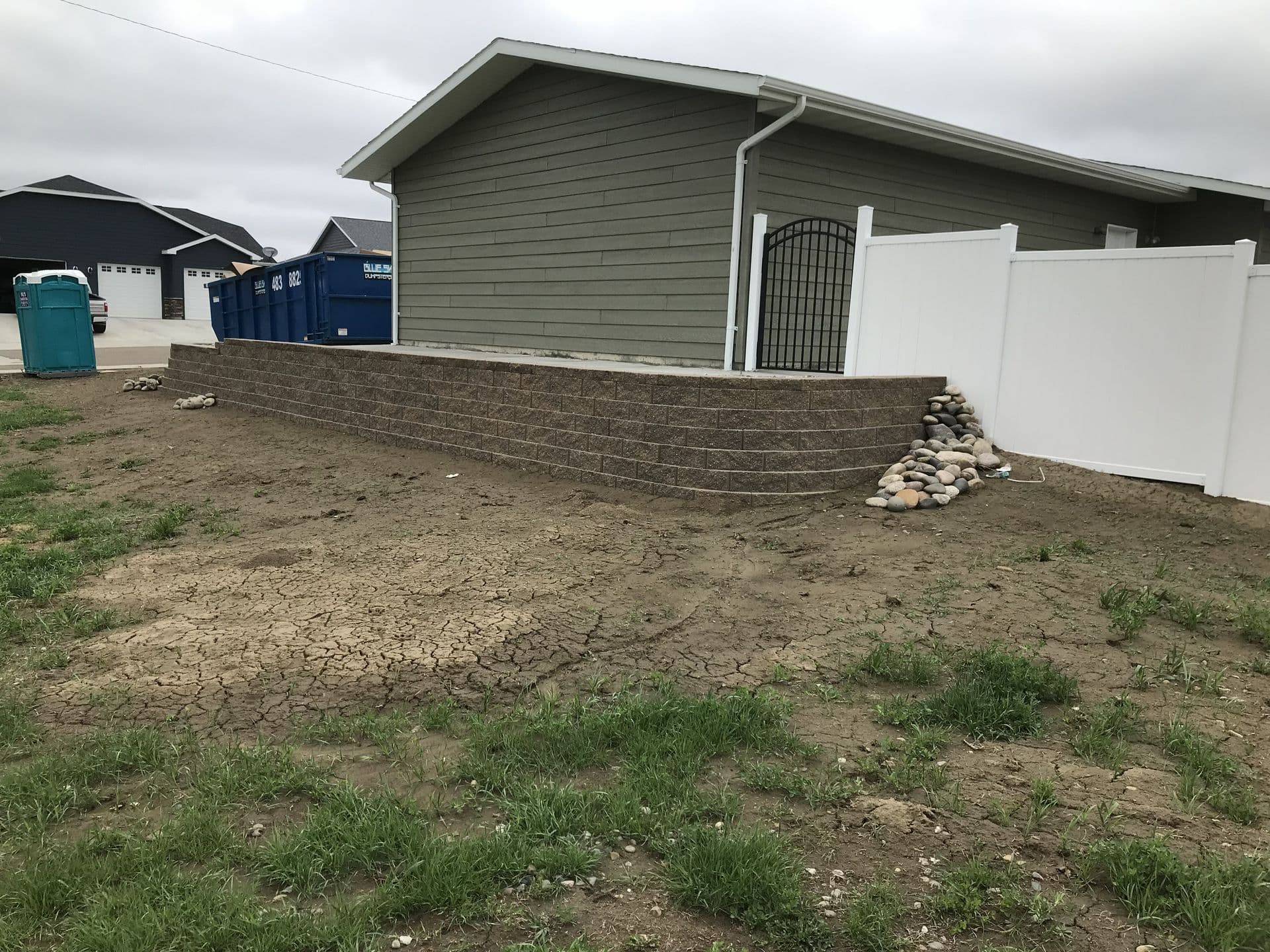
Construction Damage to Trees: Protecting Roots Before Work Starts
People build in the Missoula and Bitterroot valleys for the trees: a house set among ponderosas, a shop tucked beside a row of old cottonwoods, a new driveway curving past a Douglas-fir. Then the trees decline, slowly, years after the last contractor leaves, and nobody connects the two. Construction rarely kills a tree by hitting it. It kills by what it does to the soil and roots, out of sight. Nearly all of that damage is preventable, but only before the work starts.
Where are a tree's roots, really?
Shallower and wider than almost anyone pictures. Colorado State University Extension, the nearest university source with detailed guidance on this, describes the large woody roots as growing horizontally, mostly in the top 6 to 24 inches of soil, with the fine absorbing roots growing outward and upward from them toward the surface, where water, oxygen and nutrients are most abundant. It puts the root zone at a horizontal distance at least equal to the tree's height.
Iowa State University Extension gives a similar picture: most roots concentrate in the top 6 to 18 inches, over an irregular area that can be four to seven times the area of the crown. The practical meaning is that the ground a contractor thinks of as clear working space, well outside the branches, is often full of the roots that feed the tree.
What is the critical root zone?
The International Society of Arboriculture (ISA) uses the term for the portion of the root zone that is essential to the tree's health and stability. Around it, an arborist defines a tree protection zone: an area with specific limits on construction activity and specific protection requirements. How much damage a given tree will tolerate depends on its age, species and condition, which is why the zone is set tree by tree and not from a single formula.
Colorado State offers a working rule for where the fence goes. For trees more than four years in the ground, it advises extending the barricade beyond the dripline by one additional foot for each inch of trunk diameter. It also suggests aiming to preserve at least 50 percent of the root system, and warns that decline and death can result when more than 40 percent of the roots or stem are damaged or killed.
Why is soil compaction so damaging?
Because it happens without anyone cutting anything. A loaded truck, a skid steer making repeated passes, a pallet of block or a pile of fill parked under a tree for a month all press the air out of the soil. Colorado State explains that compaction is most severe near the surface, exactly where most roots are, and that it reduces permeability and soil oxygen and interferes with drainage. ISA describes the same effect: slower root growth, less water getting in, and less of the oxygen roots need to survive.
Iowa State notes that soils with more clay hold more water but are more susceptible to compaction, and recommends working when soils are dry. On valley-bottom ground in a wet spring, that advice matters. Both Colorado State and Iowa State make the same observation: compaction is far easier to prevent than to correct. Colorado State suggests spreading wood chips 4 to 6 inches deep around protected trees as a cushion in case equipment crosses the line.
What do grade changes do to a tree?
Adding soil over roots smothers them. Colorado State says fill interferes with normal air and moisture movement to the roots; it considers a minor fill of less than 3 inches of good topsoil harmless to most trees, and treats anything larger as a major change that needs a way to get air to the roots. Soil or debris stacked against the trunk is a separate hazard, and ISA singles out the root collar as especially vulnerable.
Cutting the grade down is no safer. Colorado State notes that lowering the grade commonly severs major roots outright, which can cause decline, death or reduced stability in high winds. Its recommendation is to terrace or build a retaining wall that leaves the original grade intact at least out to the dripline. On sloped foothill lots, where a building pad or driveway is cut into the hill, this is the decision that most often determines whether the trees uphill and downhill survive.
Is boring better than trenching?
Yes, when the line has to pass a tree. A trench for water, power, gas, septic or irrigation cuts every root it crosses, and a trench run alongside a tree can take out a large share of its root system in one pass. Colorado State advises keeping trenches far from existing trees and, where a line must go under or near one, boring a tunnel beneath the roots with a power auger. Iowa State gives the same advice and adds a simple economy: combine utilities in one trench where possible.
Where trenching cannot be avoided, Colorado State recommends placing the trench as far from the trunk as possible, with 8 feet as a minimum, cutting as few roots as possible, pruning the cut roots cleanly and backfilling promptly so they do not dry out. Any of this is excavation, so a utility locate through Montana811 comes first; the service is free. Our guide to tree roots, foundations and sewer lines covers how far roots can safely be cut.
How should trees be fenced off before work starts?
With something sturdy, visible and installed before the first machine arrives. Iowa State calls for a sturdy fence at least at the outer dripline with zero activity inside it, and adds that the larger the protected area, the less the damage. ISA recommends signs on the fence explaining why people should stay out and whom to contact if they need to get in. Colorado State recommends checking trees and barricades at least once a week during the job.
Zero activity means what it says: no parking, no material storage, no soil stockpiles, and no dumping. ISA specifically warns about spilled fuel and the runoff from washing out concrete trucks, both of which change soil chemistry and damage roots. Colorado State suggests writing the protection rules into the contract and walking the site with everyone before work begins, because the fence only works if the crew knows it is not negotiable.
How long does construction damage take to show?
Longer than the warranty on the house. Iowa State Extension says root and soil damage may not be evident for as long as 8 to 10 years. Colorado State describes the early signs after a grade change: smaller leaves, leaf scorch and early fall color, followed by twig dieback and the progressive death of larger stems in the upper crown, sometimes not noticed for several years. ISA puts it simply: small injuries accumulating over time can start a decline that is hard to reverse.
In this region the decline often ends with insects. Colorado State notes that stressed trees are more susceptible to bark beetles and borers, which is a real concern for a ponderosa that has lost roots. See our guide to ponderosa pine care for what a stressed pine looks like.
What can an arborist do before and after the work?
Before: the most valuable hour is the one spent at the planning stage. ISA lists what an arborist can suggest while plans are still on paper, including realigning a driveway or wall, reconfiguring grading, bridging footings or paving over roots, and rerouting or tunneling utilities. An arborist can also tell you which trees are worth the effort. Iowa State's test is a desirable species in reasonably good health with at least 20 years of life ahead of it, and both extension services acknowledge that sometimes removal and replacement is the more sensible choice.
After: ISA's guidance for damaged trees centers on water, mulch and patience. A long, slow soak over the whole root zone in dry months, a 2 to 4 inch layer of organic mulch, and restraint with fertilizer immediately after damage. Colorado State advises against thinning the crown preemptively to compensate for assumed root loss; wait and prune out what actually dies. ISA also notes that a damaged tree should be checked for structural stability, and removed if the risk cannot be reduced.
HJ Property Care provides tree health and risk assessments before a project and afterward, and our tree services cover the pruning or removal that follows. If a tree near recent construction is thinning, compare it against the signs a tree is about to fail. Summer care for a stressed tree is in our guide to watering trees through drought, and related topics are collected in the Montana Tree Guide.
Call HJ Property Care & Tree Service at (406) 215-7319 or request a tree assessment and an ISA Certified Arborist will look at the tree with you.
Need help?
HJ Property Care & Tree Service is locally owned and ISA-certified. Call for a free estimate.
This article is part of the Montana Tree Guide, our complete guide to trees in western Montana.
Explore our tree services.
Sources
We cite primary sources: Montana State University Extension, the City of Missoula, and the ISA, so you can verify anything here yourself.
- Avoiding Tree Damage During Construction (International Society of Arboriculture). Last checked October 11, 2026.
- Treatment of Trees Damaged by Construction (International Society of Arboriculture). Last checked October 11, 2026.
- Protecting Trees During Construction (Fact Sheet 7.420) (Colorado State University Extension). Last checked October 11, 2026.
- Trees and Construction (Iowa State University Extension and Outreach). Last checked October 11, 2026.
- Montana811: Call Before You Dig (Montana811). Last checked October 11, 2026.
- FAQ: Safe Digging (Montana811). Last checked October 11, 2026.
Ready to transform your outdoor space?
Get a free, no-obligation estimate within 48 hours. Locally owned and ISA-certified.