
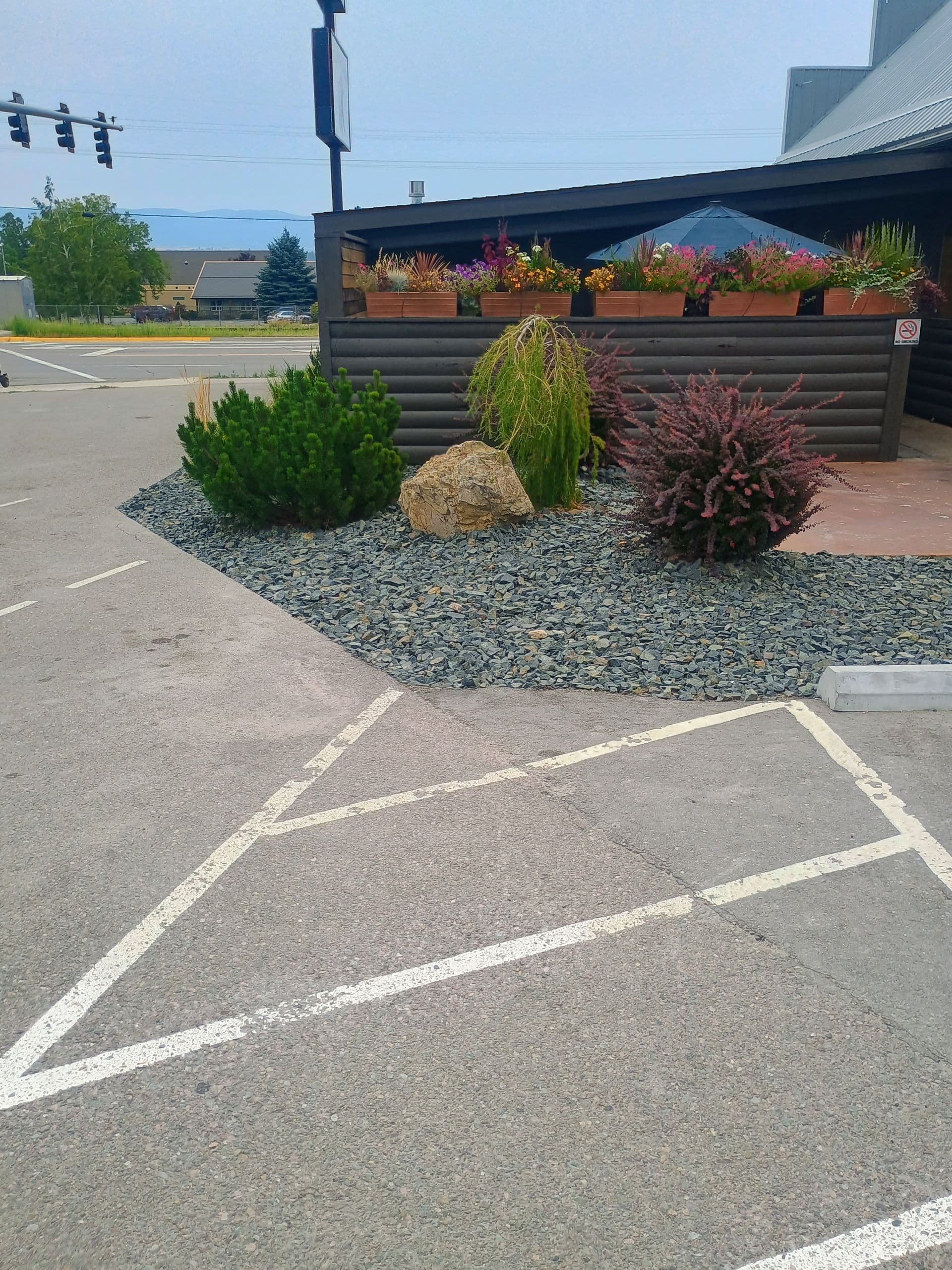
Replacing Some of Your Lawn With Native Plants in Montana
Reviewed by Adam Hurlbert, Owner & Founder, 15+ years in landscape & property care
Most yards in Missoula and the Bitterroot have lawn in places that never get used: a hot south slope, a strip along the drive, a corner the mower barely reaches. Montana State University Extension notes that landscape irrigation is often the largest household water use and that reducing irrigated turf is an effective way to cut demand. Replacing those pieces with native plants saves water and mowing and adds habitat. This guide covers where to start, how to remove grass, what to do with the sprinklers, which natives MSU recommends, and how to get them established.
Why replace part of a lawn with native plants?
Water, work and wildlife. MSU's article on landscaping to reduce water use says Montana is a semi-arid state with water supplies under increasing pressure, that several communities are adopting restrictions on landscape irrigation, and that pivoting from irrigated turf to an alternative landscape can improve soils, encourage biodiversity, support pollinators and include edible plants.
MSU's MontGuide on native plants for home gardens adds that native plants have cold and drought hardiness, provide food and habitat for beneficial insects including pollinators, and evolved alongside native pollinators. Many serve as larval hosts for native butterflies and moths, whose caterpillars feed birds. Our existing guide to native plants for the Bitterroot Valley profiles many of them.
Which parts of the lawn should go first?
The ones that cost the most and give the least. Colorado State University Extension's guide to removing lawn suggests beginning with odd areas that are hard to mow: slopes, tight corners and small patches between sidewalks or driveways. MSU's planting MontGuide makes the same point about grade: slopes steeper than about 33 percent cause mowing and runoff problems and suit ground cover rather than lawn. Deep shade is another candidate; CSU says ground covers or wood-chip mulch with shade-loving perennials may be more practical than grass there.
Keep the lawn where you actually use it: a play area, the dog's yard, the space around a patio. MSU's native plant guide suggests starting small and transitioning over time if a full conversion is daunting. Our guide to phasing a landscape project over several seasons applies here too.
How do I get rid of the grass?
There are several methods, and CSU says none satisfies every goal. MSU describes the low-chemical route: stress the turf by mowing at the lowest setting in hot weather, then place five to eight inches of mulch over it and wait several weeks; the mulch kills the grass, and you plant into the decomposed turf by raking the mulch back. CSU describes a similar mow-close-and-cover method with compost and 8 to 12 inches of wood chips, warning it can take a season or more and may not kill all the bluegrass.
Other options from CSU: solarizing under sealed clear plastic for 4 to 8 weeks, most effective in the hottest months; digging or using a sod cutter, which is fast and lets you plant immediately but removes organic matter and brings weed seed to the surface; tilling, which CSU says can spread bindweed and Canada thistle; and a non-selective herbicide such as glyphosate, which CSU says may need two to three applications two to three weeks apart. MSU also mentions an herbicide labeled for grasses as an option. With any herbicide, the label directions are the law.
What should I watch for around trees?
Soil level. MSU cautions that removing or adding too much soil under a tree's canopy can have negative consequences. Sod cutting and deep mulch both change grade near roots, so stay light inside the drip line and keep mulch off trunks. If a large tree sits in the area you want to convert, our ISA Certified Arborist can look at it first through a tree health and risk assessment.
Do I need landscape fabric under the mulch?
Usually not. MSU says weed barrier fabric is not typically necessary, especially if the mulch is more than five inches thick. It notes fabric does nothing about weed seeds blowing in on top, tends to work its way to the surface and shred, complicates weeding, and can harm soil health by reducing water and oxygen penetration and keeping organic matter from working into the soil. MSU says weed barriers should not be used around permanent plantings.
For the mulch itself, MSU says organic mulches such as arborist wood chips suit most permanent plantings, are lighter to move, and improve the soil as they break down, while gravel suits more desert-like plantings but is heavy and can reflect heat onto sensitive plants. If your home is in the wildland-urban interface, read our guides to fire-resistant mulch alternatives and lawns and irrigation as fire breaks before deciding what goes next to the house.
What happens to my sprinkler system?
It has to change. MSU says removing turf likely means capping sprinklers, disabling or rerouting lines, and possibly adding drip irrigation to new beds. It recommends grouping plants by water needs and laying out zones to match, and suggests flagging irrigation heads and planning the new landscape around existing zones. If there is no map of the system, MSU suggests cycling through the zones on the controller and sketching one.
A spray head left running on a native bed overwaters it and wastes the savings. Our guides to drip irrigation for Montana beds and how irrigation zones should be laid out cover the redesign, and our irrigation systems crew does the work.
Which native plants does MSU recommend?
MSU's 2025 MontGuide lists natives that are reasonably easy to establish and mostly available from local suppliers. Perennials on the list include blanketflower, common yarrow, Lewis flax, prairie smoke, Rocky Mountain beardtongue, wild bergamot, silvery lupine, sulphur-flower buckwheat, upright prairie coneflower and pasqueflower, plus bitterroot itself. Native grasses include Idaho fescue, prairie junegrass, bluebunch wheatgrass, blue grama and little bluestem. Shrubs include western serviceberry, chokecherry, shrubby cinquefoil, western wild rose, golden currant, mallow-leaf ninebark, common snowberry and skunkbush sumac.
MSU cautions that Montana's climates and soils vary widely and to keep local conditions in mind, and notes some listed plants are native to neighboring states rather than Montana. It also says never to dig native plants from the wild; buy from a reputable supplier, and it points to the Montana Native Plant Society's source guide as a place to start. Our sibling guides to pollinator gardens, xeriscaping in western Montana and ornamental grasses cover design ideas.
Should I plant seed or nursery plants?
Often both. MSU says seed costs less but seldom gives quick results, while nursery-grown plants cost more and improve the chance of establishment; a combination gives early impact and long-term diversity. MSU warns that seed mixes not sourced locally may contain non-native or invasive species, and that mixes with annuals put on a first-year show that fades.
Timing differs by method. MSU says late fall is the optimal time to seed most native forbs and grasses, because many need a cold period to germinate, though exposed, windy sites with little snow cover may do better seeded in spring. Nursery plants go in well in spring before heat and dry soil, and in fall after summer heat while the soil is still warm. Our guide to fall planting for trees, shrubs and bulbs covers the fall window.
How much water do new native plantings need?
More than people expect, at first. MSU says a common mistake is failing to water young native plants because they are considered drought tolerant, and that new plantings should be watered until established, which may take a growing season or longer for trees and shrubs. Some species dislike excess water, so MSU advises watering judiciously as the plants require. Expect to weed the mulch too: MSU notes fine material settles into all mulch over time and weeds will start, so rake and replenish it as needed.
MSU also recommends a soil test before any planting, since residential soils are often disturbed and may need compost or work on compaction and drainage. Our guide to soil testing for Montana yards explains how.
Native lawn conversions with HJ
We remove turf, rework irrigation into drip and matched zones, and plan and install native and water-wise beds through our landscaping design service, and we can keep the remaining lawn thick with our licensed fertilizer and weed control program. This guide is part of our Montana Landscaping, Lawn & Irrigation Guide. Call (406) 215-7319 or request a free estimate.
Need help?
HJ Property Care & Tree Service is locally owned and ISA-certified. Call for a free estimate.
This article is part of the Montana Landscaping, Lawn & Irrigation Guide, our complete guide for western Montana property owners.
Explore our landscaping & design.
Sources
We cite primary sources: Montana State University Extension, the City of Missoula, and the ISA, so you can verify anything here yourself.
- Landscaping to Reduce Water Use: Approaches and Benefits with Turf Reduction (Montana State University Extension). Last checked November 2, 2026.
- Native Plants for Montana's Home Gardens (MontGuide MT202503AG, 08/25) (Montana State University Extension). Last checked November 2, 2026.
- Planning and Planting Successful Lawns in Montana (MontGuide MT202003AG) (Montana State University Extension). Last checked November 2, 2026.
- How to Remove All (or Part) of Your Lawn (Colorado State University Extension (PlantTalk Colorado)). Last checked November 2, 2026.
- 1518: Growing Grass in Shade (Colorado State University Extension (PlantTalk Colorado)). Last checked November 2, 2026.
Ready to transform your outdoor space?
Get a free, no-obligation estimate within 48 hours. Locally owned and ISA-certified.