
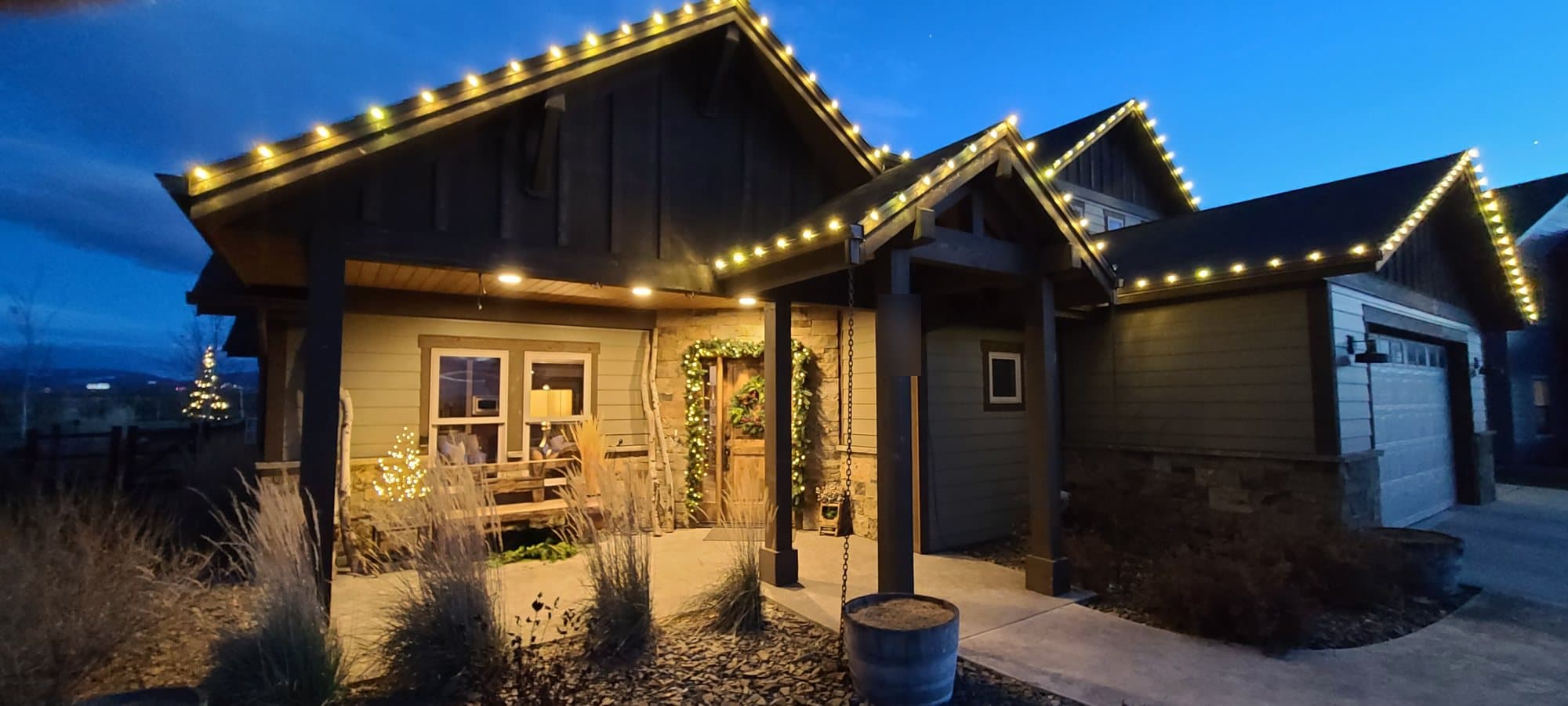
When to Hang Christmas Lights in Western Montana
In western Montana the calendar and the weather disagree about Christmas lights. Tradition says the weekend after Thanksgiving. The roof, the ground under the ladder and the gutters say several weeks earlier. The way to satisfy both is to separate two decisions that most people treat as one: the day the lights go up, and the day they get switched on.
When is the best time to put lights up here?
The best time is whenever the roof is dry, the ground at the base of the ladder is bare and firm, and there is enough daylight to finish what you start. In the Missoula and Bitterroot valleys that combination shows up reliably in October and the first part of November, and then less and less often as the month goes on. Nobody can promise a particular week. What you can count on is that the odds get worse with every week you wait.
That is why the working rule is to treat lights as a fall job, not a December one. It belongs on the same list as the rest of the fall and winter services a property needs before snow: gutters cleared, leaves off the lawn, irrigation shut down. Lights fit naturally at the end of that list, once the gutters they clip to are clean and before anything is frozen in place.
Why does the weather matter more than the date?
Because every part of the job touches a surface that changes in the cold. A ladder needs stable, level footing, and federal workplace ladder rules say plainly that a ladder should not be set on a slippery surface unless it is secured. Frozen lawn, frosted pavers and a skin of ice on a concrete walk are all slippery surfaces. A roof that looks dry from the driveway can hold frost on its north side until midday, or all day once the sun is low.
Cold changes the materials too. Light cords are stiffer and harder to lay straight, and clips are harder to seat with gloved hands. None of this makes the work impossible. It makes it slower, and it turns a job that was routine on a mild afternoon into one where each step up the ladder needs more attention than it got a month earlier.
What does frozen ground change?
Two things. The first is ladder footing, already covered: ground that was soft enough to bed a ladder foot in October is hard and often slick in December, and the foot sits on top of it instead of in it. The second is everything that goes into the ground. Stakes for walkway lights, stakes for cord routing and anything else that needs to be pushed into soil goes in easily before the freeze and barely at all after it.
There is a quieter third effect on the plan itself. Once snow is down, you lose sight of where beds end, where irrigation heads sit and where a cord can cross without being run over or shoveled through. If the property is plowed, the cord route and the plow route need to be settled together, and that is far easier while you can still see the ground. Our guide to preventing snow plow damage covers the marking side of that.
What about ice along the roof edge?
The eave is exactly where lights attach and exactly where ice forms first. Meltwater from the warmer upper roof refreezes when it reaches the cold overhang, and it does so in the gutter and along the drip edge. Once that has happened, clips have nothing clean to grip, and the person installing them is reaching over ice from a ladder. Lights that were already in place before the ice arrived simply sit under it and keep working.
This is the strongest single argument for an early install. A strand clipped to a clean, dry gutter in early November has a better hold and a straighter line than one forced onto a crusted edge in mid December. It also means that the first real cold snap of the season is something you watch from inside, with the display already finished.
Can lights go up early and stay off?
Yes, and this is how most professionally installed displays are scheduled. Outdoor-rated lights are built to be outside for the season. They do not care whether they are lit. Putting them up on a mild day and leaving them dark until the evening you choose costs nothing, and a plug-in timer or a single switched outlet makes the first night as simple as turning it on.
The one caution runs the other way. Utah State University Extension notes that Christmas lights are not designed to withstand prolonged exposure to sun and weather, and it advises removing them at the end of the season. Early is fine. Permanent is not. If what you want is lighting that stays up all year, that is a different product, and permanent landscape lighting is the right tool for it.
When should the lights come down?
Soon after the holidays, on the first safe day. Most households aim for early January. The pull to leave them until spring is strong, because January is cold and the roof is at its worst, but the lights and the surfaces they are clipped to both do better with a prompt takedown. Months of wind work clips loose, and strands that sag end up frozen into gutter ice.
Lights in trees have their own deadline. An arborist with Davey Tree, interviewed by News 12, pointed out that lights add weight to branches during snowstorms and should not be left on into the growing season, when a trunk or branch is expanding against the wire. Our separate guide on putting lights on trees without damaging them goes through that in detail.
What if a safe takedown day does not come in January?
Then wait for one. Lights that stay up dark for two extra weeks are a minor problem. A fall from an icy roof is not. Unplug the display, leave it in place and take it down when the eave is clear and the ladder has honest footing. What you should avoid is pulling strands from the ground to save a trip up the ladder: that is how clips snap, gutters bend and wire gets stretched.
This is also the half of the job most worth handing to someone else. A crew that is already out in winter conditions for residential snow removal and tree work can pick the day and bring the right equipment for it. A homeowner tends to get one free Saturday and whatever weather comes with it.
How does HJ plan to schedule it?
Holiday lighting is new for us in the 2026 season, and the plan is built around the two visits described here: installation in the fall window, before the roof and ground freeze, and a return visit to take everything down after the holidays. Packages, pricing and exact install dates are still being finalized, so we are taking names on an interest list, with no obligation, and will contact that list first.
You can read what we are planning on the Christmas light installation page. If you already know you want lights up this year, the most useful thing you can do now is get on the list early, since the good-weather window is short and it is the same for every property in the valley.
Call HJ Property Care & Tree Service at (406) 215-7319 or join the holiday lighting interest list and you will hear first when install dates open.
Need help?
HJ Property Care & Tree Service is locally owned and ISA-certified. Call for a free estimate.
Explore our christmas & holiday light installation.
Sources
We cite primary sources: Montana State University Extension, the City of Missoula, and the ISA, so you can verify anything here yourself.
- Festoon Your House Safely (Utah State University Extension). Last checked October 11, 2026.
- Ladders: construction industry safety standard (Occupational Safety and Health Administration). Last checked October 11, 2026.
- Decorating trees for the holidays can damage them (interview with a Davey Tree arborist) (News 12). Last checked October 11, 2026.
Ready to transform your outdoor space?
Get a free, no-obligation estimate within 48 hours. Locally owned and ISA-certified.