
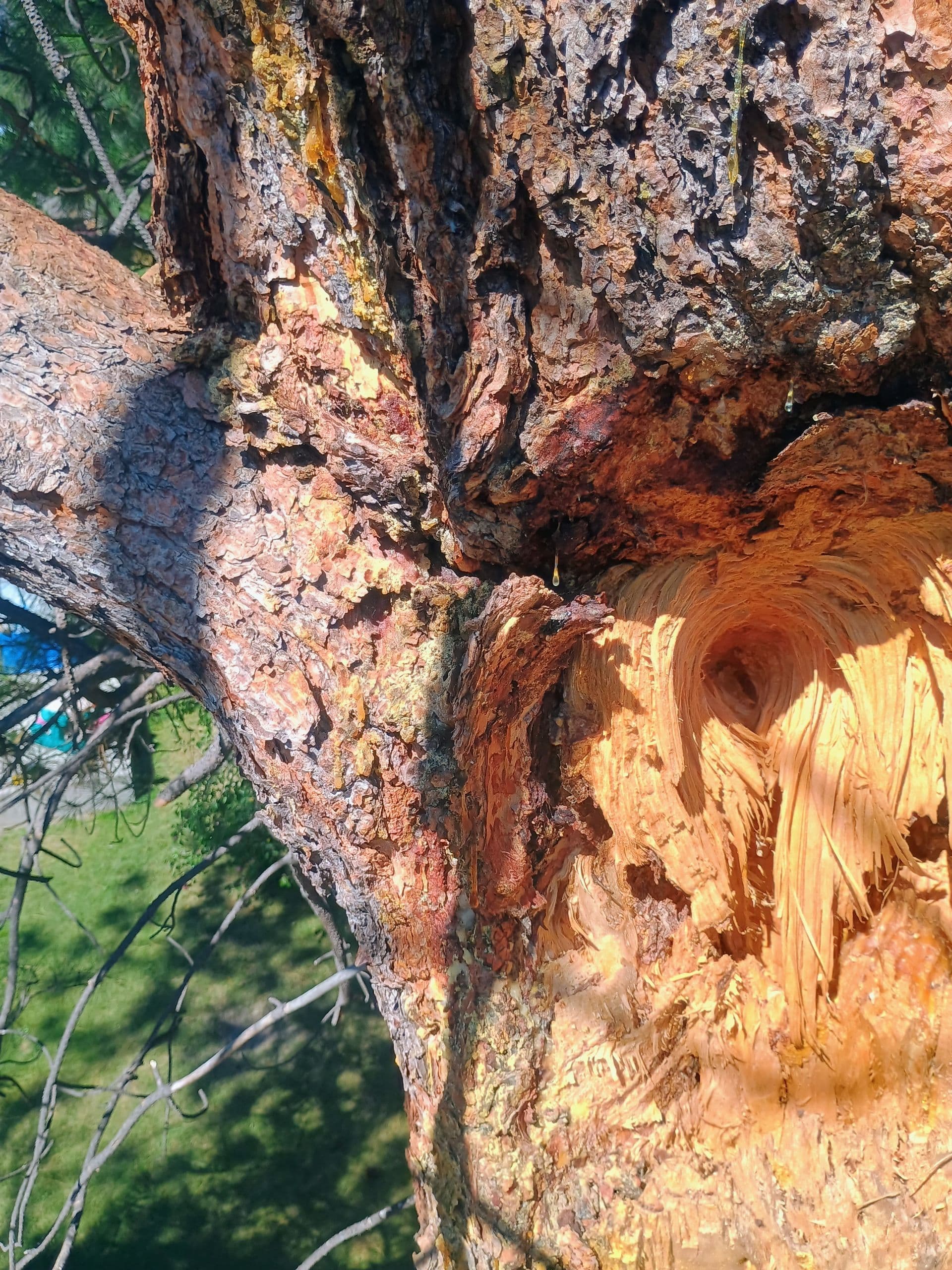
A Tree Fell on Your House, Car or Fence: What to Do First
Heavy wet snow in October, a valley windstorm or a summer thunderstorm can put a tree on a roof in a few seconds. What you do in the next hour matters for safety, and what you do in the next day matters for the insurance claim. This guide covers both in order. The insurance sections report what the Montana Commissioner of Securities and Insurance and the Insurance Information Institute publish, as we read them on 11 October 2026. It is general information. Policies differ, so check your own policy and talk to your agent or insurer about your claim.
What is the first thing to do?
Get people out of the part of the building the tree hit and keep them out. A trunk resting on a roof is not finished moving. It can settle as snow melts, as wind shifts it or as a cracked rafter gives way, and limbs that punched through the ceiling are holding weight you cannot see.
Then look, from a distance, for wires. If the tree took down a line or is touching one, stay well away, call 911 and call the utility. Do not touch the tree, the fence it is lying on or a vehicle under it. If you smell gas, leave and call from outside. Everything else in this guide waits until the scene is safe.
Who do you call, and in what order?
Emergency services first if anyone is hurt, if wires are involved or if the structure is unstable. The utility next if there is any chance a line is affected. Then your insurance agent or carrier, and a tree service that handles emergency work. Montana's insurance commissioner advises people with fallen tree or wind damage not to delay in contacting their agents or carriers to begin the claims process.
Our emergency tree and storm response page explains how HJ's 24-hour response works and what the crew needs to know when you call. This guide does not repeat it.
What should you document before anything is moved?
The commissioner's office lists four things for policyholders after storm damage: document all damage with photos or videos before beginning cleanup or repairs, keep receipts for any repairs or emergency expenses to share with the claims adjuster, keep samples of damaged items such as carpeting or upholstery for the adjuster, and avoid contractors who demand full payment up front or make pushy or unsolicited offers of repair work.
In practice, take wide photographs that show the whole tree and where it came from, then closer ones of each point where it meets the building, vehicle or fence, and the root plate or the break. Photograph from the ground and from inside the house. Do not climb onto the roof to do it.
Can you start cleanup before the adjuster comes?
You can and should prevent further damage. The Insurance Information Institute's guidance on settling claims says to take reasonable steps to protect your property from further damage and to save the receipts, and it warns against making extensive permanent repairs until the adjuster has assessed the damage.
For a tree on a roof, that usually means the tree comes off and the hole is covered, and the permanent roof repair waits. Lifting a trunk off a damaged structure is rigging work, where the wood is taken apart in sections so the load comes off the roof without dropping or rolling. It is not a job for a chainsaw and a ladder. Ask the crew to photograph the work as it proceeds and keep the invoice with your claim file.
How does homeowners insurance generally treat a tree on a house?
According to the Insurance Information Institute, if a tree hits your home or another insured structure, such as a detached garage, a standard homeowners policy covers the damage to the structure and to the contents. Montana's commissioner likewise notes that standard homeowners insurance typically covers wind damage.
On removing the tree itself, the Institute says a homeowners policy covers the cost of removal when the tree has hit an insured structure, but only up to a limit that depends on the insurer and the policy. Those limits are often modest compared with the size of a large removal, so ask your insurer what yours is before assuming the whole job is covered.
What if the tree fell and did not hit anything?
This surprises people. The Institute says that if the fallen tree did not hit an insured structure, there is generally no coverage for debris removal. It notes one exception some insurers make: they may pay for removal if the tree is blocking a driveway or a ramp designed to assist a person with a disability.
So a pine lying across the lawn after a windstorm is usually the owner's cleanup, even though the storm that dropped it was a covered event. The Institute also says standard policies cover damage to trees and shrubs themselves only from certain named causes such as fire, lightning, vandalism or a vehicle not owned by the resident, within limits.
What about a car, a fence or a neighbor's tree?
A car is an auto insurance matter, not a homeowners one. The Institute says that if a tree falls on your car, the damage is covered under the comprehensive portion of an auto policy, if you carry it. A fence or shed is usually treated as a structure on your homeowners policy, but how yours classifies it is a question for your agent.
If the tree came from next door, the Institute's advice is still to file with your own insurer. Your insurer may then try to collect from the neighbor's insurer through subrogation, and if it succeeds you may be reimbursed for your deductible. The legal side of that situation is covered in our guide to neighbor tree disputes in Montana.
Does the condition of the tree matter to a claim?
It can. The Institute states plainly that poor maintenance is not covered by homeowners insurance and that maintaining the health of your own trees is the way to minimize damage. A tree that was visibly dead or decayed before it fell raises different questions from a sound tree taken down by an extreme wind.
That is the argument for looking at large trees before storm season. Our guide to the signs a tree is about to fail covers what to watch for, and our storm season preparation guide covers the yard as a whole. Where a tree has clear defects over a house or driveway, hazard tree removal on your schedule is far simpler than emergency work on the storm's.
Where can a Montana policyholder get help?
The Office of the Montana State Auditor, Commissioner of Securities and Insurance, says its Policyholder Services Division helps people understand their policies and resolve disputes with insurers. Its storm guidance gives csimt.gov and 406-444-2040 as the contacts.
HJ handles the tree, not the claim. We can remove it safely, document what we found and haul the debris as part of our tree services. For more on trees and storms in this area, see the Montana Tree Guide.
Call HJ Property Care & Tree Service at (406) 215-7319 or request a tree assessment and an ISA Certified Arborist will look at the tree with you.
Need help?
HJ Property Care & Tree Service is locally owned and ISA-certified. Call for a free estimate.
This article is part of the Montana Tree Guide, our complete guide to trees in western Montana.
Explore our tree services.
Sources
We cite primary sources: Montana State University Extension, the City of Missoula, and the ISA, so you can verify anything here yourself.
- Insurance Commissioner Urges Montanans to Review Coverage and File Claims Promptly Following Recent Storms (Montana Commissioner of Securities and Insurance). Last checked October 11, 2026.
- If a tree falls on your house, are you covered? (Insurance Information Institute). Last checked October 11, 2026.
- Settling insurance claims after a disaster (Insurance Information Institute). Last checked October 11, 2026.
- A Little Care Can Prevent Tree Damage to Property (Insurance Information Institute). Last checked October 11, 2026.
- Tree Trimming and Vegetation Management (NorthWestern Energy). Last checked October 11, 2026.
Ready to transform your outdoor space?
Get a free, no-obligation estimate within 48 hours. Locally owned and ISA-certified.