
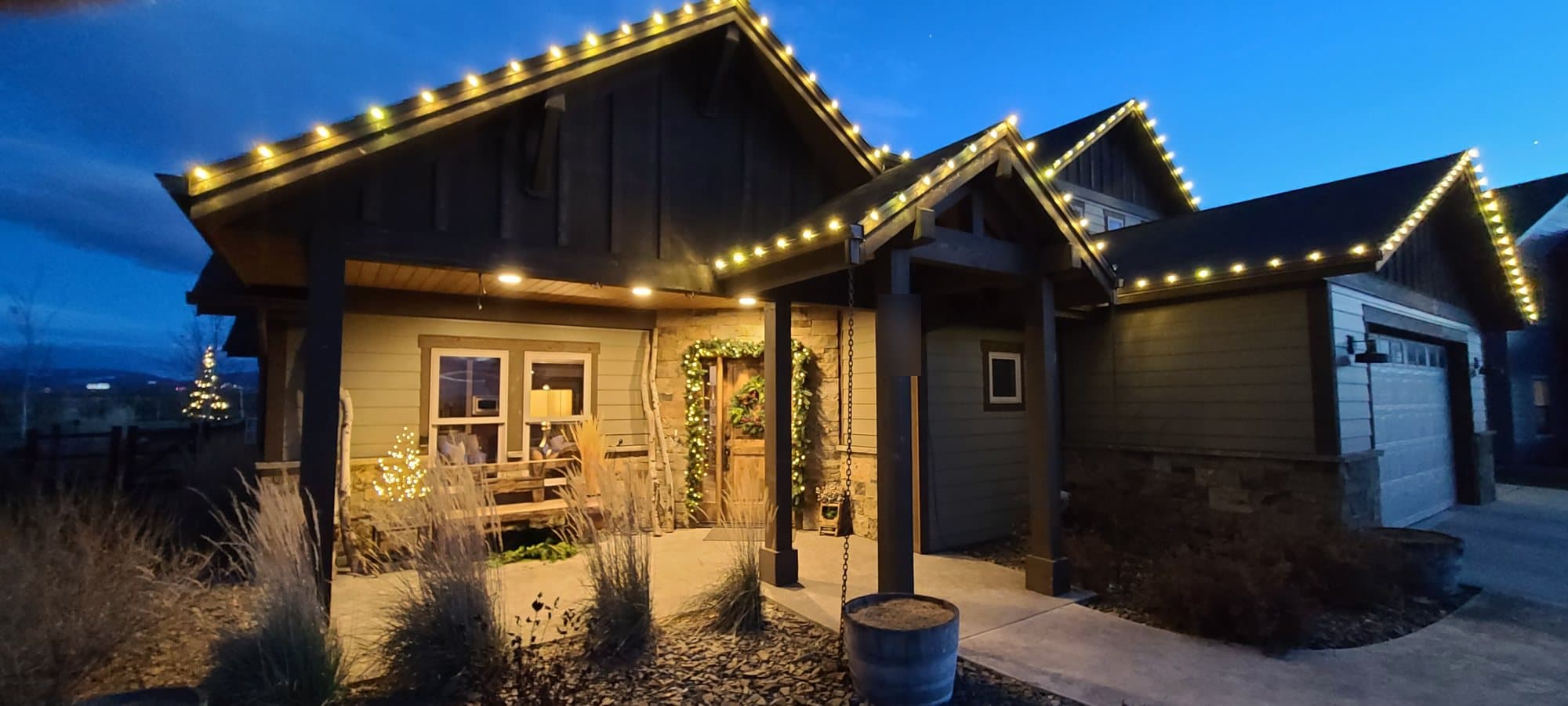
Questions to Ask Before Hiring a Christmas Light Installer
Holiday light installation is seasonal work, and each fall it attracts both established companies and people with a ladder and a free month. A short conversation sorts one from the other. These are the questions worth asking anyone before you book, what a good answer sounds like, and, since this service is new for us in 2026, where our own answers are still being worked out.
Are you insured, and can I see proof?
Ask this first. The Consumer Product Safety Commission has reported falls as the most frequent type of holiday decorating injury, and this is work done on ladders and roofs in cold weather. You want to know that the company carries liability insurance for damage to your property and has coverage for the people doing the work. A legitimate company expects the question and can show a current certificate without fuss.
Ask who will actually be on your roof as well. Some companies use their own year-round employees. Others bring on seasonal help or subcontract the work. Neither is automatically wrong, but you should know which it is, and whether the insurance you were shown covers those people. HJ Property Care & Tree Service is licensed and insured, and the crew works at height on tree jobs all year.
Who owns the lights?
There are three common arrangements. In a lease model the installer owns the lights and you pay for their use each season. In a purchase model you buy the lights through the installer and own them. In the third, the installer hangs lights you already have. Each changes the first-year figure, the following years and who is responsible when something fails, so make sure you know which one you are being quoted.
Follow up with what happens if you do not rebook. Leased lights go back to the installer. Purchased ones should be yours to keep, cut to your roofline. For HJ this is one of the open questions: our 2026 packages are not final, and whether customer-owned lights can be used is not settled. If you have lights, tell us what you have. Our cost factors guide explains why the answer affects price.
Is takedown included, and when does it happen?
Never assume. Ask whether removal is part of the price, roughly when it happens, and what the plan is if the roof is iced over that week. A good answer names a window in January and says that the crew waits for safe conditions. A vague answer here is how lights end up on a house until April.
Ask how the lights are handled coming down, too. Strands that are unclipped and coiled last for years. Strands pulled off from the ground take clips, and sometimes gutter sections, with them. HJ's service is being built around both visits: we install, and we come back to take the lights down. Our guide on when to hang and remove lights in western Montana explains why the takedown date has to stay flexible.
Where do the lights go between seasons?
If the installer stores them, ask how. The useful version of storage is not just boxes on a shelf. It means strands labeled by where they came from on your house, tested before they go away, and tested again before they come back. Ask whether storage is included or charged separately, and what happens to your lights if you move or change companies.
If the installer does not store them, ask how they will be handed back, so you are not left with a tangle to sort out next November. Our own answer is not final. Storage between seasons is something we are looking at for this service, and we are not promising it for 2026. Tell us if you would use it, since that helps decide whether it gets offered.
What happens if something stops working in December?
Something often does. Wind pulls a section loose, a strand fails, a protected outlet trips after wet snow, or a timer loses its setting in a power outage. Ask whether mid-season service calls are included, how you report a problem and how soon someone normally comes out. The few weeks the display is lit are the whole point of it, so slow repair is a real cost.
Ask what is covered. Failed materials supplied by the installer are normally their responsibility. Damage from a storm, a falling branch or a snow shovel may be handled differently. It is also fair to ask what you can safely do yourself, such as resetting an outlet, and what you should leave alone. Our service terms for repairs are being finalized along with the packages.
How will the lights be attached?
The answer should be clips made for the purpose, matched to your gutter, shingle or roof edge, and it should not include nails, screws or staples in the house. Utah State University Extension warns that nails and staple guns can easily cut or damage the insulation and conductors of light strings. They also leave holes behind. Ask what kind of clip will be used on your particular roof edge, since metal roofing, gutter guards and tile each need a different one.
If trees are being lit, ask the same question about them. Nothing should be nailed or stapled into a tree, and wraps should be put on so they come off cleanly after the season. Ask who decides which trees are suitable. Our guide to lights on trees without damage covers what good practice looks like. At HJ that judgment comes from a crew led by an ISA Certified Arborist.
How is the display powered and controlled?
Ask where it will plug in, and whether the installer checks that the outlet has ground-fault protection, which the CPSC advises for all outdoor lights. Ask whether the cords and lights are rated for outdoor use, where connections will sit once snow is on the ground, and how cords will be kept clear of walks, driveways and any area that is plowed or shoveled.
Then ask about control. A timer or similar control should be part of any professional setup, set so the display is not running all night. Find out who sets it, whether you can change it, and what it does after a power cut. The background to all of these questions is in our outdoor Christmas light safety guide.
When can you install, and how far ahead should I book?
Good-weather install days are limited and every installer in the valley is working inside the same short window, so ask early. Find out when installations start, whether you get a date or a range, and what happens if the weather turns on your day. Ask whether lights can be installed early and left off until you want them lit. The answer should be yes.
Ask about lead time separately if the property is a business or a community entrance, because those usually need more planning and sometimes an approval. For HJ, install dates for 2026 have not opened yet. We are keeping an interest list, with no obligation, and the people on it hear first. Details are on the Christmas light installation page.
What else does the company do the rest of the year?
This last question tells you more than it seems to. A company that works in your area year-round has a reputation to protect in February and July, and it will still be answering the phone when a strand fails or a takedown date slips. It also tells you what the crew does on a normal day, and whether ladders, roofs and trees are familiar ground for them.
Our answer is that lighting is the newest of our fall and winter services, alongside snow removal, fall cleanups and tree work across Missoula and the Bitterroot Valley. If we already look after your property, lining lighting up with that work is the simplest way to schedule it.
Call HJ Property Care & Tree Service at (406) 215-7319 or join the holiday lighting interest list and you will hear first when install dates open.
Need help?
HJ Property Care & Tree Service is locally owned and ISA-certified. Call for a free estimate.
Explore our christmas & holiday light installation.
Sources
We cite primary sources: Montana State University Extension, the City of Missoula, and the ISA, so you can verify anything here yourself.
- Put Safety at the Top of Your List When Decorating this Holiday Season (U.S. Consumer Product Safety Commission). Last checked October 11, 2026.
- Festoon Your House Safely (Utah State University Extension). Last checked October 11, 2026.
Ready to transform your outdoor space?
Get a free, no-obligation estimate within 48 hours. Locally owned and ISA-certified.