
A Spring Tree Care Checklist After a Montana Winter
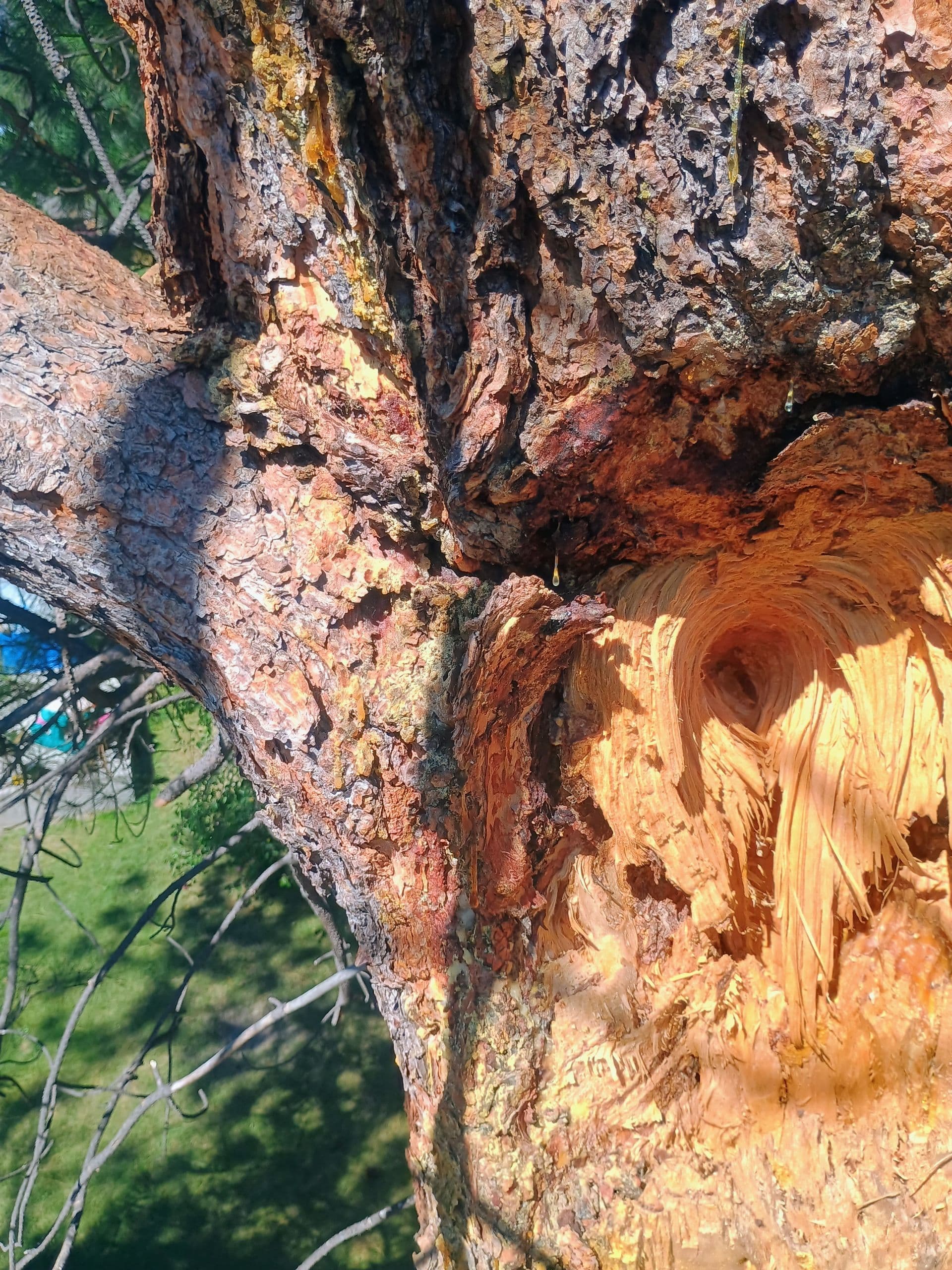
A western Montana winter leaves its marks where you cannot see them until the snow goes: a split limb high in a cottonwood, bark chewed off at the base of a young apple, a spruce brown down one side. The weeks between snowmelt and full leaf are the best time of the year to find those problems, because the branch structure is still visible and the tree has not yet committed its spring growth. This checklist is a walk around the property, top to bottom, with a note at each stop on what to do now and what to leave alone.
Where should the walk-around start?
Start with safety, from a distance. Before walking under anything, look up into each large tree for broken limbs lodged in the crown, limbs hanging by a strip of bark, fresh cracks at branch unions, and any tree that is leaning where it stood straight in fall. Those are hazards first and tree care second. Our guide to the signs a tree is about to fail describes what to look for, and anything on or near a wire is the utility's call before anyone else's.
Then work through each tree in the same order: crown, trunk, base, ground. The sections below follow that order. How to manage snow load during the winter itself is covered in our winter tree care and snow load guide; this checklist picks up after the melt.
What should you do about snow and ice breakage?
Prune it properly, and soon. MSU Extension Forestry's fact sheet on storm damage says this kind of injury rarely heals well by itself, which makes prompt pruning essential if the tree is to be saved. The first goal is to minimize the wood exposed to the air, since open wood invites pests and decay. A jagged break closes slowly, and a smooth, correctly placed saw cut closes much faster.
The fact sheet describes cutting in three steps so the bark does not tear: an undercut, a second cut to take the weight off, and a final cut close to the main stem. Never leave a stub long enough to hang a coat on. A limb that is split but stable may recover. MSU's markers for removing it include a branch more than four inches in diameter, a split that gapes wider than half an inch, or one that opens and closes in the wind. The same source says cottonwoods, poplars, willows, green ash and Siberian elms are particularly prone to breakage.
Is that brown evergreen dead?
Probably not, so do not prune it yet. MSU Extension's Schutter Diagnostic Lab reports that winter burn on evergreens can appear without warning in spring, with red, yellow or brown foliage most pronounced on the south and southwest sides, and that many trees grow out of it. The test is the buds. As long as they are soft and green there is still life in the tree, and the browning becomes less obvious once new growth pushes and dead needles drop.
So the spring task for a burned spruce, fir or pine is water during dry spells and patience. Branches that are fully dry and brittle with dead buds can come off later. A conifer that lost its top to snow is a different case. MSU Extension Forestry advises trimming the main stem back to within an inch or two of healthy side branches and later selecting one strong new leader, which it recommends especially for pines.
What does vole and deer damage look like in spring?
Check the base of every young tree as soon as the snow is off. MSU Extension describes vole damage as tiny incisor marks on the bark, usually on the lower eight to ten inches of the trunk, and notes that vole paths through the grass become more apparent as the snow melts. Damage happens mainly in fall and winter, under cover. Bark removed all the way around the trunk is serious, and a partial wound can close.
Higher up, look for the shredded bark of antler rubbing and the torn, ragged twig ends of deer browse, both described in our guide to deer and elk damage on trees. For next winter, MSU's vole guidance is habitat first, meaning mowing and removing ground cover and debris near trunks, and then exclusion: hardware cloth set at least six inches below the ground and extending at least 14 inches above it, or trunk guards on young trees.
Should tree wraps and guards come off now?
Winter wraps, yes. MSU's tree problem MontGuide recommends tree wrap applied in October to protect thin-barked young trunks from sunscald, and says to remove the wrap in April. MSU's guidance on frost cracks makes the same point about white trunk guards: install in fall, remove in spring, because leaving them on year-round can promote fungal and insect problems.
While the wrap is off, look at the south and southwest side of the trunk. MSU describes sunscald there as bark killed when afternoon sun warms it and the temperature drops rapidly after sunset, most common on smooth-barked trees such as mountain ash, apple and maple. Frost cracks are vertical splits on the same side. MSU advises against wound paint on frost cracks, since it does not reduce the chance of decay. Loosen or remove staking ties too; the MontGuide says stakes should come off after one year.
What should be pruned now, and what should wait?
Broken, dead and hazardous wood can come off whenever you find it. Beyond that, timing depends on the tree, and three spring cautions come straight from the research sources. Pines: MSU Extension advises against pruning from late spring to early summer because Diplodia tip blight enters through wounds, and the Forest Service rates green pine slash created from April through July as an extreme risk for breeding pine engraver beetles.
Apples, crabapples and pears: MSU recommends pruning out fire blight during dry winter weather, cutting 10 to 12 inches below the infected area and disinfecting tools between cuts, then checking the trees regularly in spring. Newly planted trees: MSU says pruning should be limited to diseased, damaged or dead limbs. For everything else, including the months to avoid for each species, use the Montana tree pruning calendar instead of guessing.
When should watering and mulching start?
Earlier than the sprinkler system usually comes on. The City of Missoula's Urban Forestry Division says it is important to give a tree a good dose of water before leaf-out in spring, and it treats May through October as the watering season for established trees. In a dry, open spring the top foot of soil can be short of moisture well before irrigation start-up, and evergreens with winter burn need that water most.
Spring is also the time to refresh mulch. MSU Extension recommends three to four inches out to the edge of the canopy, and Missoula Urban Forestry recommends pulling it back four to six inches from the trunk. The city's reason is to deter fungal disease, and mulch against the bark also gives voles cover. The amounts and schedule for the rest of the year are in our guide to watering trees through a Montana drought.
What do slow leaf-out and suckers mean?
Give trees time before judging them, then read the signs. MSU's MontGuide describes two delayed symptoms of winter damage. A tree whose roots were injured by deep cold without snow cover usually starts growth in spring, but the leaves are small and may wilt shortly after bloom. And an unusually heavy flush of suckers from the base is a common symptom of freeze damage in the top of the tree.
A branch with no live buds by the time its neighbors are in full leaf is likely dead and can be removed. A tree showing either of the patterns above is worth a professional look, because the decline can play out over the summer or over several years.
When is it time to call an arborist?
Call for anything you cannot reach from the ground, any limb over a roof, drive or play area, any split or lean in a large tree, and any tree where you are unsure whether it is alive. MSU Extension Forestry is direct on the first point: using a chainsaw in a tree should only be done by a trained arborist with safety ropes or a bucket. For urgent breakage we provide emergency tree and storm response.
For the rest, a spring assessment sets the year's priorities: what to prune now, what to schedule for the dormant season, and what to water and watch. That is part of our tree services, and the Montana Tree Guide has a page for each of the problems this walk-around turns up.
Call HJ Property Care & Tree Service at (406) 215-7319 or request a tree assessment and an ISA Certified Arborist will look at the tree with you.
Need help?
HJ Property Care & Tree Service is locally owned and ISA-certified. Call for a free estimate.
This article is part of the Montana Tree Guide, our complete guide to trees in western Montana.
Explore our tree services.
Sources
We cite primary sources: Montana State University Extension, the City of Missoula, and the ISA, so you can verify anything here yourself.
- After the Storm: Caring for Your Trees (MSU Extension Forestry). Last checked October 11, 2026.
- Garden Tip of the Month: Winter Injury / Evergreen Desiccation (MSU Extension Yard and Garden). Last checked October 11, 2026.
- Voles (MSU Extension, A Guide to Pests, Problems, and Identification of Ornamental Shrubs and Trees in Montana). Last checked October 11, 2026.
- Deer (MSU Extension, A Guide to Pests, Problems, and Identification of Ornamental Shrubs and Trees in Montana). Last checked October 11, 2026.
- What's Wrong with This Tree? (MontGuide MT199518AG) (MSU Extension). Last checked October 11, 2026.
- Frost Crack (MSU Extension, A Guide to Pests, Problems, and Identification of Ornamental Shrubs and Trees in Montana). Last checked October 11, 2026.
- Diplodia Tip Blight (MSU Extension, A Guide to Pests, Problems, and Identification of Ornamental Shrubs and Trees in Montana). Last checked October 11, 2026.
- Pine Engraver (Ips pini), Insect and Disease Management Guide, Chapter 4.10 (revised 2025) (USDA Forest Service, Northern and Intermountain Regions, Forest Health Protection (hosted by Montana DNRC)). Last checked October 11, 2026.
- Fire Blight (MSU Extension, A Guide to Pests, Problems, and Identification of Ornamental Shrubs and Trees in Montana). Last checked October 11, 2026.
- Transplant Shock (MSU Extension, A Guide to Pests, Problems, and Identification of Ornamental Shrubs and Trees in Montana). Last checked October 11, 2026.
- How Much Water Do My Trees Need? (City of Missoula, Urban Forestry). Last checked October 11, 2026.
- Drought Stress (MSU Extension, A Guide to Pests, Problems, and Identification of Ornamental Shrubs and Trees in Montana). Last checked October 11, 2026.
Ready to transform your outdoor space?
Get a free, no-obligation estimate within 48 hours. Locally owned and ISA-certified.