
Fire Blight on Apples, Crabapples, Pears and Mountain Ash in Montana
Every summer a few apple and crabapple trees in the Bitterroot Valley look as though someone held a torch to the branch tips. The leaves turn brown or black and hang on, the shoot curls over like a cane handle, and the damage seems to arrive in a week. That is fire blight, a bacterial disease that Montana State University Extension calls the most problematic and prevalent disease of apple in Montana and one found throughout the state. It can be managed in a backyard tree, mostly with a pruning saw and good timing.
What is fire blight?
It is an infection caused by the bacterium Erwinia amylovora. It is not a fungus, which matters because fungicides do nothing to it. MSU Extension lists the hosts as plants in the rose family, including apple, pear, crabapple, mountain-ash, hawthorn and cotoneaster. MSU's Western Agricultural Research Center in Corvallis adds serviceberry and raspberry.
That host list covers a large share of what grows in yards from Lolo to Darby: old homestead apples, ornamental crabapples, backyard pears and the mountain-ash planted for its berries. According to MSU's apple disease MontGuide, in highly susceptible varieties the disease can cause a steady decline and, ultimately, the death of the tree.
What does fire blight look like?
MSU Extension describes the sequence. Infected blossoms look water-soaked and turn gray-green, then shrivel and blacken as if burned. Infected shoots wilt quickly and bend into the hooked tip known as a shepherd's crook. Leaves on infected branches turn brown to black and often stay attached through fall and winter instead of dropping.
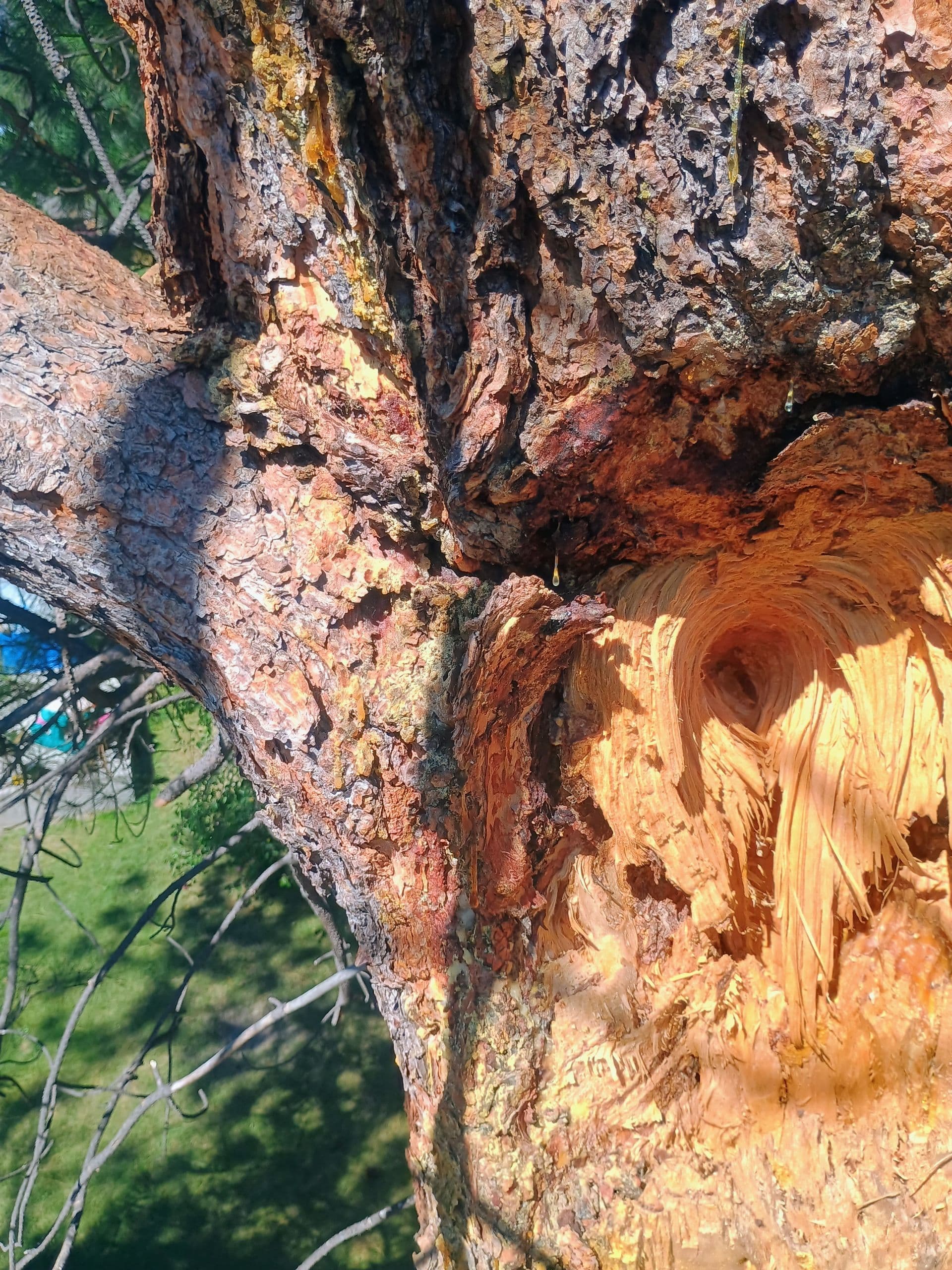
On the wood, look for cankers: sunken, darker patches of bark. In humid weather amber or orange droplets can ooze from infected tissue. The MontGuide adds that peeling back the bark on an infected branch shows a streaky brown stain, and that cankers on larger limbs are often charcoal black with peeling bark. In winter, a branch still holding dead leaves or mummified fruit is the easiest clue that the tree had fire blight the season before.
How does it spread from tree to tree?
The bacteria spend the winter in cankers. In spring, when humidity is high, they ooze out. Insects are drawn to the ooze and carry it to open flowers, and MSU notes it also moves by splashing rain and on pruning tools. The research center describes insects as the main carrier between trees, with wind second.
From an infected flower the bacteria multiply and move down the soft shoot into older wood. During long wet spells they can also enter young shoots directly through wounds or natural openings in the leaves and bark.
When is the risk highest in western Montana?
During bloom, when warm weather and moisture overlap. The MontGuide says the bacteria become active when the temperature reaches 65 degrees and that the disease is especially damaging in years with sustained rain and high humidity through flowering. The research center puts the optimal conditions at 75 to 90 degrees coinciding with rain or dew, and notes that flowers can only be infected while they are open.
That is why a warm, showery stretch in May worries fruit growers more than a cold one. It is also why the research center advises against sprinkler irrigation that wets the tree during bloom. Vigor matters as well. MSU says fire blight is most damaging in young, rapidly growing trees, and that heavy nitrogen fertilizer pushes the soft, succulent growth the bacteria favor. If your lawn program reaches under the apple tree, it is worth asking whoever handles your fertilizer and weed control to keep nitrogen modest there.
When should infected wood be pruned out?
Pruning is the primary way to remove fire blight from a tree, and the MSU sources agree on the conditions: the wood must be dry. MSU's tree and shrub guide says to prune out and remove infected twigs and branches during dry winter weather, then check plants regularly in spring and remove anything symptomatic. The MontGuide allows cutting during the growing season as soon as symptoms appear, as long as branches are dry and humidity is low, and continuing through dormancy, after leaf drop or in early spring before leaves emerge.
Winter is the safer window for most homeowners, and it lines up with ordinary dormant pruning. Our Montana tree pruning calendar explains why apples and pears are pruned late in the dormant season in the first place.
How far below the damage do you cut?
Farther than looks necessary, because the bacteria travel ahead of the visible symptoms. MSU's guide to tree and shrub problems says to cut 10 to 12 inches below the infected area. The apple disease MontGuide says 12 to 14 inches. Either way, a few inches is not enough.
The MontGuide describes a simple check. After the cut, peel back a little bark at the cut end and look for reddish-brown streaking or flecking. If it is there, cut farther back and check again. After leaf-out, watch old cuts, and if a new canker forms, cut again below it. MSU also recommends removing watersprouts at the base of the tree in warm, dry weather or when the tree is dormant, since they give the disease a direct path to the trunk. Take the prunings off the property or destroy them.
Do pruning tools need to be disinfected?
Yes, between every cut, because the tool itself can carry the bacteria into healthy wood. The MSU publications name different disinfectants: the tree and shrub guide gives 70 percent ethyl alcohol or a standard household disinfectant spray, and the MontGuide gives a 10 percent bleach solution or rubbing alcohol. Use one of them and do not skip cuts.
It is tedious on a tree with many strikes, and it is the step that keeps the pruning from spreading the disease it is meant to remove. MSU lists contaminated pruning tools alongside rain splash and pollinating insects as one of the ways the bacteria move from plant to plant.
Are there sprays that cure it?
No. The MontGuide is direct: the only chemical controls reduce the risk of infection, and there are no chemical cures once symptoms form. MSU's fire blight fact sheet says copper sprays can be applied in early spring just before buds swell, that copper should not be used every year, and that label instructions must be followed strictly. It also states that antibiotic sprays are not recommended in the urban setting.
The research center's view is that backyard growers can often avoid spraying altogether by relying on resistant varieties, sensible watering and fertilizing, frequent scouting and quick removal of infected wood. As with any pesticide, the label is the law.
Which varieties resist fire blight?
Planting a cold-hardy, resistant variety is what MSU calls the best control. Its MontGuide on apple diseases includes a table rating common Montana varieties for fire blight, from resistant to very susceptible, and it is worth checking that table before you buy a tree. The research center adds that several hard cider varieties grown in Montana are very susceptible.
The full table also covers winter hardiness, ripening period and three other diseases, so read it or ask your county Extension office before buying. If you are not sure what you are looking at, MSU's Schutter Diagnostic Lab can confirm fire blight from a sample submitted through your Extension office. For hands-on help, we handle fruit tree pruning as part of our tree services, and the Montana Tree Guide covers other problems of valley trees.
Call HJ Property Care & Tree Service at (406) 215-7319 or request a tree assessment and an ISA Certified Arborist will look at the tree with you.
Need help?
HJ Property Care & Tree Service is locally owned and ISA-certified. Call for a free estimate.
This article is part of the Montana Tree Guide, our complete guide to trees in western Montana.
Explore our tree services.
Sources
We cite primary sources: Montana State University Extension, the City of Missoula, and the ISA, so you can verify anything here yourself.
- Fire Blight, A Guide to Pests, Problems and Identification of Ornamental Shrubs and Trees in Montana (Montana State University Extension). Last checked October 11, 2026.
- Fire Blight fact sheet (February 2024) (Montana State University Extension, Urban and Horticulture IPM). Last checked October 11, 2026.
- Important Apple Diseases in Montana and Recommended Varieties for Resistance (MontGuide MT200812AG) (Montana State University Extension). Last checked October 11, 2026.
- Fire Blight Management in Montana Orchards (Montana State University, Western Agricultural Research Center). Last checked October 11, 2026.
Ready to transform your outdoor space?
Get a free, no-obligation estimate within 48 hours. Locally owned and ISA-certified.