
Montana wildfire laws: what homeowners are and are not required to do
Reviewed by Justin Johnson, ISA Certified Arborist (RM-8889A)
People often assume Montana must have a rule telling homeowners how far to clear back from the house. We could not find one for existing homes. What the state does have is a set of narrower laws about burning, slash, fire protection and who pays when a fire escapes, plus local rules that mostly attach to new subdivisions. This guide reads the Montana Code directly and separates what is legally required from what is simply a good idea.
Does Montana law require defensible space around existing homes?
We reviewed the state fire statutes in the 2025 Montana Code Annotated and did not find a statewide requirement that the owner of an existing house maintain a set clearance distance, nor a state defensible space inspection program. That is our reading rather than an official statement, and local rules, recorded covenants or a subdivision's conditions of approval can still apply to a specific lot, so ask your county planning office and read your covenants.
State policy does speak to the subject. In MCA 76-13-115, the Legislature declares that "all private property owners and federal and state public land management agencies have a responsibility to manage resources, mitigate fire hazards, and otherwise prevent fires on their property". It also declares fire prevention, hazard reduction and loss mitigation fundamental components of state fire policy. The section is a list of policy findings; it does not set distances. Defensible space in Montana is mostly driven by self-interest and by insurers, and the practical work is laid out in our Montana Wildfire & Defensible Space Guide and fire mitigation service.
Do I need a permit to burn on my own land in Montana?
During wildfire season, generally yes. MCA 76-13-102 defines the wildfire season as May 1 through September 30, and MCA 76-13-121 says that during that season, or an expansion of it, a person may not set a slash, land-clearing, debris-burning or open fire without an official written permit from the recognized fire protection agency for the area. If no restrictions are in place, a permit is not needed for a recreational fire under 48 inches in diameter, surrounded by a nonflammable area or structure, with a suitable way to put it out.
County and air quality rules add to that outside those dates. Ravalli County administers burn permits from March 1 to November 30, and Missoula County requires a permit for outdoor burning, with daily activation, set burning hours and limits near Missoula. Details are in our Missoula County and Ravalli County guides, and pile technique in burning slash piles safely and legally.
Am I liable if a fire I started spreads to a neighbor?
You can be. Under MCA 50-63-103, a person who sets or leaves a fire that spreads and damages or destroys property not belonging to them is liable for all damages caused, and the owner of the damaged property may bring a civil suit. A person who sets or leaves a fire that threatens to spread is liable for all costs and expenses incurred, including investigation and suppression costs, by the state, a forestry association or anyone who extinguishes it or prevents its spread. The section points to exceptions in other statutes, so talk to an attorney about any specific situation.
A permit does not remove that exposure. MCA 76-13-122 says a permit holder must comply strictly with the permit, and that someone who fails to comply, leaves the fire unattended, leaves before it is totally extinguished, or negligently lets it spread beyond the permitted burning area is subject to a civil penalty and to the same liability section. The same penalty and liability apply under nearby sections to failing to put out a recreational fire and to throwing lighted material.
What is Montana's slash law, and does it apply to thinning my yard?
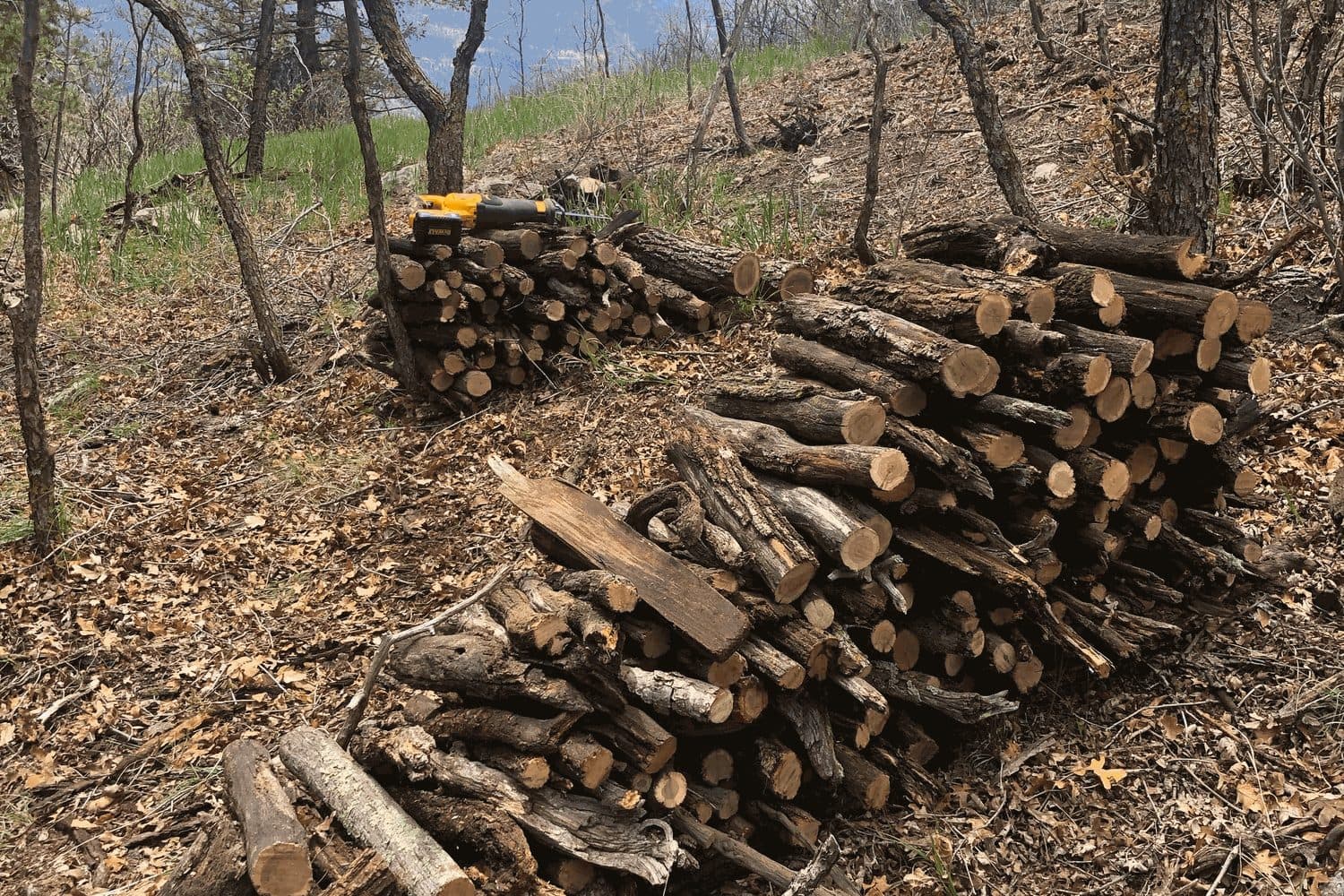
Montana's Control of Timber Slash and Debris law is aimed at timber cutting. MCA 76-13-408 says that before cutting forest products, building a road for that purpose or doing timber stand improvement on private forest lands, the person doing the work must enter a fire hazard reduction agreement with the DNRC, except where a minimum slash hazard would exist. Those agreements involve a bond, and nonburning reduction work and preparation for burning must be done within 18 months of the start of cutting in the area covered. DNRC says sawmills and other purchasers must get proof of an agreement from the seller, and its program calls this a Hazard Reduction Agreement.
Most homeowner work falls under the small-scale carve-out. MCA 76-13-401 defines a minimum slash hazard as slash generated by noncommercial or small-scale activities, which may include harvesting sawlogs or firewood, weeding, pruning or clearing on private land. Under MCA 76-13-408, such an activity is exempt from the part if no forest products are sold. If forest products are sold, it needs a written exemption from DNRC, limited to one per parcel annually, delivered to the purchaser with the products. So thinning for fire safety and chipping the slash is different from selling logs off the lot; if logs will be sold, call your local DNRC service forester first. Disposal choices are compared in slash disposal options and chipping on site or hauling away.
Can a county restrict what I do on my own land during fire season?
Yes. Under MCA 7-33-2212, a board of county commissioners may designate high fire hazard areas on private land or land outside municipal, state or federal jurisdiction, and may require people in those areas to cease activities or shift working hours to less critical periods of the day. If an emergency or disaster has been declared, the board's presiding officer may control entry, though residents, people on official business and workers whose employment does not present a fire hazard must be allowed in and out unless there is a significant risk to health or safety.
Stage 1 and Stage 2 restrictions also reach private land outside cities, and a violation can bring a fine and up to six months in jail, according to Montana Fish, Wildlife & Parks. The stages and their exemptions are explained in Montana fire restrictions. Separately, MCA 76-13-125 prohibits operating an internal combustion engine within any wildland without a modern, efficient and adequate spark arrester, which is worth remembering with saws and off-road equipment.
Does being in the wildland-urban interface change my legal obligations?
Not by itself, as far as we can find. MCA 76-13-145 directs DNRC to identify and map wildland-urban interface parcels, based on each county's community wildfire protection plan where one exists, and to review the designation every five years. The same section says location within the designated WUI may not be the sole reason for assessing additional fire protection fees, impact fees or other fees against the property. And MCA 76-3-608 says a governing body may not deny a proposed subdivision based solely on its parcels being designated WUI. For what the label means locally, see the wildland-urban interface in Missoula and Ravalli counties.
What rules apply when land is subdivided or a new home is built?
This is where most of the mandatory wildfire rules live. MCA 76-1-601 requires a growth policy, where one is adopted, to evaluate the potential for fire and wildland fire, including whether to delineate the WUI and whether regulations are needed on defensible space and adequate access, and MCA 76-3-504 requires subdivision regulations to identify areas unsuitable for development because of hazards unless they can be overcome by approved mitigation. The Ravalli County CWPP says that county's subdivision regulations set standards for access and roadway fuel treatments in high fire hazard areas and require a management plan by a professional forester or other accredited person. Recorded plat conditions and covenants can follow the land to later owners, so check yours. Building codes are covered in building in the WUI in Montana.
Do I have to pay for wildfire protection on forested land?
Possibly. Under MCA 76-13-201, an owner of land classified as forest land within a wildland fire protection district, or otherwise under contract for fire protection by a recognized agency, is subject to fire protection fees set in the statute, with a charge per landowner and an additional per-acre charge above 20 acres. MCA 76-13-102 defines forest land as land with enough timber, standing or down, slash or brush to constitute, in DNRC's judgment, a fire menace, and it can include intermingled or nearby grassland and agricultural areas. Check your property tax statement if you are unsure.
What does insurance law require?
Insurance rules bind the insurer rather than requiring you to do anything, but they shape the decisions you face. Montana requires 45 days' written notice with specific reasons before a home policy is canceled or not renewed (with a shorter period for nonpayment), lets insurers offer benefits for mitigation without requiring them, and gives you the right to request your wildfire risk score. See wildfire insurance and nonrenewals in Montana and how to document mitigation for your insurer.
If it is not required, why do it?
Because the law sets a floor and fire does not read it. The Ravalli County CWPP states that up to 90 percent of home losses from wildfire are caused by embers, and that reducing ignition potential around the structure and the first five feet is the most effective way for a structure to withstand a fire. Nothing in the statutes above will stop an ember from landing in a gutter full of pine needles. Start with the home ignition zone, and look at cost-share programs before you pay for everything yourself.
This guide is general information as we read the Montana Code Annotated 2025 and agency pages in November 2026, not legal advice. Statutes change, and the Legislature meets again in 2027. Ask an attorney or your county for anything that affects a specific property. For the physical work, Call HJ Property Care & Tree Service at (406) 215-7319 or request a free estimate. We walk the property with you, starting at the house and working outward, and an ISA Certified Arborist plans the tree work.
Need help?
HJ Property Care & Tree Service is locally owned and ISA-certified. Call for a free estimate.
This article is part of the Montana Wildfire & Defensible Space Guide, our complete guide for western Montana property owners.
Explore our fire mitigation.
Sources
We cite primary sources: Montana State University Extension, the City of Missoula, and the ISA, so you can verify anything here yourself.
- MCA 76-13-115, State fire policy (Montana Legislature). Last checked November 2, 2026.
- Missoula, Ravalli counties set Stage II fire restrictions (6 Aug 2026, KPAX report) (Missoula Current). Last checked November 2, 2026.
- MCA 76-13-102, Definitions (wildfire season) (Montana Legislature). Last checked November 2, 2026.
- MCA 76-13-121, Permit for burning required (Montana Legislature). Last checked November 2, 2026.
- MCA 50-63-103, Liability of offender for damages and costs (Montana Legislature). Last checked November 2, 2026.
- MCA 76-13-122, Failure to comply with permit (Montana Legislature). Last checked November 2, 2026.
- MCA 76-13-408, Fire hazard reduction agreement and bond (Montana Legislature). Last checked November 2, 2026.
- MCA 76-13-401, Definitions (timber slash and debris) (Montana Legislature). Last checked November 2, 2026.
- The Hazard Reduction Agreement (logging slash reduction) (Montana DNRC Forestry). Last checked November 2, 2026.
- MCA 7-33-2212, Activity restrictions in high fire hazard areas (Montana Legislature). Last checked November 2, 2026.
- MCA 76-13-125, Spark arresters required (Montana Legislature). Last checked November 2, 2026.
- Fire restriction definitions (Stage 1, Stage 2, closures) (Montana Fish, Wildlife & Parks). Last checked November 2, 2026.
- MCA 76-13-145, Designation of wildland-urban interface parcels (Montana Legislature). Last checked November 2, 2026.
- MCA 76-3-608, Criteria for local government review (Montana Legislature). Last checked November 2, 2026.
- MCA 76-1-601, Growth policy, contents (Montana Legislature). Last checked November 2, 2026.
- MCA 76-3-504, Subdivision regulations, contents (Montana Legislature). Last checked November 2, 2026.
- MCA 76-13-201, Costs for protection from fire (Montana Legislature). Last checked November 2, 2026.
- MCA 33-23-401, Written notice required for cancellation or nonrenewal of insurance policies on homes (Montana Legislature). Last checked November 2, 2026.
- Ravalli County Community Wildfire Protection Plan, February 2024 (prepared by DJ&A) (Ravalli County, hosted by Montana DNRC). Last checked November 2, 2026.
- Burn Permits (Ravalli County Sheriff's Office). Last checked November 2, 2026.
- Outdoor burning opens March 1 in Missoula County (Missoula County Public Health). Last checked November 2, 2026.
Ready to transform your outdoor space?
Get a free, no-obligation estimate within 48 hours. Locally owned and ISA-certified.